

Otseteed: sisu | otsing | sektsiooni alammenüü

University  

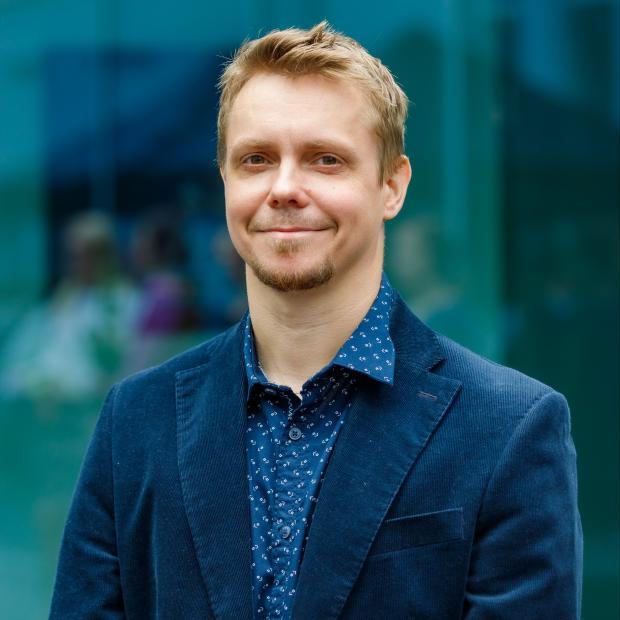
Dear Friends,

It has become customary for most universities all over the globe to proclaim the goal of becoming one of the leading universities of their respective country, region, or continent, and to achieve a high position in the various ranking lists of world universities. Well, I would not mind that, either. But our university has set itself a different task: to become one of the friendliest universities around.

We – myself and my colleagues – believe that a university should first and foremost be an environment for growth. The growth of both students and faculty, scholarly advancement as well as growth as simple human beings. We do not think that university education can be limited to the mechanical transmission of knowledge and skills, which can be measured by standards of efficiency. For us, university education means the cultivation of the critical, constantly questioning mind in concert with personal development, so that each graduate may realise her or his potential to the fullest extent to become a distinct individual with a distinct outlook on life as well as her or his own particular contribution to give to the wider community.

We also believe that one does best what one does knowingly and of one’s own free will. This is why we have structured our degrees so that they would give maximum freedom to the learner as well as to the teacher – students at Tallinn University are guaranteed significant freedoms in designing their study plans and selecting their subjects, while faculty members are expected to teach courses related to their particular fields of expertise and relevant to their own current research, rather than to repeat from year to year the same lectures that are prescribed by a petrified syllabus.

We are sure that teaching and research should be intimately related. The excitement of new discoveries should not be confined within the laboratory walls, but immediately brought to the students in the seminars, and any new idea that comes to a faculty member should be shared with a critical audience as soon as it is ripe enough. Whatever job a student takes up later in life, we believe that exposure to the problems that occupy researchers’ minds will greatly help her or his own ability to pose questions, to solve problems and to come to terms with the constantly changing reality in which we live.

Next, we are convinced that university education is, by its nature, dialogical. Each new hypothesis should not only be presented to students, but also tested in discussion, each experiment assessed from multiple points of view, each interpretation of a classic text questioned by those who wish to read it differently. Each of us needs critical evaluation from the side in order to advance – and so we believe that criticism is a sign of respect, rather than an attack against the person whose views are discussed. After all, in the university we are among colleagues and friends. And in this sense, university quickly becomes a way of life, the habit of discussion sticks and conversations spread from classrooms to cafes and from seminars to informal get-togethers of all sorts.

And finally, we believe in high, strict academic standards. A student who has partied merrily in the company of her or his colleagues and teachers should not expect any leniency when she or he takes a test the next morning. Similarly, a lecturer should not expect to become popular by giving high grades to those who have not earned them. University education means hard work, even if it is work we do willingly.

All in all, we believe that the University is the more versatile as an environment the more different are the people who inhabit it. So, in whatever capacity you might want to come to Tallinn – to stay with us as a visiting scholar or exchange student, to enroll on an undergraduate or graduate program, or to apply for a teaching position – we will in any case be looking forward to your contribution to the environment we are trying to create and maintain.

Yours sincerely,

Prof. Rein Raud
Rector