

Tallinn Summer School in Social and Cultural Studies
Degree Course | July 24 - 31, 2009
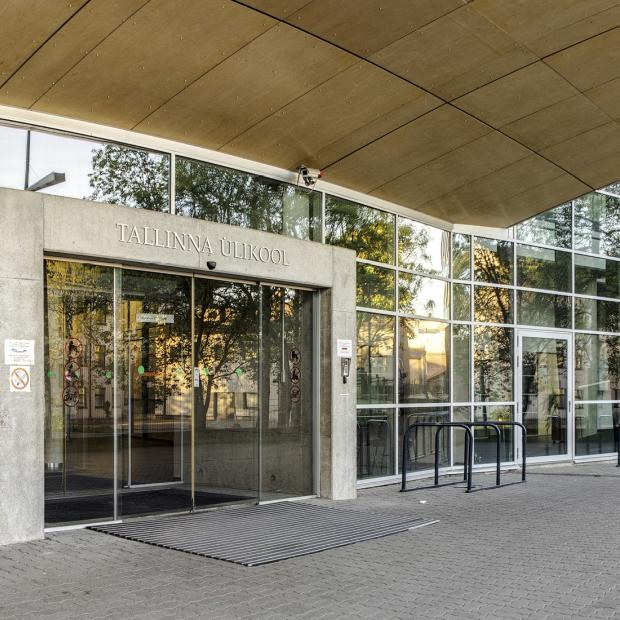
Hosting institutions: Estonian Institute of Humanities, Tallinn University; Institute of Germanic and Romance Languages and Cultures, Tallinn University; Institute of Estonian Language and Culture, Tallinn University; Institute of International and Social Studies, Tallinn University; Centre for Medieval Studies, Tallinn University; Centre for Central-Eastern Europe and the Balkans, University of Bologna
Supporters: City of Tallinn; Hungarian Cultural Institute; European Parliament; Goethe-Institut, Revals Hotels
Directors: Ms. Piret Peiker from Institute of Germanic and Romance Languages and Cultures, Tallinn University; Ms. Linda Kaljundi from Centre for Medieval Studies, Tallinn University
Course Programme
Scholars and students across disciplines are daily engaged in examining the practices and artefacts of everyday life: the strategies and performances of social life, the networks of daily rhythms, the common and minimal aspects of the habitat, background noise. Yet the concept of the everyday seems to include as many extraordinary challenges as its analysis promises still further, unexplored perspectives.
How did the idea of ‘everyday life’ develop historically and in what ways is it being conceptualised across scholarly traditions today? How should we take account and speak of the quotidian, the banal, the evident, the ordinary, the habitual? What speaks to us, seemingly, is always the big event – we scan the horizon of our habitat and social life in search for the unusual, the extra-ordinary. However, what is the relationship between the routine and the exceptional, the exotic and the familiar? What happens when nothing happens?
On the one hand, the cultural turn in social and cultural studies has erased the watershed between the banality of the ordinary, and the elite high culture and monumental history; as it has likewise encouraged investigating the obvious facts, social rituals and objects of the everyday at all levels. Yet, one also needs to ask for the role of the everyday in the wide web of social relations and the social stratification of discourses. What role does the everyday play in shaping political cultures and identities; how do the public and the private, people and elites, majorities and minorities negotiate and interact in this realm? Everyday life is not simply inherited or structured but created through the activities of those who live it, challenge and co-operate with the ‘rules’ of the every-daily life and habitat. How is the experience of the everyday constructed, inscripted and processed by various media and genres (art, design, belles lettres, music, gossip, TV, internet, journalism, etc.)?
The course is designed to build up both analytical and practical skills, and consists of an intensive series of plenary lectures, student workshops and seminars lead by scholars from diverse academic and cultural backgrounds, including Prof. Alphonso Lingis (Pennsylvania State University), Dr. Ben Highmore (University of Sussex), Prof. Michaela Pfadenhauer (University of Karlsruhe) and Dr. Zsuzsanna Szvetelszky (University of Pécs). The programme also includes guided tours led by anthropologists, art historians and cultural geographers, which explore everyday scenes and practices in the city of Tallinn and the realms of the post-Soviet everyday habitat in Northern Estonia.
Furthermore, at the conclusion of the course the students can take part in optional trips to Riga, St. Petersburg or Tbilisi, organised by the Tallinn Summer School (TSS).
The language of the summer school course is English.
Participants
The 7th Tallinn Postgraduate Summer School in Social and Cultural Studies is aiming to create a dialogue between different approaches, inviting M.A. and Ph.D. students of Anthropology, Sociology, Cultural Theory, History, Art, Literature, Philosophy, Politics, Semiotics and other related fields to study new perspectives and methodological tool-kits for analysing the creation of the everyday.
Requirements
Students are expected to do preparatory reading in order to participate in the workshops of the Summer School.
They also have an option (not compulsory) to present their own research during student colloquia. If you wish to present a paper, please send a 300-word abstract by May 15 to our student co-ordinator. Upon full participation in the study programme and completion of a 2500-word essay by September 15 students will be awarded 5 ECTS points.
Fee
250 EUR, thereof:
non-refundable registration fee: 100 EUR,
course fee: 150 EUR.
Please note: the registration and course fee cover tuition, study materials and the guided tours in Estonia. They do not cover other travel expenses, subsistence or accommodation. Information and advice on payment methods, accommodation, visas, etc. upon registration.
Scholarships
Ten Tallinn University students and six University of Bologna students are exempted from the course fee and pay a reduced registration fee of 35 euros (550 EEK) as grantees of their universities.
We are able to offer a limited number of additional grants covering the course fee, privileging motivated students whose home countries have fewer opportunities to offer grants. If you wish to be considered for such a grant, please mention it on registration.
Accommodation
We are in position to offer reasonably priced (ca 15-20 EUR depending whether bathroom in the hall or room) double rooms in Grand Mari Guesthouse (address: Narva mnt. 24/ Fr.R. Kreutzwaldi 2) across the street from Tallinn university, next to tram stop. All prices include breakfast. Please make your choice upon registration.
Deadlines
Registration: June 1, 2009
Abstract submission: June 1, 2009
Registration fee (invoice): June 1, 2009
Essay submission: September 15, 2009
Contact
If you have any questions, please do not hesitate to contact our student coordinator Ms. Anu Printsmann (anu.printsmann(at)tlu.ee)
Phone: (+372) 6199 539
Fax: (+372) 6199 556
Mobile: (+372) 5347 1524
Centre for Landscape and Culture
Estonian Institute of Humanities
Tallinn University
5 Uus-Sadama Street
10120 Tallinn
Estonia