Page 20 - TLU magazine - The Way to The Top
P. 20
 What is foreign?
Foreign food is for example that which comes from the sea. This includes our very own Baltic sea fish; the tradition of catching which was in- troduced only in the 13th century by the coastal people from Sweden. Scientists have informa- tion on animal food thanks to bone findings.
So, how much did the Estonian and Latvian people consume imported food in the 13th century? According to Lembi Lõugas, to answer this question, we need to take an in-depth look at the societal changes that took place here
in the late 12th and early 13th centuries. This period saw the transformation from the prehis- toric way of life to Medieval society.
The foreign foodstuff was brought by the rep- resentatives of foreign authorities, as a result of which and thanks to increasing demand, (sea) trade started evolving rapidly. To what extent the locals started embracing the foreign food is what the researchers will find out in the coming years.
At the moment, for example, the researchers are studying new materials from Medieval and modern villages and cemeteries, which provide better options for finding out if (at all) the for- eign food reached the village societies and if so, whether its consumption was in any way related to certain classes.
For research, it is substantially necessary to dig into the chemical composition of the collagen hidden in the bones and identify the ratios of different components. These indicate the shares of different foods consumed during a person’s lifetime.
What did people eat and why?
Lembi Lõugas admits that the locals in Estonia and Latvia did not really need foreign food, but surely there were people who wanted to copy the lifestyles of the nobility or who were involved with the in- creasing market demands of the town people.
Lõugas says that since the topic of food is current- ly very important and unique, it is very interesting to look back across the centuries and see how eating habits changed at different times and how, if at all, and by whom foreign foods were accepted.
Within the research, the researchers will try to identify what the natural food of people was back then. Additionally, why famine haunted people in a region of Europe that is rich in nat- ural resources and what the untraditional foods that were eaten during harvest failures were.
The work of the researchers is primarily impor- tant to learn about the sides of our history for which there are no written records or which only cover limited topics. For instance, we have plenty of information on trade towns, but little information on rural areas.
Lembi Lõugas believes that addressing such topics has a lot to offer to a much wider audi- ence than just history enthusiasts.
The duration of the personal research funding group grant project “Foreign vs local in Medieval and Modern Age eating habits in the eastern Baltic: tracing food consumption changes through prov- enance analyses” is from 1 January 2018 to 31 December 2022. The Estonian Research Council funds the project with almost 470,000 euros. Principal Investigator: TU Archaeological Research Collection research track associate professor Lembi Lõugas.
Research communication specialist Kertu Kula
  “For research, it is substantially necessary to dig into the chemical composition of the collagen hidden in the bones and identify
the ratios of different components.”
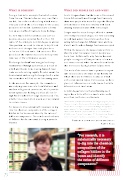
 20 Lembi Lõugas
TALLINN UNIVERSITY MAGAZINE / NO. 14 / SPRING 2020
Photo: Piret Räni