
Keynote speakers
Stef Craps
.jpg)
Stef Craps is a professor of English literature at Ghent University in Belgium, where he directs the Cultural Memory Studies Initiative. His research focuses on imaginative engagements with the legacies and ongoing realities of political violence and ecological devastation, drawing on memory and trauma studies, ecocriticism and the environmental humanities, and postcolonial and decolonial theory. He investigates how literary and cultural texts bear witness to histories of injustice, suffering, and loss, and how they envision responsibility, repair, and renewal. Craps is the author of Postcolonial Witnessing: Trauma Out of Bounds (Palgrave Macmillan, 2013) and Trauma and Ethics in the Novels of Graham Swift: No Short-Cuts to Salvation (Sussex Academic Press, 2005), a co-author of Trauma (Routledge, 2020), and a co-editor of Memory Unbound: Tracing the Dynamics of Memory Studies (Berghahn, 2017). He has also (co-)edited special issues of scholarly journals on topics including climate witnessing, ecological grief, and transcultural Holocaust memory. His current work examines ecological mourning as a creative and transformative process with the potential to foster new forms of solidarity and care across human and non-human worlds.
Lecture "Singing the World Whole? Denial and the Fantasy of Repair in Joshua Oppenheimer’s The End "
Joshua Oppenheimer’s post-apocalyptic musical The End imagines a world two decades after ecological collapse, where a wealthy family survives in a subterranean bunker sustained by art, etiquette, and carefully curated narratives about their past. Within the film’s diegesis, catastrophe is irreversible: the surface world is lost, the damage cannot be undone, and the characters inhabit an irreparable aftermath. Yet this staging of irreparability is not an endorsement of fatalism. Rather, it is the film’s central critical strategy.
Drawing on Kari Marie Norgaard’s analysis of climate denial as sustained through “tools of order” and “tools of innocence,” I read the bunker as a micro-society organized around the preservation of ontological stability and moral self-understanding. Music, ritual, memoir-writing, and the repetition of family myths reinstate rhythm, continuity, and the sense that life remains coherent despite environmental breakdown. At the same time, these practices deflect full acknowledgement of the family’s implication in planetary devastation. The musical form is crucial: song transforms anxiety into harmony and absorbs guilt into aesthetic performance. Together, these mechanisms sustain a reparative fantasy—the belief that moral equilibrium and futurity can be restored within a world that has, in fact, been irreversibly broken by the very systems of wealth, extraction, and entitlement that secured the family’s survival.
If irreparability defines the world within the film, it does so in order to illuminate a different temporal position for the viewer. The imagined end is not closure but a vantage point from which the present becomes legible as still open. By dramatizing a future in which repair is no longer possible, The End confronts audiences with the consequences of collective disavowal and exposes the cultural habits that render such finality conceivable, thereby revealing it to be historically contingent and, in our own moment, still preventable.
Dolly Jorgensen
.jpeg)
Dolly Jørgensen is Professor of History at the University of Stavanger in Norway, specializing in environmental history and environmental humanities. Her current research agenda focuses on cultural histories of animals. She has published three monographs: Ghosts Behind Glass: Encountering Extinction in Museums (University of Chicago Press, 2025), The Medieval Pig (Boydell, 2024) and Recovering Lost Species in the Modern Age: Histories of Longing and Belonging (MIT Press, 2019). She co-directs The Greenhouse Center for Environmental Humanities at the University of Stavanger and was co-editor-in-chief of the journal Environmental Humanities (2020-2025).
Lecture "Life After Life: The spectacle of liveliness in the afterlives of extinct animals"
Extinction has been going on as long as there has been biological life—in fact over 99% of all species that have ever existed on Earth are extinct. Extinction usually happen at a very slow place. However, we are now living through the Sixth Mass Extinction, a time in which species rapidly going extinct because of human actions. Yet while extinction is the biological end for a species, it is not the end of its life. Instead, species live on through material remains and stories told about them. These are the afterlives of the extinct. In this keynote, Professor Dolly Jørgensen will discuss the role of technological spectacle in the creation of liveliness for extinct animals. This technological spectacle extends from the museum to the lab, ranging from moving film encounters to genetic attempts to revive extinct species. She will argue that this spectrum of afterlife spectacle has the potential to extend empathy for both the extinct and non-extinct species, but it also has the potential to de-value the extinct. Since extinction is not just the end of life but also the beginning of an afterlife, it is critical to consider the ethical implications of life after life.
Eelco Runia
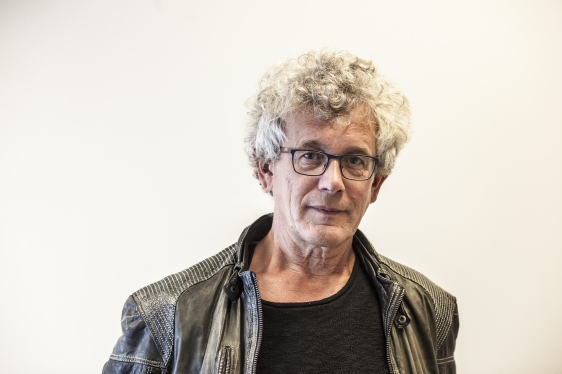
Eelco Runia is a Dutch historian, psychologist, and novelist whose work focuses on historiography, cultural change, and discontinuous historical events. He studied history and psychology at Leiden University and later became chair of the Centre for Metahistory Groningen at the University of Groningen. His research explores how societies respond to historical ruptures and “jumps into history,” themes developed in his influential project Committing History and in his book Moved by the Past (2014). Alongside his academic work, Runia has also published acclaimed novels engaging with questions of memory, history, and cultural trauma.
Lecture: “The king is dead, long live the king”
In real, ‘sublime’, discontinuities there is a fateful gap between endings and beginnings. The liminal space between endings and beginnings is brought about by what I like to call ‘accomplished facts.’ Accomplished facts inaugurate spaces in which the old has been left behind before the new has taken shape. Now, burning your ships behind you may seem a stupid thing to do, but from an evolutionary point of view there may be method in the madness. In my book Moved by the Past I have argued that crossing Rubicons, doing unimaginable things that cannot be undone, is the way humans, as a species, unwittingly organize their cultural evolution. Recklessly, or audaciously, taking leave of the old creates the stress that eventually induces the mutations that constitute the new.
In the first part of my lecture I will sketch the theory of the accomplished fact and its counterpart of stress-induced mutation. I will also try to historicize the mechanics of how things come to their ends and how subsequently the void is filled with the new. The way Caesar broke apart from the old doesn’t necessarily have to be the way we, in the 21st century, create our accomplished facts. It would, in fact, be rather improbable that everything in the world evolves except the way in which this evolution comes about. So one of the questions I will try to answer is: is there a kind of metapattern that elucidates how the way we create our evolution itself evolves.
Then, secondly, I will zoom in on what I think is a good example of how the mechanism with which we create accomplished facts itself evolves: the way we organize regime-change. Up till the late 18th century for most societies the prime historical event was the death of the sovereign. For these societies the cry ‘The king is dead, long live the king’ marked the creation of a major – and stressful - accomplished fact – but the mechanism involved, is, of course, rather rudimentary. The introduction of the notion of popular sovereignty in the American and French Revolutions replaced this coarse mechanism with a much cleverer one. And indeed, from an evolutionary point of view, democracy may not be primarily a strategy to choose between competing political programs but a smart mechanism to provide the accomplished facts a society needs in order to evolve. Which poses the question: has this mechanism without our being quite aware of it been superseded by another one that does the job just as well?