WISH – Work‑Life Integration Starts Here
2025-2028
The project, formally titled “Bridging Work‑Life and Primary Education: Integrating Work‑Life Topics and Key Competencies into Teaching Practice” and abbreviated as WISH (Work‑Life Integration Starts Here), is a three‑year Erasmus+ Cooperation Partnership led by Tallinn University.
The project addresses the growing need to help primary‑school teachers integrate work‑life topics and key competencies into teaching. Current EU and OECD policy documents stress that young people should develop competencies that prepare them for jobs that do not yet exist. By the end of primary school, pupils are expected to have a broad understanding of the world of work, yet teachers often lack research‑based guidance. WISH fills this gap by creating a research‑based handbook, thematic modules, and teacher training, starting in December 2025 and running until November 2028.
The project’s mission is to bridge the gap between formal education and the realities of working life at an early stage. It promotes project‑based, student‑centred learning that connects classroom activities with real‑world challenges. By examining how different European countries conceptualise work‑life topics, WISH encourages cultural awareness, civic engagement and social responsibility. Activities are aligned with the Erasmus+ priorities of developing key competences, supporting teachers and fostering common values.
Contacts: Inge Timoštšuk (inge.timostsuk@tlu.ee) and Kaidi Nurmik (kaidi.nurmik@tlu.ee).
Partners
WISH brings together five higher‑education institutions with complementary expertise:
- Tallinn University (Estonia)
- University of Helsinki (Finland)
- University of Paderborn (Germany)
- Masaryk University (MUNI) (Czechia)
- LUMSA University (LUMSA) (Italy)
TLU Team
The Tallinn University team comprises academics and researchers from the School of Educational Sciences who specialise in primary teacher education and in integrating work‑life topics into the curriculum. Their expertise ensures that the project’s outputs are grounded in both research and classroom practice.
- Inge Timoštšuk (inge.timostsuk@tlu.ee), project leader and lead of WP2
- Kaidi Nurmik (kaidi.nurmik@tlu.ee), project manager and lead of WP1
- Anne-Mai Näkk, team member
- Helene Uppin, team member
- Maile Käsper, team member
- Helen Arov, team member
- Anastassia Skiperskaja, project assistant
Work packages
WP1 – Project management

Led by Tallinn University, WP1 ensures that the project runs smoothly, quality standards are met, and risks are mitigated.

WP2 – Teaching strategies for integrating work‑life topics and key competences

Also led by Tallinn University, WP2 focuses on developing the handbook and practical modules for teachers.
Activities include drafting theoretical chapters, co‑creating five thematic modules, piloting these modules in schools,
finalising the handbook, and disseminating results.

WP3 – “Integrating Work‑Life Topics into Primary Education” for teacher education

The work package led by the University of Helsinki will develop a teacher‑training module consisting of an introductory section
(around 2 ECTS credits) and five sub‑courses that explore how to integrate specific work‑life themes and general competences
into the teaching process.
Events and results dissemination
Events, updates and results will be published on this website under the relevant work‑package sections and shared through
the partner institutions’ communication channels (newsletters, social media and websites).

WP1 Project management
WP2 – Teaching strategies for integrating work‑life topics and key competences
WP3 – “Integrating Work‑Life Topics into Primary Education” for teacher education
Project kick-off meeting brought partners together in Estonia and Finland, 04-06.02.2026
The first project kick-off meeting brought together partners from Estonia, Finland, Germany, Czechia, and Italy. During the meeting, partners introduced their national education systems and curricula and agreed on a detailed plan for the work packages and content-related activities.
The meeting took place in both Estonia and Helsinki. In Estonia, Sandra Järv, Head of Avatud Kool, introduced the school’s background and its project-based learning approach. In Helsinki, discussions continued and the group visited the Amos Rex Museum to gather inspiration for the development of the learning modules.
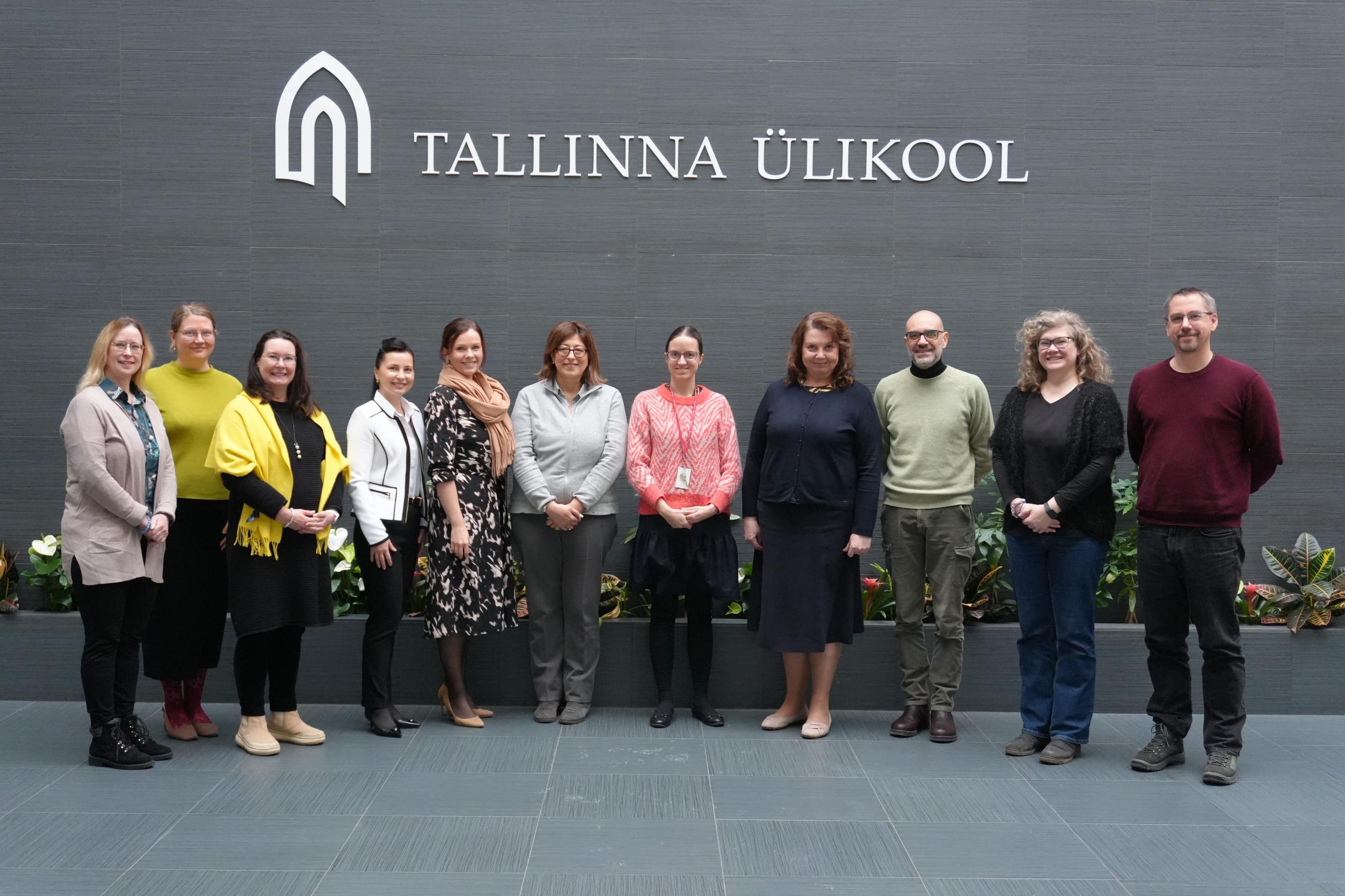
Photo: Marlene Neiland
As a result of the project, a handbook for teachers and five thematic learning modules will be developed and piloted in schools. In addition, a professional development module will be created to support teachers in more consciously integrating work-life topics and key competences into their everyday teaching practice.
According to Professor of Primary Education Inge Timoštšuk, the different national contexts enrich perspectives on the preparation of primary school teachers, while the international professional network strengthens the university’s research capacity.