
Research and Development Projects
Conceptualizing, Assessing, and Developing General Competencies
One of the Centre for Educational Psychology's (HPK) areas of activity is conceptualizing general competencies, developing assessment tools, and carrying out trainings and interventions. A major part of this work takes place within the Ministry of Education and Research (HTM)-funded project (TRU24160) "Preparation of concepts for general parts of future curricula and development of assessment of general competences"
We work with general competencies that are closely tied to psychological processes — both motivational and cognitive. This is why the team includes people with backgrounds in both psychology and education. These are competencies needed both for learning across all school subjects and for coping in later life.
Learning to learn and Self-Regulation Competence
Building on a previously developed concept of learning to learn competence, we are updating the existing EIS-based tools for assessing this competence. We are creating age-appropriate assessment tools for students in the first, second, and third stages of basic school (grades 2–3, 4–6, 7–9). In addition, we are developing tools for assessing motivation, emotions, and their regulation for third-stage students (grades 7–9). We collect class-based norms and prepare informative feedback sheets for teachers. We conduct training in both conceptualizing and assessing learning competence, and we develop learning materials (including videos) for both teachers and students.
Social and Self-Determination Competence
In this project, we are updating previously developed tools for assessing communication and self-determination competence for the first, second, and third school stages. We are revising the assessment tools based on feedback and their relationships with other indicators. We are also linking the test concept to social-emotional and self-determination competence, and developing new test sections accordingly. We collect class-based norms and prepare feedback and informational materials for teachers and students. We are also developing related supportive activities.
Reading Competence
In this project, we are updating previously developed reading competence assessment tools for the first and second school stages and creating new tools for the third stage. We collect class-based norms and prepare informative feedback sheets for teachers (and, at the second stage, for students as well). We conduct training and develop guidance materials on assessing and developing reading competence for teachers, special education teachers, and speech therapists.
Entrepreneurship Competence
Activities related to entrepreneurship competence focus, in cooperation with the University of Tartu, on developing existing assessment tools for second- and third-stage students and improving their user-friendliness. Our goal is to update the feedback and guidance materials for the existing tools so that the feedback is meaningful and relevant to students, and the guidance materials serve as a substantive resource for teachers addressing entrepreneurship-related topics. In the longer term, we plan to develop an entrepreneurship competence assessment tool for fourth-stage students (upper secondary).
Project team: Eve Kikas, Piret Soodla, Elina Malleus-Kotšegarov, Pirko Tõugu (University of Tartu), Kaja Mädamürk, Ita Puusepp, Mikk Granström, Maris Juhkam, Valeri Murnikov, Kati Aus, Joosep Norma, Triinu Kilp-Kabel, Lisa Loifenfeld.
Factors Shaping Upper Secondary Students' Learning
This project focuses on creating a new assessment tool designed to give upper secondary schools a more substantive and comprehensive overview of students' cognitive development and learning competence than is currently available. The need for this project stems from the fact that a student's educational path is strongly influenced by academic achievement, which is also taken into account in upper secondary school admissions. Traditional indicators provide important but limited information about learning ability, mainly reflecting outcomes rather than the processes that shape learning. The assessment tool being developed will make it possible to evaluate a student's level of thinking, prior knowledge, learning skills, motivational characteristics, and self-regulation, thereby offering a broader framework for understanding a student's development and developmental potential. The project's ultimate goal is to create a science-based tool that helps schools assess students' developmental potential and make evidence-based decisions both in the admissions process and in supporting students throughout their upper secondary studies.
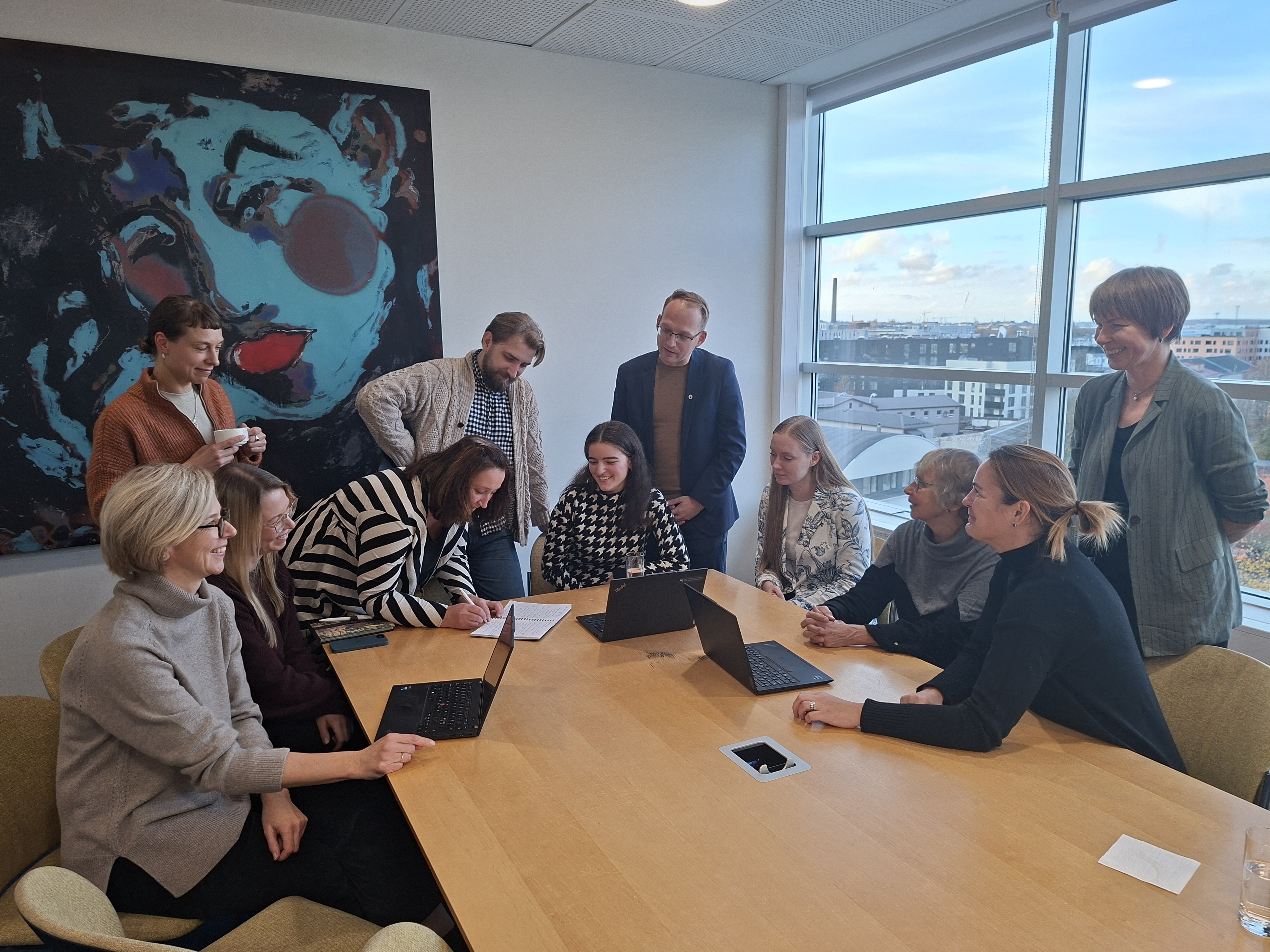
Project team: Valeri Murnikov, Eve Kikas, Aaro Toomela, Ita Puusepp, Triinu Kilp-Kabel, Remy Suurna, Carl Eric Pehme
Assessment Tool and Training Programme for Supporting and Evaluating Learning to Learn and Self-Regulation Competencies in Higher Education
Universities are tasked with supporting the development of students' general competencies, which enable them to learn effectively. However, in Estonia there is little information on how, and to what extent, universities actually develop these competencies. Course descriptions generally do not include learning outcomes related to general competencies, which means their development and assessment tend to be incidental.
HPK is leading a project aimed at building a shared understanding among lecturers, program directors, and educational development specialists regarding general competencies, and at offering science-based solutions that support the development and assessment of these competencies in order to reduce first-year student dropout. The project will develop a test of first-year students' learning and self-regulation competencies, a first-year student satisfaction and learning environment questionnaire, and a training program for lecturers. The project is carried out in cooperation with TalTech. Starting from the 2028/2029 academic year, all Estonian higher education institutions will be able to adopt the assessment tools and training program developed through this project, should they wish to.
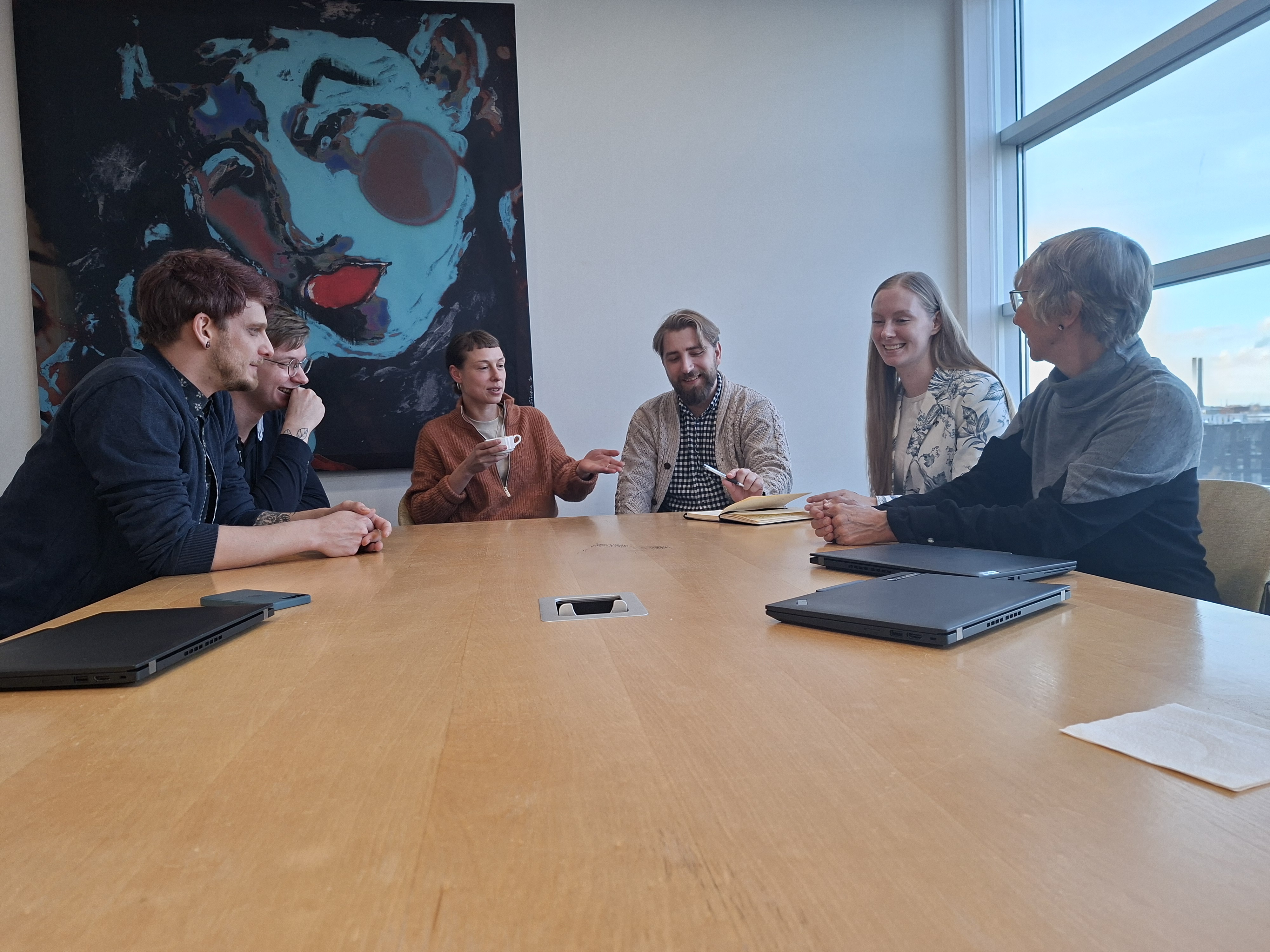
Project team: Anne-Mai Meesak, Eve Kikas, Aaro Toomela, Kati Aus, Valeri Murnikov (pictured), Mikk Granström, and Anneli Veispak.
.jpeg)
This activity is carried out within the framework of the Education and Youth Programme and the Cohesion Policy Funds' implementation plan, under measure 21.4.4.2 "Links between Education, Society, and the Labour Market," intervention "Quality and Internationalisation of Higher Education and Doctoral Schools," activity "Quality and Internationalisation of Higher Education."