

HPK news
On this page, you will find news about the activities of Tallinn University’s Centre for Educational Psychology.
Educational Psychology Conference Brings Together Around 300 Participants
On 15 October, Tallinn University hosted the education conference “Educational Psychology – A Bridge from Research to Practice”, led by the Centre for Educational Psychology. The conference brought together nearly 300 teachers, school leaders and researchers interested in educational psychology. Many members of the Centre contributed to its success.
The day was opened by Tallinn University Rector Priit Reiska and Triin Laasi-Õige, Secretary General of the Ministry of Education and Research. The first presentation was given by Eve Kikas, Head of the Centre. She gave a brief overview of the history of educational psychology field. She also introduced the educational psychology applications created by the Centre: assessment tools and intervention programmes. Maiki Vanahans then shared experiences of implementing them in a kindergarten setting, and Tiina Tiit did the same for schools. Xin Tang gave a presentation on students’ curiosity, and Kati Aus and Katrin Poom-Valickis discussed the role of educational psychology in teacher education. Karin Streimann from the National Institute for Health Development spoke about the dark side of intervention research and what can be done to make interventions effective.
During lunch, participants could view posters created by early-career researchers, in an exhibition led by Marilyn Jurman and Remy Uusna. In the afternoon, nine workshops on educational psychology topics took place. They were led by Kristjan Kask, Mikk Granström, Kaja Mädamürk, Pirko Tõugu, Piret Soodla, Maris Juhkam, Karin Lillemaa, Kristiina Treial, Grete Arro, Heli Aomets, Õnne Uus, Teele-Triin Klimov, Joosep Norma and Anne-Mai Meesak. The main hall also hosted a panel discussion moderated by Elina Malleus-Kotšegarov, and the Rector Priit Reiska and the Head of the School of Educational Sciences Tiia Õun presented an award for an educational innovation initiative.
Grete Arro hosted the entire day. Anne-Mai Meesak, Eve Kikas, Kati Aus and Mikk Granström were members of the organising team, which began preparing the conference as early as the spring. Many thanks and much appreciation to everyone who contributed to the conference!
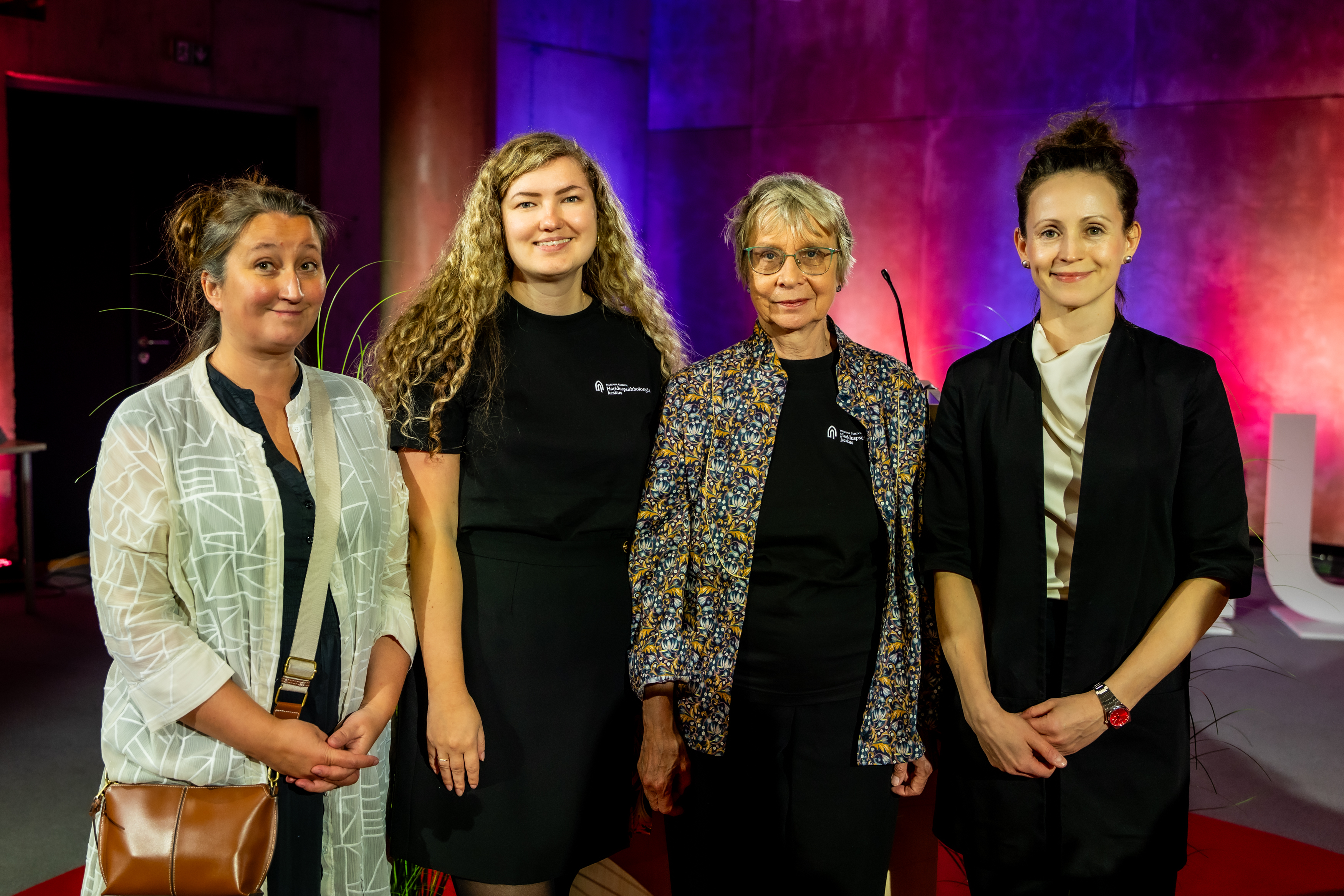
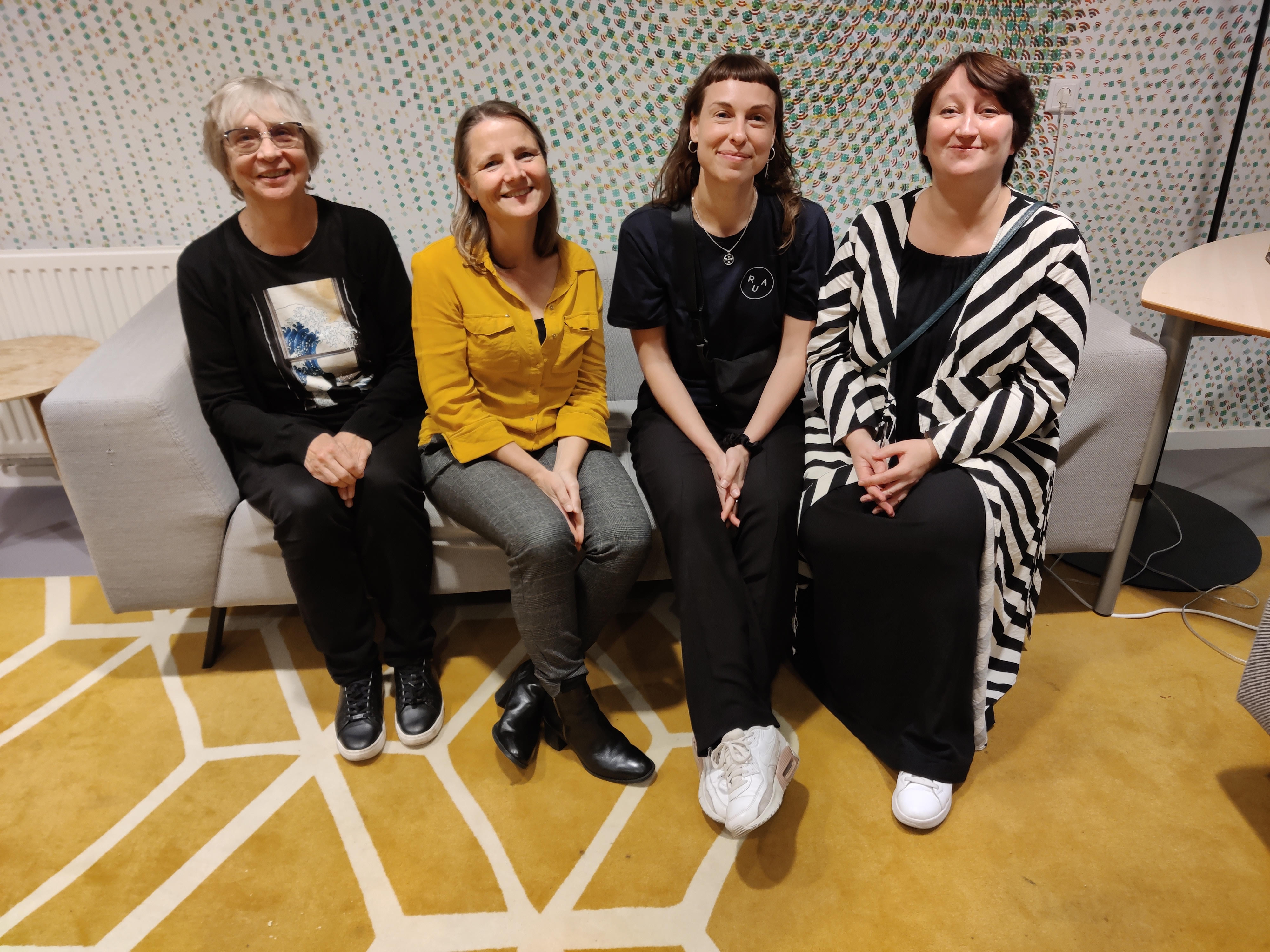
Photo (by Erlend Štaub): Kati Aus, Anne-Mai Meesak, Eve Kikas and Grete Arro
Head of the Centre for Educational Psychology Eve Kikas Receives National Lifetime Achievement Award for Education Professionals!
At the Teacher of the Year Gala held on 10 October, the National Lifetime Achievement Award for Education Professionals was awarded to Eve Kikas, distinguished professor of school psychology, who also heads the Centre for Educational Psychology. Eve Kikas is the founder of school psychology as a field in Estonia and a leading figure in educational psychology. She has done remarkable work in bringing together the fields of education and psychology, translating research into practice, and supporting the next generation of researchers. The handbooks and assessment tools she has developed are used in schools and kindergartens across Estonia. Rewatch the Gala here.
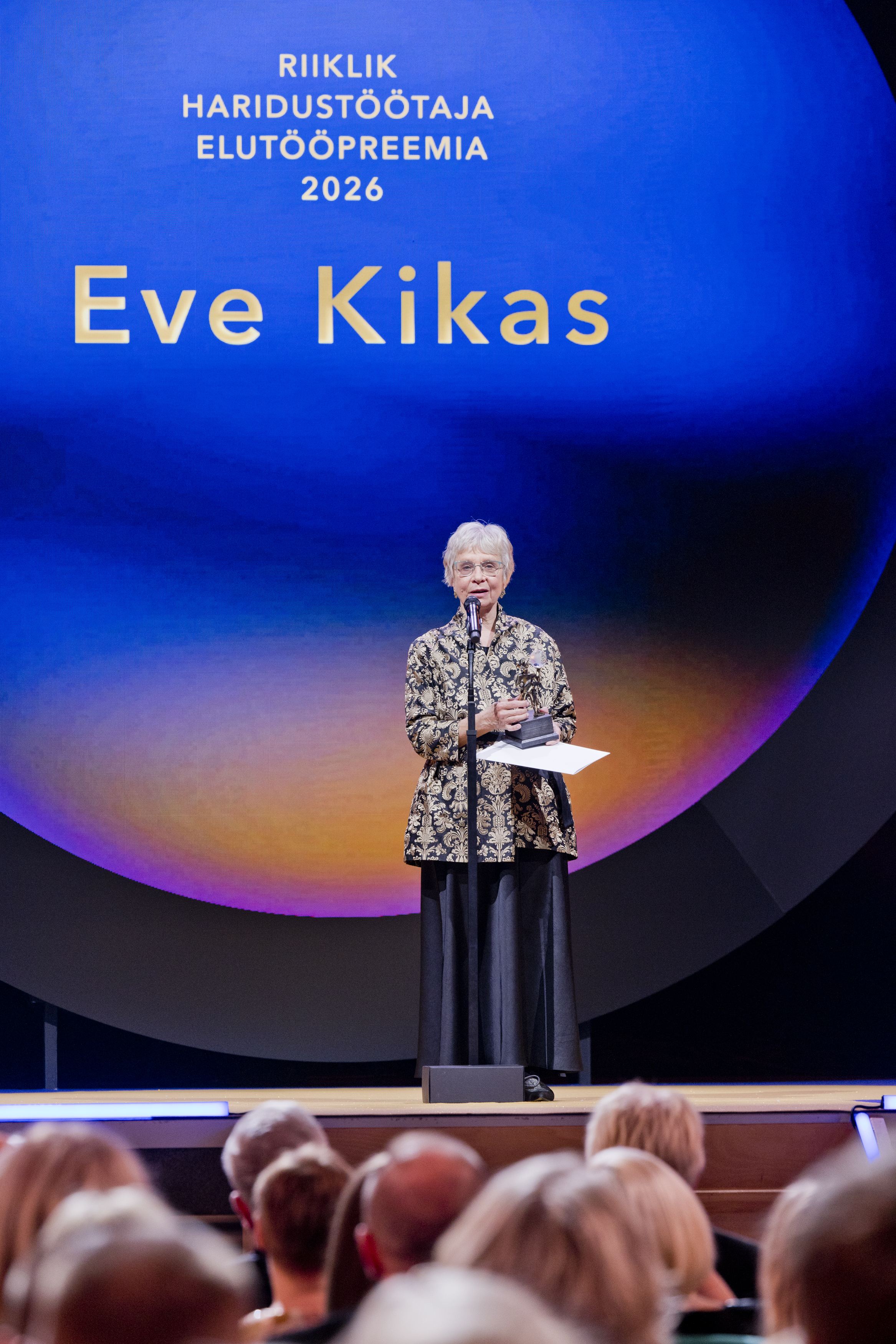
Photo by Ardo Kaljuvee
HPK Held a General Meeting at the End of September
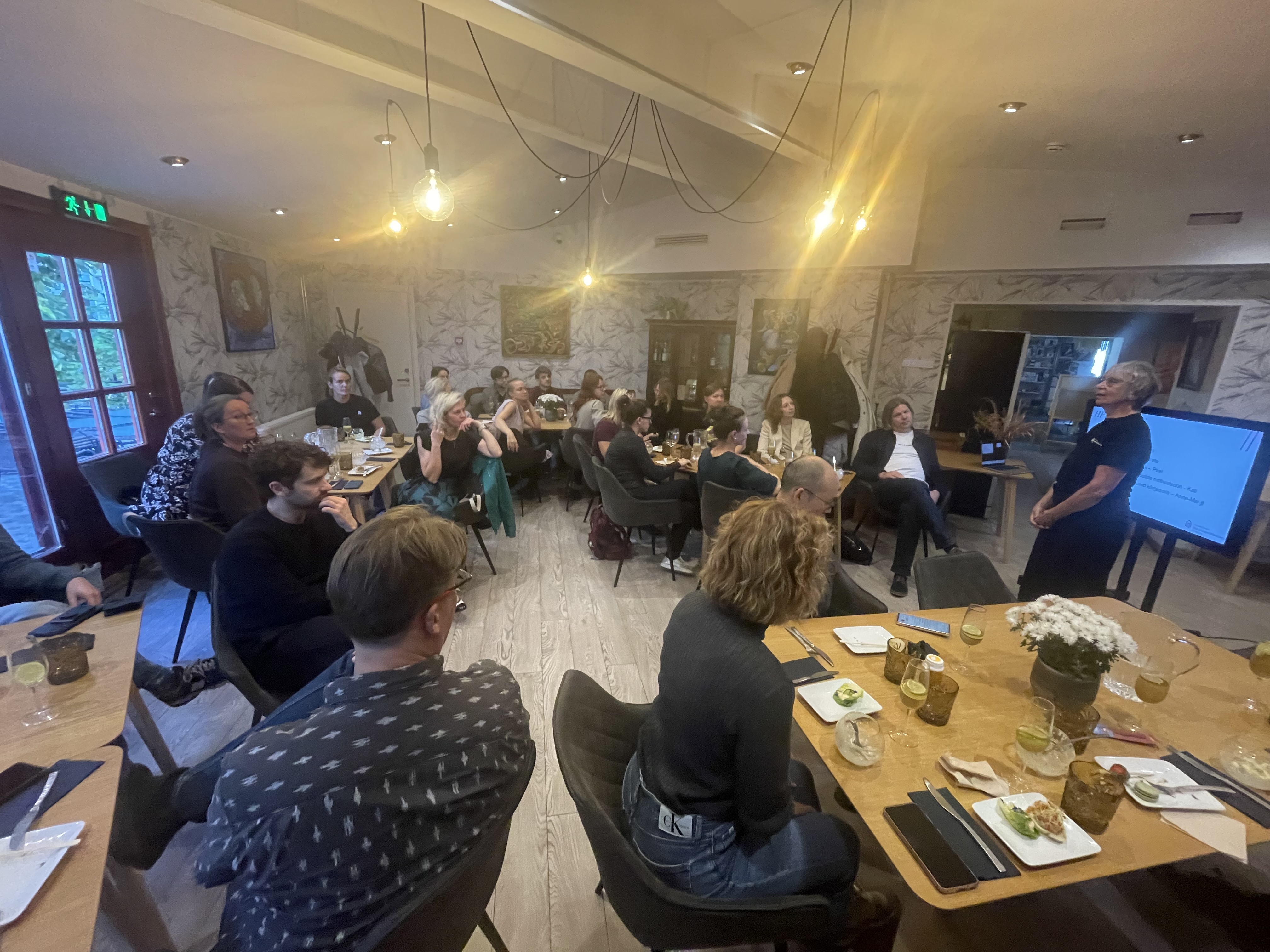
At the HPK general meeting held on 30th September, the Centre’s activities during the current year were presented first. This year saw the launch of new projects such as “Supporting Estonian Language Learning and Subject Learning in Subject Instruction: An Intervention Study on Developing Learners’ Communication Skills, Reading Skills and Motivation” and “Assessment Tool and Training Programme for Supporting and Evaluating Learning to Learn and Self-Regulation Competenceis in Higher Education”. The project “Preparation of Concepts for the General Parts of Future Curricula and Development of Assessment of General Competences” is also continuing.
The participants looked at photographs and looked back on events in which HPK members had taken part during the year.
Twelve new members were admitted to HPK at the general meeting. They introduced their work and explained their interest in joining the Centre. The meeting provided an opportunity to interact with colleagues in a more informal setting, engage in discussion and identify shared research and development interests.
HPK Researcher and Development Manager Anne-Mai Meesak Appears on “Expert on Air” show
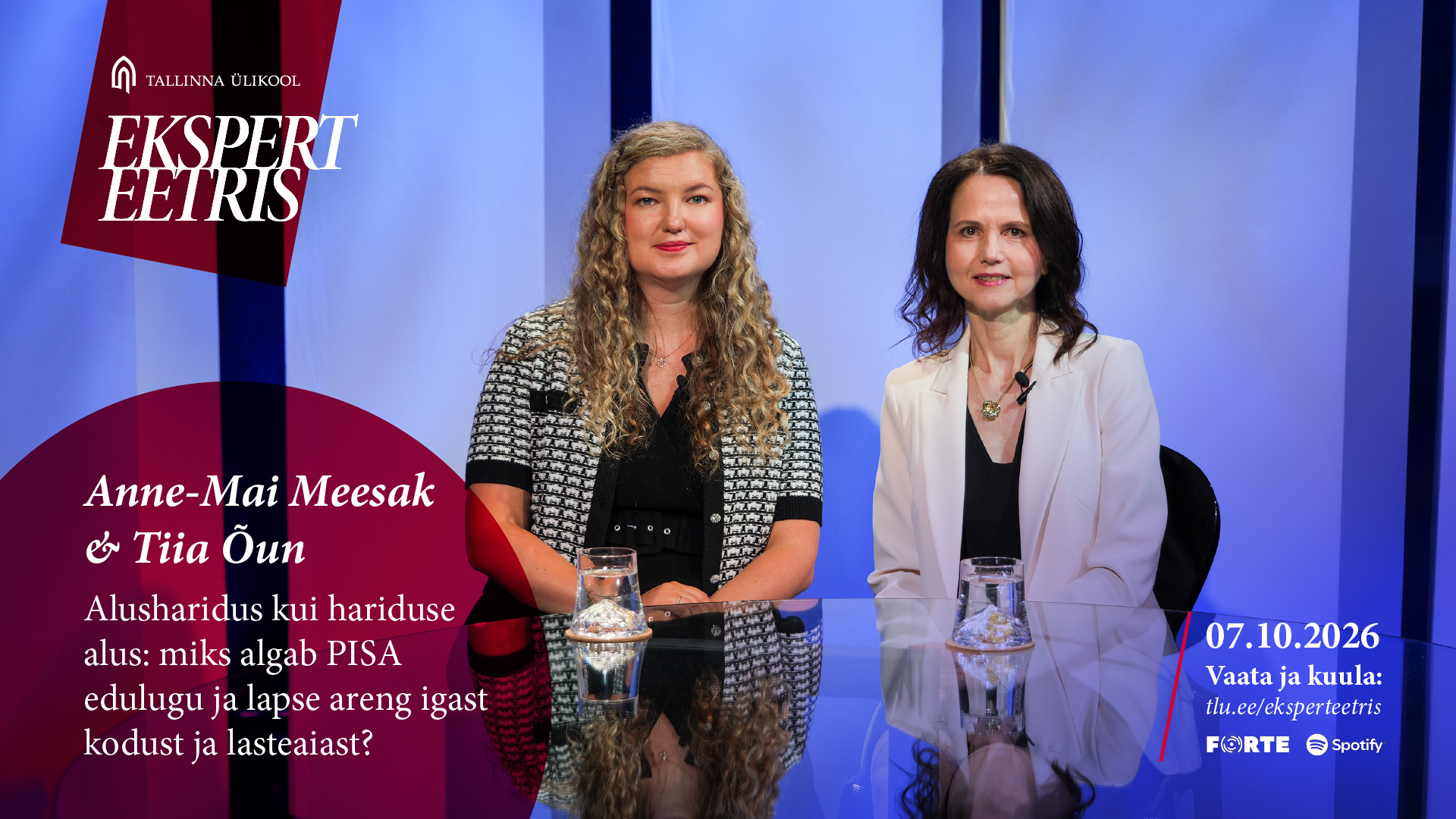
This episode of Expert on Air focused on the importance of early childhood education. The guests were Tiia Õun, Director of the School of Educational Sciences and Head of the Teacher Education area, and Anne-Mai Meesak, researcher and Development Manager at the Centre for Educational Psychology.
The programme explored the uniqueness of early childhood education in Estonia, the popularity of the field and the concerns preschool teachers are facing. Anne-Mai also briefly discussed the findings of her doctoral dissertation, which involved five-year-old children. Watch the programme! (in Estonian)
HPK Doctoral Students Represent Tallinn University in the “Science in Three Minutes” Competition
Marilyn Jurman and Heli Aomets were among the 15 early-career researchers who took part in the final of the “Science in Three Minutes” competition. Marilyn received the Novaator Special Prize, as well as a special prize from the Estonian Academy of Sciences and the Estonian Doctoral School.
Read her featured article: “A Teacher Who Manages Their Students Well May Struggle with Their Own Well-Being” (in Estonian)
HPK Doctoral Student Heli Aomets Presented at Two Research Conferences
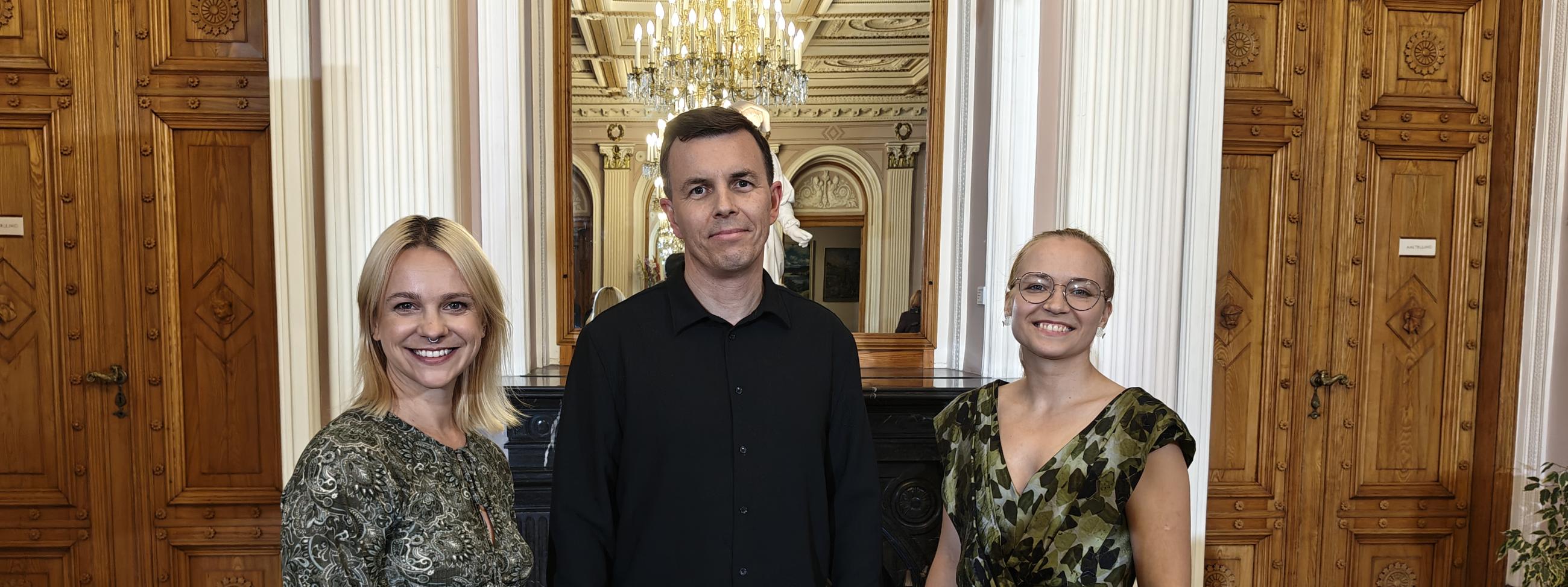
Heli participated in the conferences “Sustainability Research and Teaching in a Time of Polycrisis” and “EARLI SIG 3 & 20 Conference”. At the first conference, Heli presented research on the relationship between teachers’ and students’ systems thinking.
The joint EARLI SIG 3 (Conceptual Change) & SIG 20 (Inquiry Learning) conference was attended by just over 100 participants, including Stella Vosniadou herself. Heli presented research on the relationships between teachers’ and students’ systems thinking and teachers’ task-design skills. Her presentation received highly positive feedback.
Conference on Metacognition and Self-Regulated Learning in France
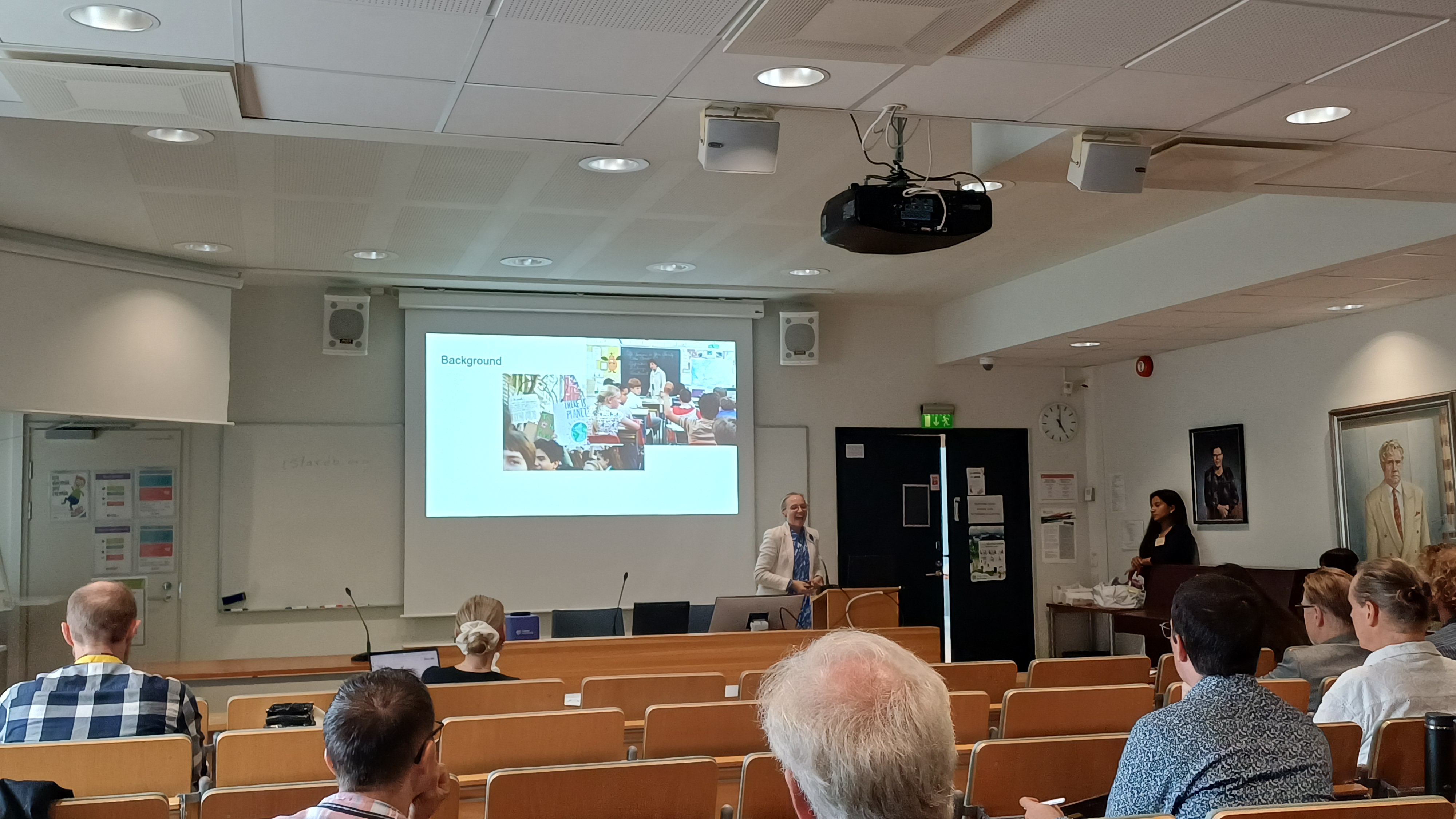
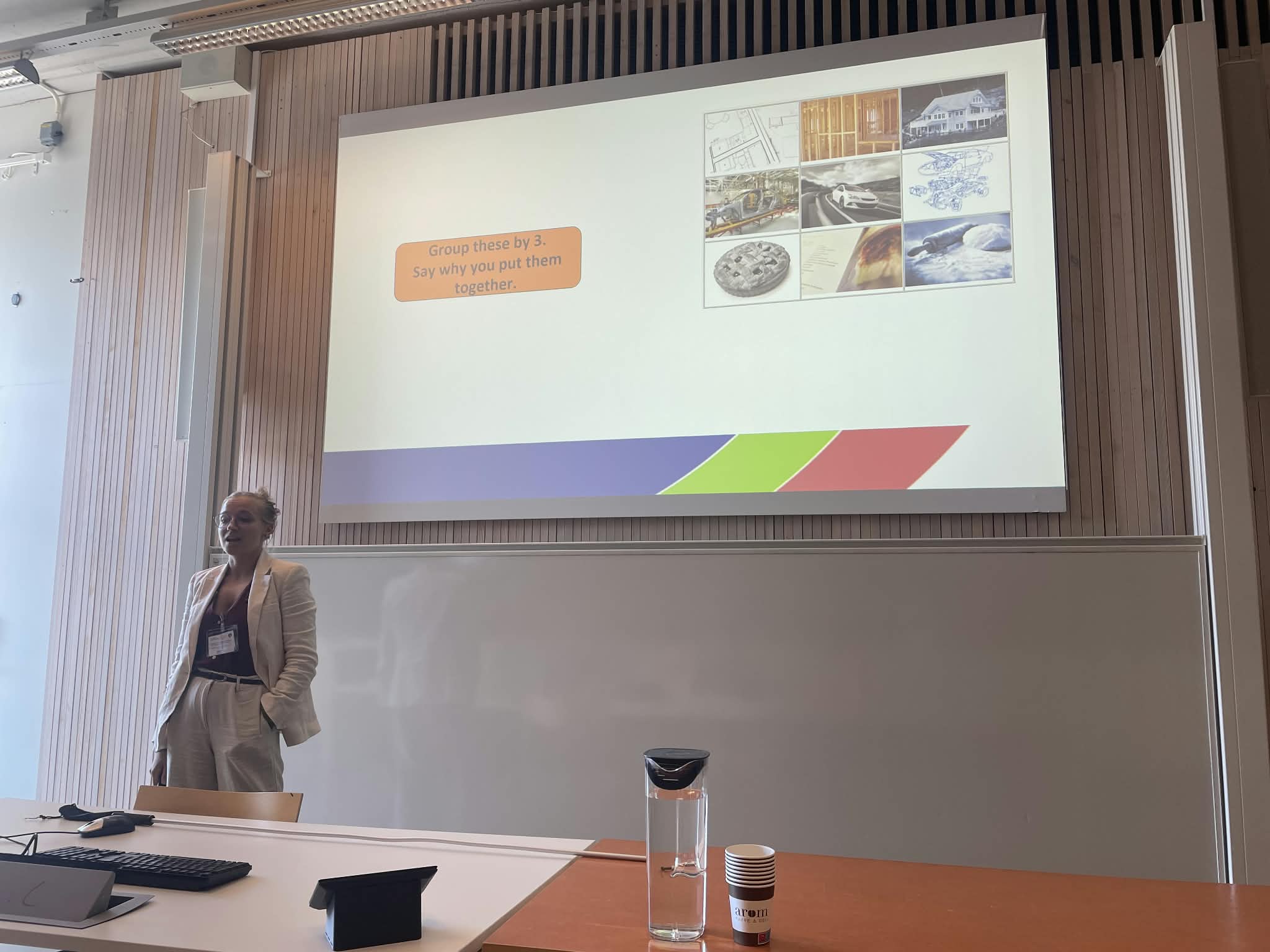
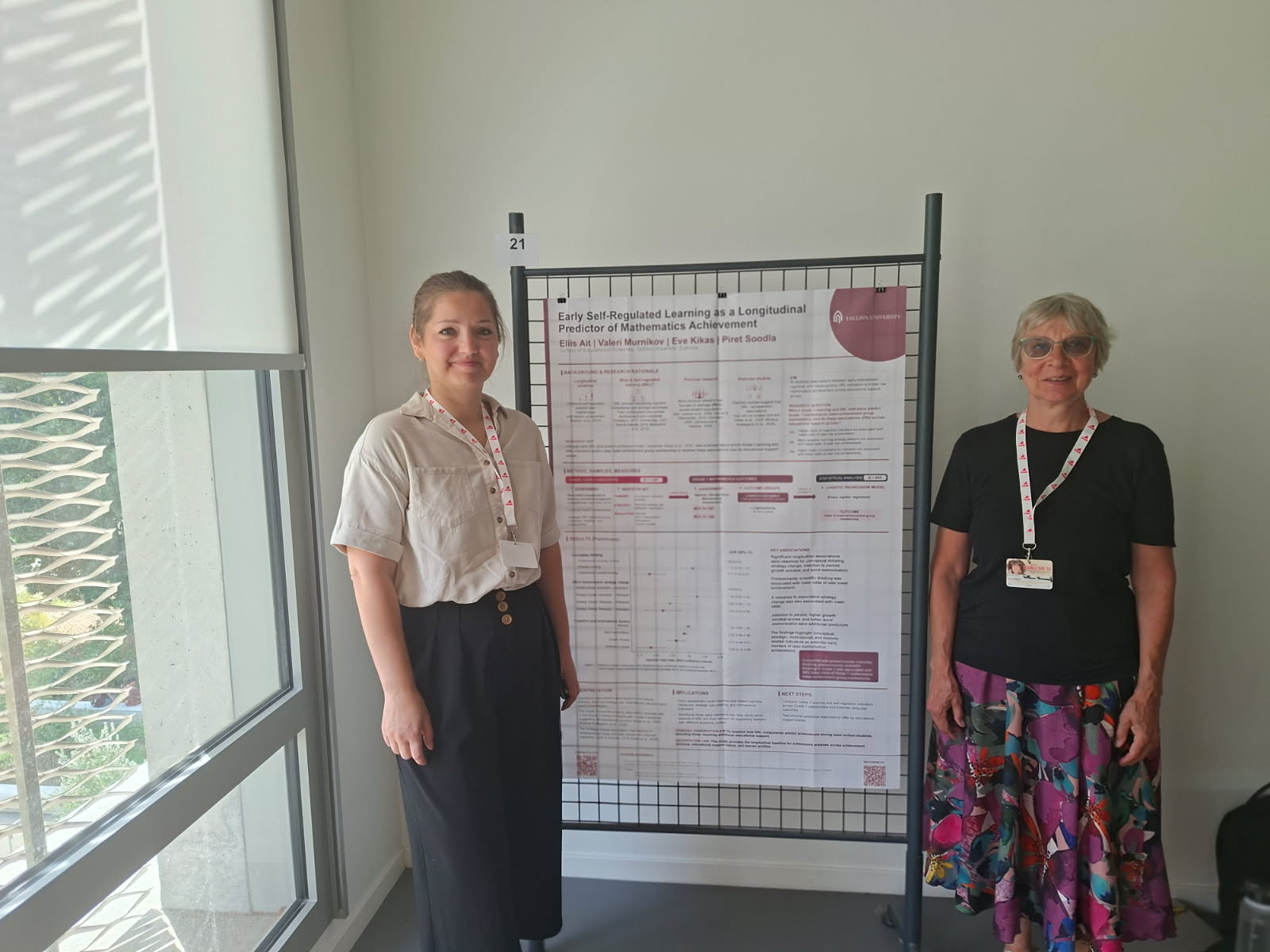
Eliis Ait and Eve Kikas attended the international EARLI SIG 16 conference “Metacognition and Self-Regulated Learning”, held in Clermont-Ferrand, France, from 25 to 28 August 2026, as well as the summer school preceding the conference. The event brought together researchers, academics and doctoral students specialising in metacognition, self-regulated learning and learning support. Topics addressed at the conference included the assessment of self-regulated learning in school contexts, learning strategies and the application of metacognition in education.
Eliis and Eve presented a poster on the relationships between lower secondary school students’ self-regulated learning skills and their subsequent academic achievement. Eliis’s participation in the summer school and conference was supported by a Kristjan Jaak mobility scholarship.
Conference on Assessment in the Netherlands
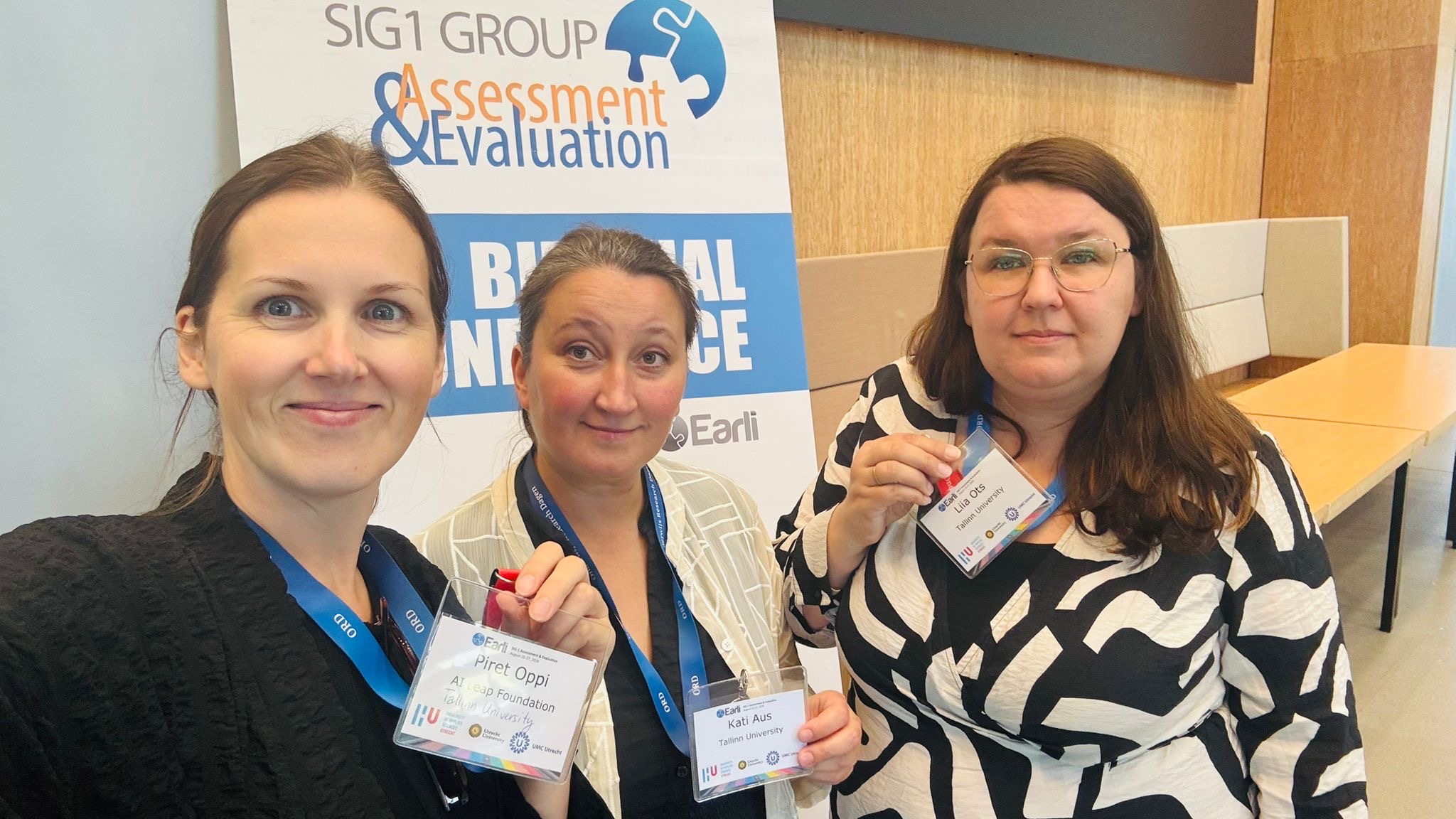
Liia Ots, Kati Aus and Piret Oppi attended the EARLI SIG 1 Conference in Utrecht from 24 to 27 August. The conference focused on current research in the field of assessment. HPK presented a poster examining teachers’ conceptions of assessment and teaching.
Early Childhood Education Conference on Madeira
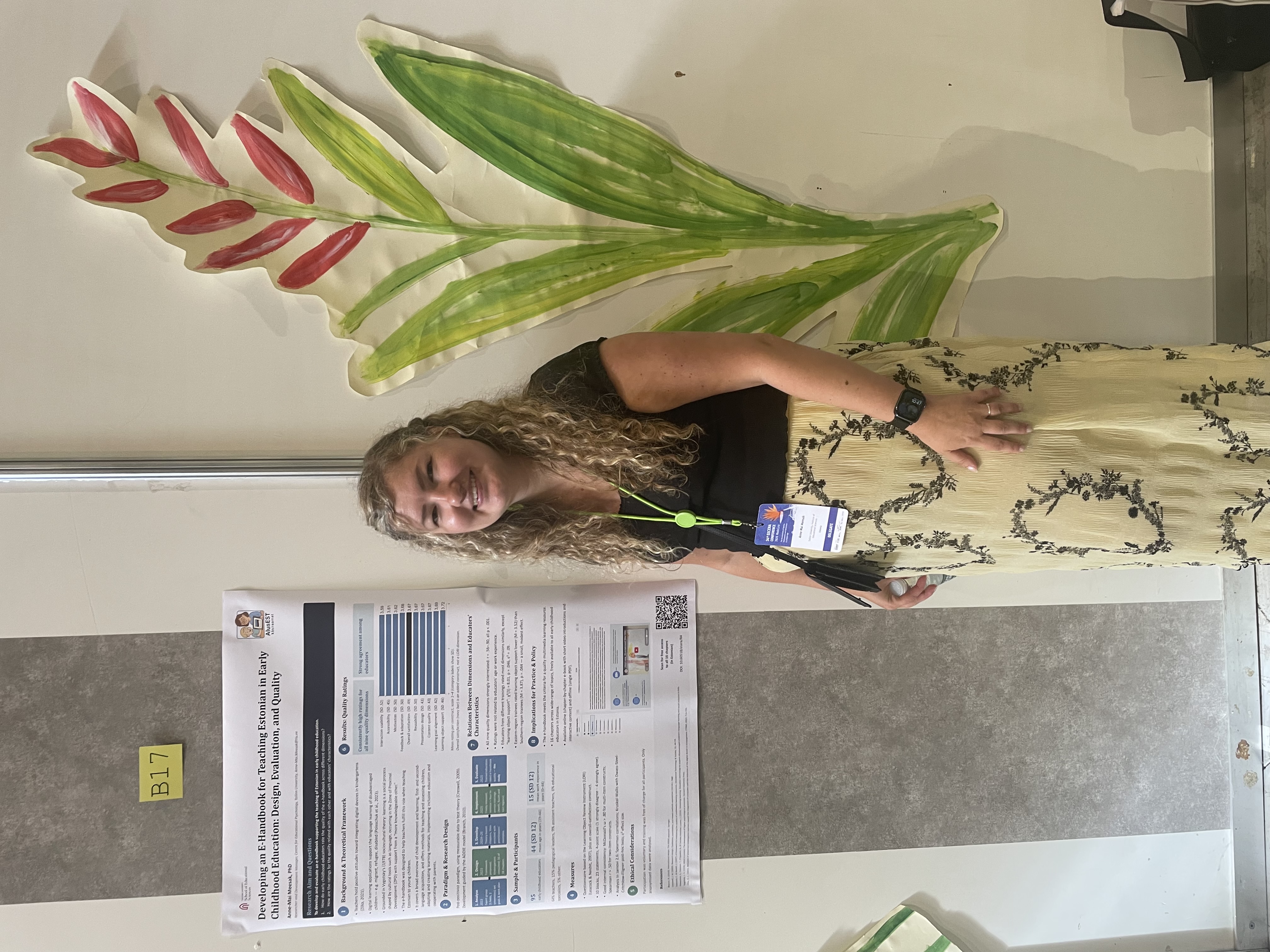
Anne-Mai Meesak attended the EECERA Conference, held on the Portuguese island of Madeira from 25 to 28 August. The conference brought together early childhood education experts and practitioners from numerous countries. In her poster presentation, Anne-Mai introduced the development process of AlusEST, a digital handbook designed to support Estonian language learning in early childhood education. The AlusEST handbook is available free of charge on the E-Koolikott platform.
Alongside the conference, Anne-Mai also had the opportunity to visit Funchal’s beautiful old town and botanical gardens.
Two Research Articles on the Role of Self-Regulated Learning Published
Two articles have been published in the European Journal of Education special issue Self-Regulated Learning in K–12 School Contexts. The articles were produced within the framework of two projects: “Developing Concepts for the General Sections of Future Curricula and Advancing the Assessment of General Competences” (TRU24160) and “Hybrid Regulation of Learning through an Open Learner Model: Supporting Students’ Meaningful Learning” (PRG2215). Both articles examine the role of self-regulated learning in academic achievement, exploring how motivational, cognitive and metacognitive components support students’ academic success at different stages of education.
The article by Kikas et al. presents a conceptual framework for assessing learning competence and explains the rationale for selecting the constructs included in the assessment. The study examines whether and how indicators of self-regulated learning assessed in Grade 2 predict students’ academic achievement in Grade 7. The findings indicate that cognitive components of self-regulated learning—particularly attention—are the strongest long-term predictors. Overall, these components are more strongly associated with achievement in Estonian language than in mathematics. Read the article here: https://doi.org/10.1111/ejed.70786
The article by Malleus et al. focuses on lower secondary school students’ achievement in mathematics. Using Bayesian networks, the study identifies the components of self-regulated learning that predict students’ membership in high- and low-achievement groups based on their factual/procedural and conceptual mathematical knowledge. Cognitive skills—particularly attention, scientific reasoning and the ability to identify relevant information in a text—again emerged as the most important predictors. Self-efficacy was the most consistent motivational predictor across all domains of mathematical competence.
The study also identified domain-specific predictors: reading comprehension and working memory were associated with factual/procedural knowledge, while rapid and frequent help-seeking during task completion predicted low levels of conceptual knowledge. Read the article here: https://doi.org/10.1111/ejed.70733
Overall, both studies emphasise the central role of the cognitive components of self-regulated learning—particularly attention—in the development of academic achievement. At the same time, they highlight the complementary contribution of motivational factors and the need to consider both long-term developmental processes and subject-specific patterns of achievement.
HPK Junior Researchers Attend the EARLI JURE 2026 Conference
EARLI early-career researchers gathered in Tartu for the JURE 2026 Conference. Heli Aomets gave a presentation entitled “Teachers’ and Their Students’ Systems Thinking: Preliminary Results”, in which she presented findings from her project “Developing Students’ Scientific and Systems Thinking in Lower and Upper Secondary Science Lessons and Enhancing Teachers’ Related Teaching and Assessment Competences”. The findings explored how teachers’ understanding of emergence relates to students’ cognitive flexibility and their understanding of emergence.
Marilyn Jurman presented “Developing a Context-Sensitive Framework for Assessing Social-Emotional Competence”, prepared in collaboration with Elina Malleus-Kotšegarov and Eve Kikas. Both presentations generated lively discussion.
Further information about the conference: https://www.earli.org/events/jure2026
.jpg)
HPK Was Also Represented at a Conference in South Korea
The 28th Conference of the International Society for the Study of Behavioural Development (ISSBD) was held in South Korea in June, with presentations by Elina Malleus-Kotšegarov and Kaja Mädamürk. ISSBD is an international scientific society that promotes research on human development across the lifespan.
The conference focused on understanding and supporting human development in a rapidly changing world, with particular attention to well-being, equality, the impact of digital technologies and cultural diversity. Elina Malleus-Kotšegarov presented research on social-emotional competence, while Kaja Mädamürk spoke about academic and occupational burnout.
Further information about the conference: https://2026biennial.issbd.org/
.jpg)
HPK Researchers Attend Educational Psychology Conference in Helsinki
The 49th Conference of the International Group for the Psychology of Mathematics Education (PME) was held in Helsinki from 27 July to 1 August. PME is an international organisation specialising in the psychology of mathematics education.
Kaja Mädamürk gave a presentation entitled “Mathematics Teachers’ Emotional Support Related to Students’ Motivation, Mindset, Anxiety, and Skills”. She presented findings from a large-scale study conducted in Estonia, demonstrating the importance of mathematics teachers’ emotional support for the development of students’ motivation and skills.
Triinu Kilp-Kabel presented a poster entitled “The Situated Nature of Math Motivation: Differences Between Topic-Specific and General Math Motivation”, which highlighted the differences between students’ general motivation in mathematics and their motivation related to a specific mathematical topic.
HPK Researchers and Doctoral Students at International Conferences
The 19th EARLI SIG 8 International Conference on Motivation and Emotion was held in Lisbon from 22 to 24 June. HPK was represented by its director, Eve Kikas, researcher Ita Puusepp, and doctoral students Eliis Ait and Marilyn Jurman.
Eliis and Marilyn began their visit at a summer school in Sintra on 20 June, where leading scholars in the field provided an excellent introduction to the conference themes. They also formed new connections with fellow doctoral students—both for the conference and for the future.
Ita organised a symposium entitled “Achievement Goal Orientations: Patterns, Antecedents, and Outcomes Across Educational Levels”, at which Eve also gave a presentation. Eliis and Marilyn presented posters at the conference.
The conference was of a very high academic standard, with keynote speakers including Eleftheria Gonida, Tim Urdan, Fani Lauermann and Kristina Stockinger. Participants also had the opportunity to learn about fascinating research conducted not only in schools but also in prisons and wider society. Throughout the conference, speakers emphasised the importance of examining phenomena in their full complexity.
One of the highlights was a panel discussion with Jacqueline Eccles and Allan Wigfield, the originators of situated expectancy-value theory, moderated by Fani Lauermann. The discussion was inspired by their new book, in which they describe the process of developing the theory through their personal experiences.
Against this rich academic backdrop, the hospitality and helpfulness of our Portuguese hosts also deserve special recognition.
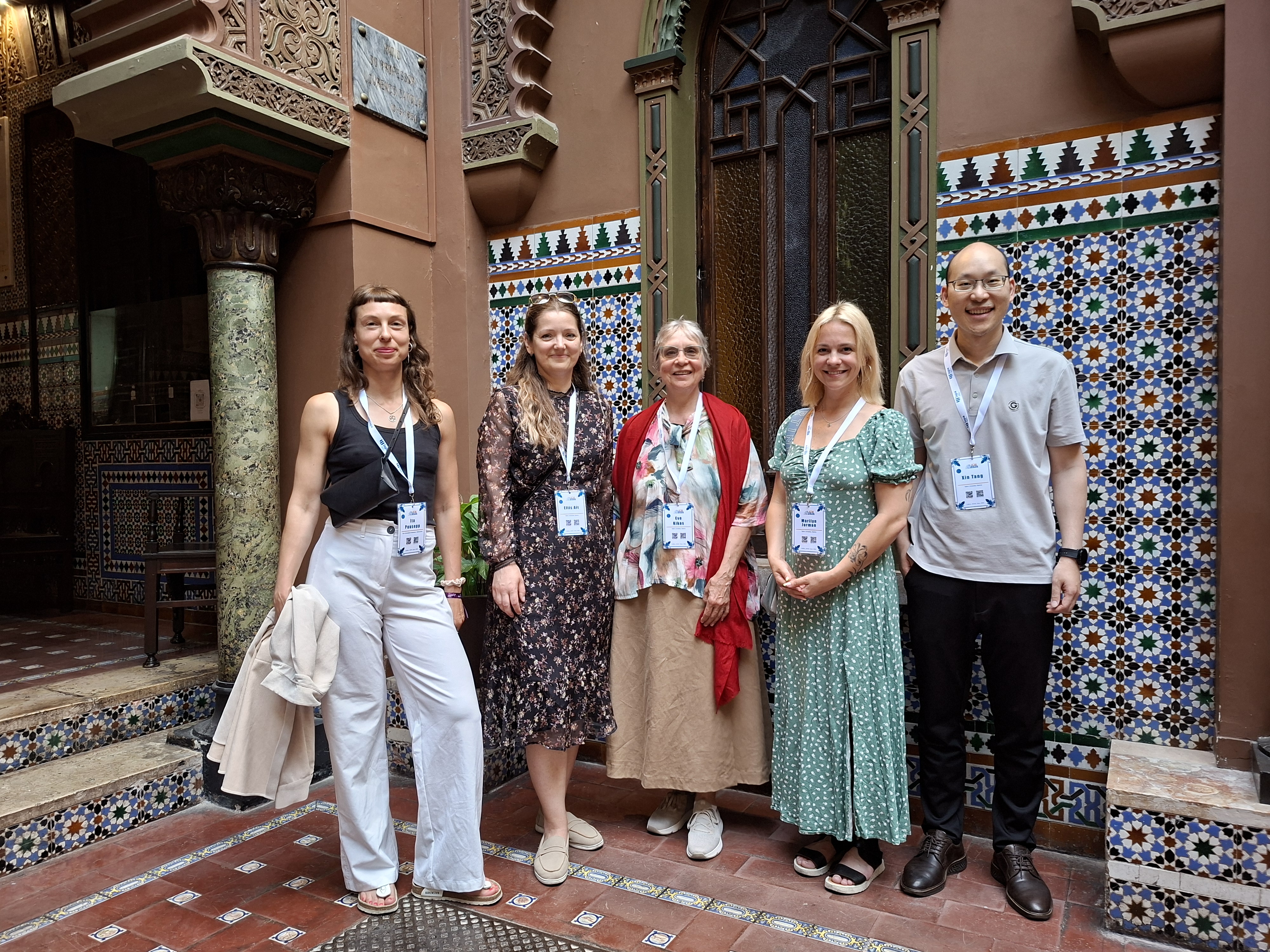
Pictured: Ita, Eliis, Eve, Marilyn and Xin Tang.
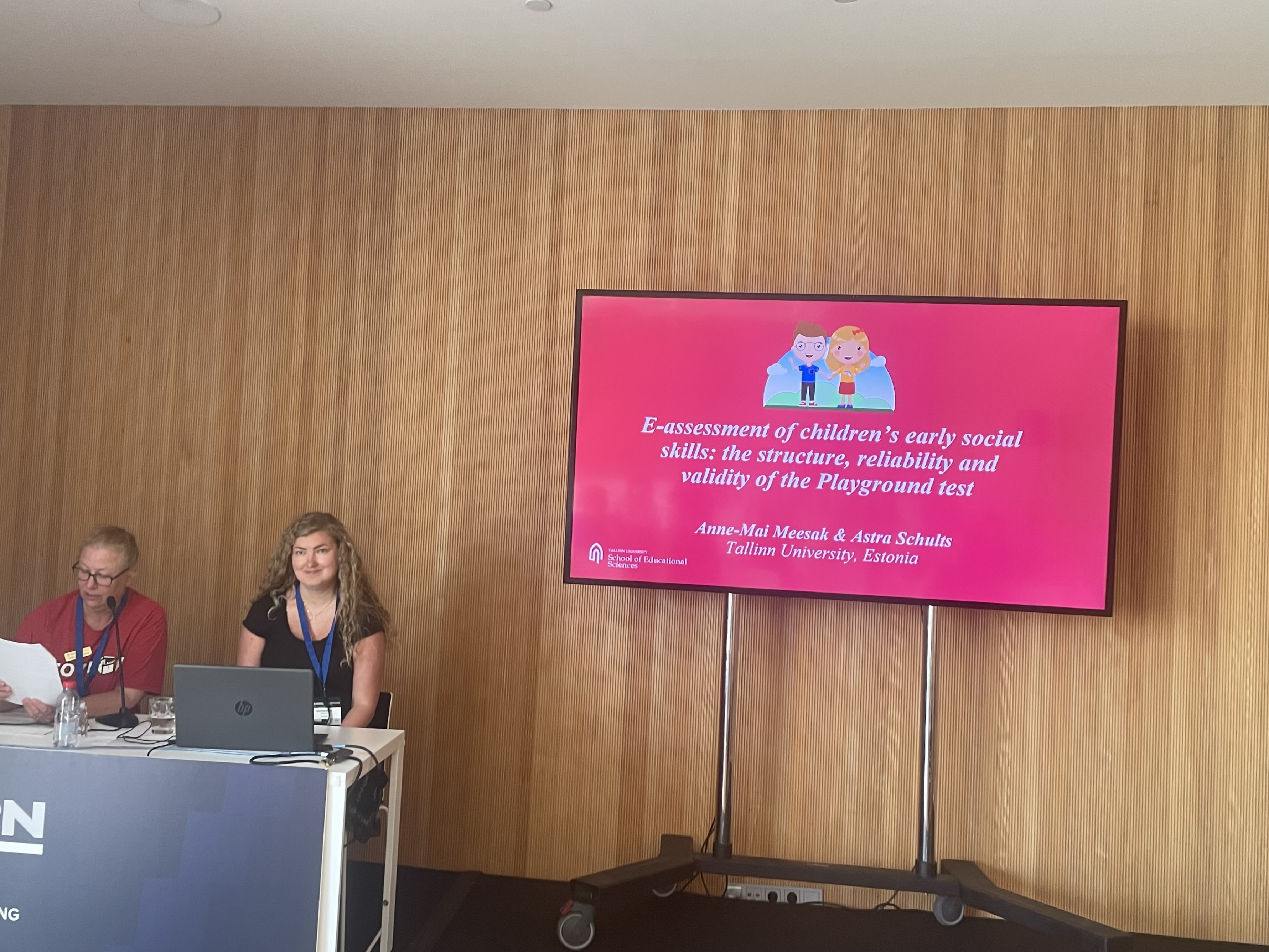
Also in late June, the 18th International Conference on Education and New Learning Technologies (EDULEARN) was held from 29 June to 2 July. More than 800 experts from around the world gathered in Palma de Mallorca for the event.
HPK researcher Anne-Mai Meesak gave a presentation entitled “E-Assessment of Children’s Early Social Skills: The Structure, Reliability and Validity of the Playground Test”.
Both keynote presentations focused on artificial intelligence. Professor Roger Azevedo discussed how generative artificial intelligence (GenAI) is reshaping the study and support of self-regulated learning (SRL) in technology-rich learning environments. Professor B. Mairéad Pratschke explored how the transition from chatbots to AI agents presents a pedagogical challenge in which the agency of teachers must not be overlooked.
Pictured: Anne-Mai with the session chair, Professor Skwarchuk.
HPK Researcher Attends the President’s Reception
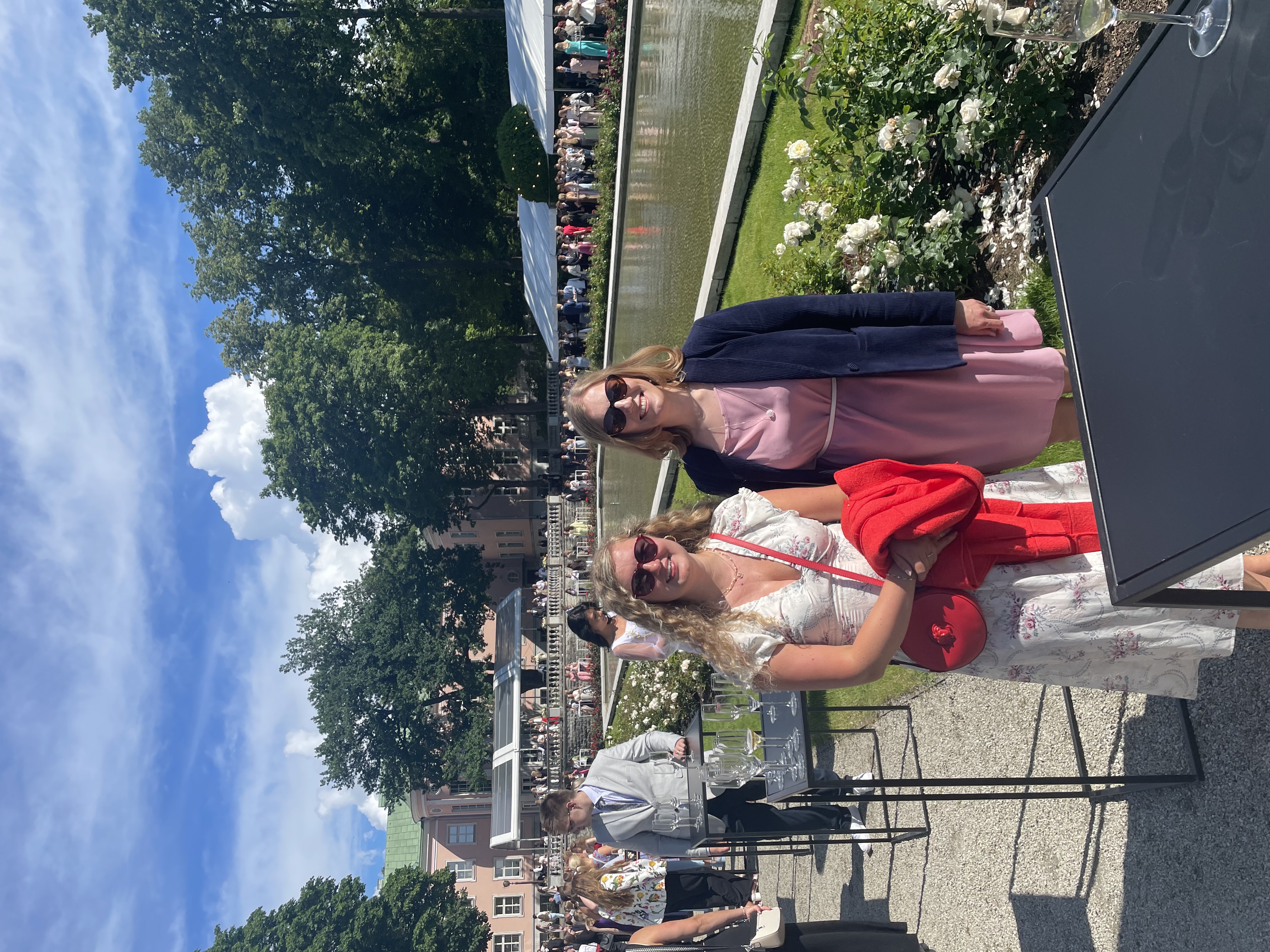
HPK researcher Anne-Mai Meesak attended a reception for outstanding graduates hosted by President Alar Karis and Minister of Education and Research Kristina Kallas in the Presidential Palace Rose Garden. Approximately one thousand graduates from upper secondary schools, vocational schools and universities attended the event.
Pictured: Anne-Mai with Natalja Kask, a graduate of the bachelor’s programme in early childhood education.
HPK Researchers at the University of Helsinki
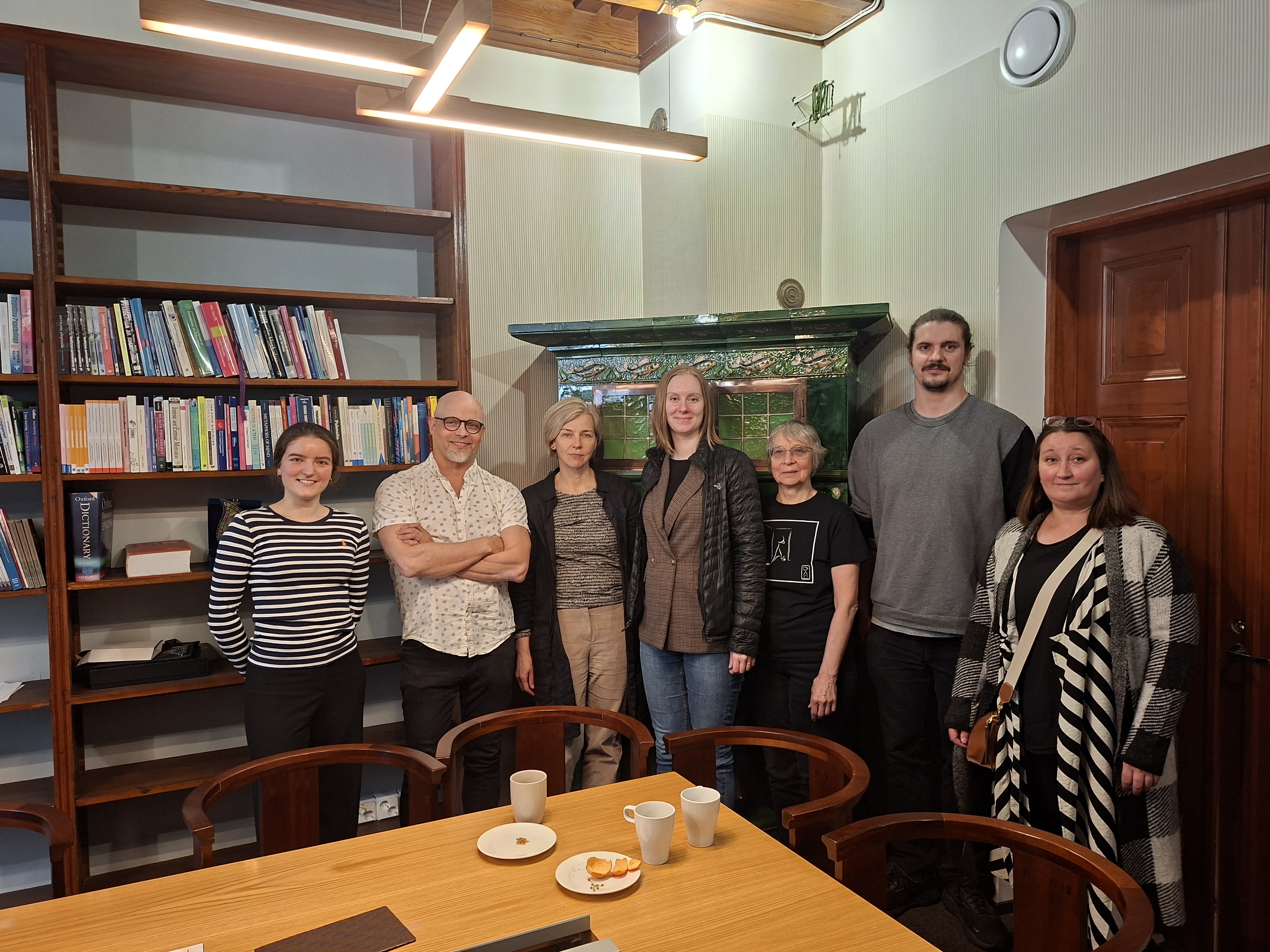
On 18 May, at the invitation of Katja Upadyaya, Eve Kikas and Kaja Mädamürk visited the Faculty of Educational Sciences at the University of Helsinki. They presented a longitudinal study of students’ development, the conceptualisation of learning competence and related research.
On 20 May, Eve Kikas, Piret Soodla, Kati Aus and Triinu Kilp-Kabel participated in a joint seminar with Risto Hotulainen’s research group at the University of Helsinki’s Centre for Educational Assessment (CEA). The participants discussed feedback and the assessment of motivation and were introduced to new assessment tools developed by researchers at the University of Helsinki.
Seminar of the Social, Emotional and Learning Competences Research Group
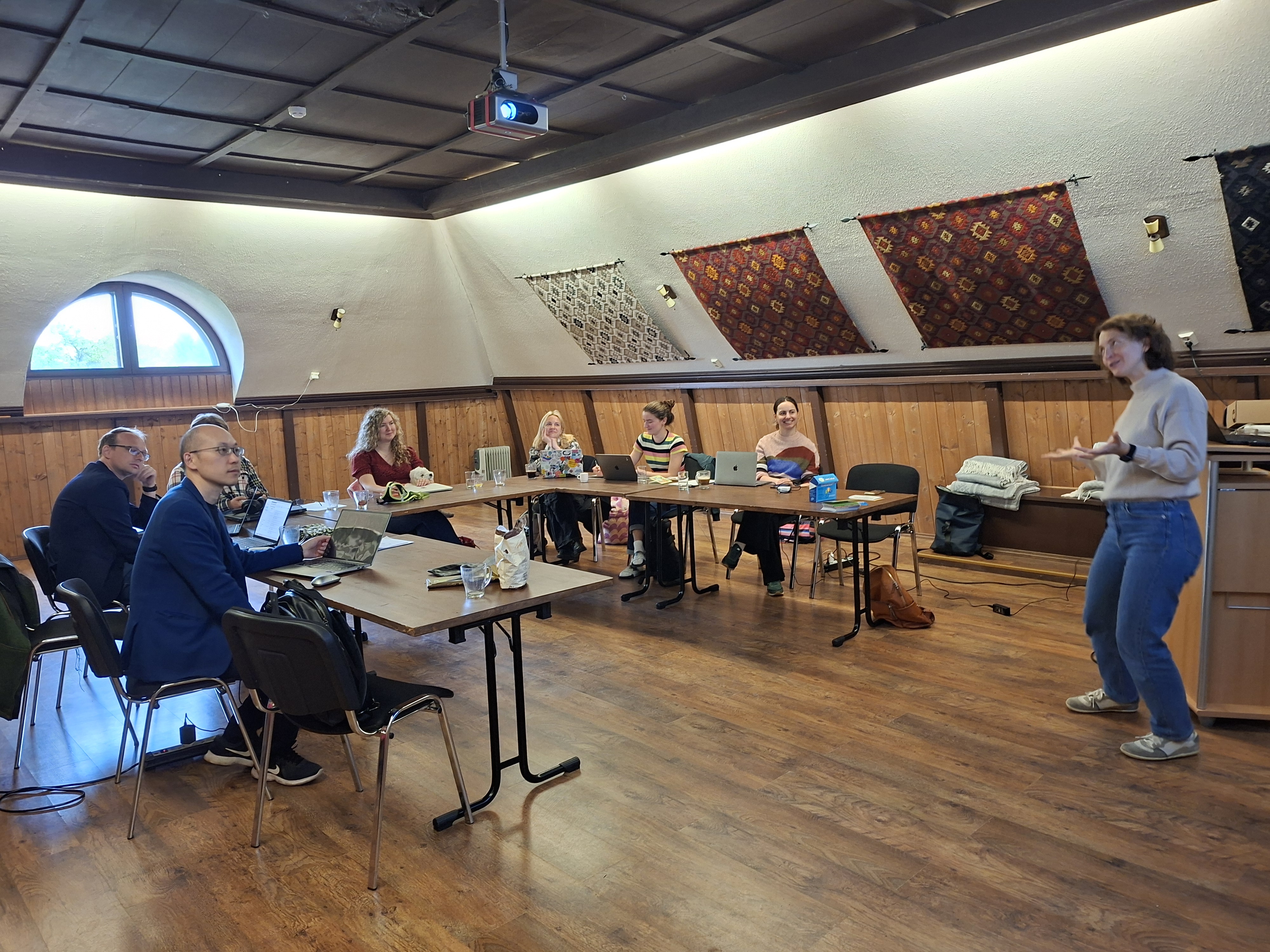
The research group “Social, Emotional, and Learning Competences in Education” (SELC EDU) held a seminar at Ruunawere Post Manor on 21–22 May.
On the first day, the group went hiking in the forest. This was followed by an intensive discussion on the conceptualisation and assessment of social, emotional and learning competences. On the second day, together with representatives of the NGO Peaasjad, the group focused on IVAs (Iga Väike Asi, or “Every Little Thing”), developed by Professor Stephanie Jones of Harvard University. The group also discussed plans for future funding applications.
Participants included Xin Tang, Elina Malleus-Kotšegarov, Eve Kikas, Valeri Murnikov, Anne-Mai Meesak, Mikk Granström, Marilyn Jurman, Lisa Loifenfeld and Kristiina Treial from Tallinn University, as well as Karin Lillemaa from the NGO Peaasjad.
Seminar of the General Competences Research Group
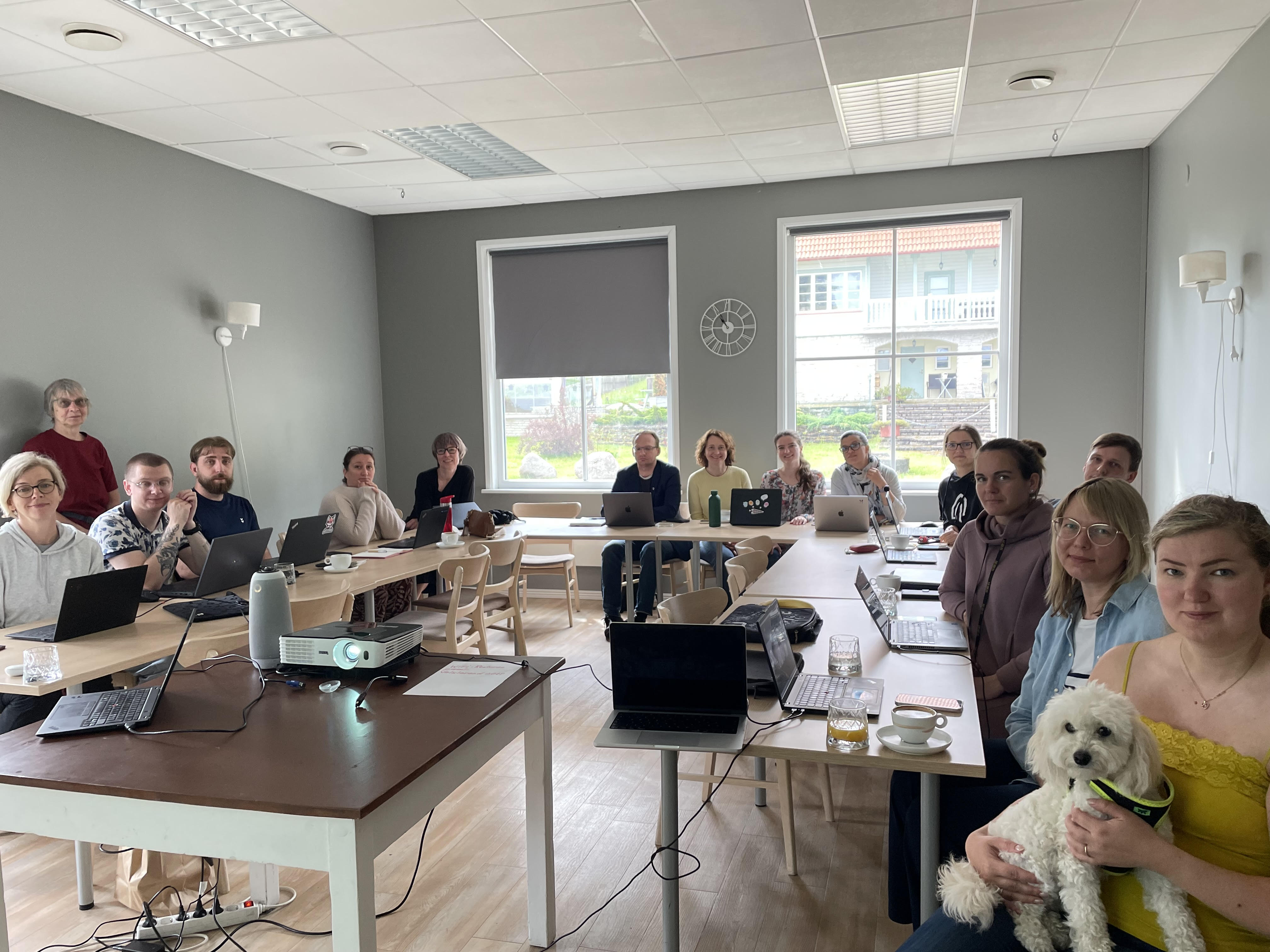
A three-day seminar was held in Valkla from 9 to 11 June, focusing on the activities of the General Competences Research Group and the project aimed at advancing the assessment of general competences.
The first day centred on the aims and activities of the research group. Carl Erik Pehme and Valeri Murnikov presented the findings of the VIIMU project on general competences in upper secondary education. Anne-Mai Meesak and Mikk Granström provided an overview of a project funded through the KVARA measure, which focuses on supporting and assessing learning and self-management competences in higher education.
During the following two days, participants reviewed the work completed within the project to advance the assessment of general competences in basic education and discussed future plans. The findings were presented by Eve Kikas, Piret Soodla, Maris Juhkam, Elina Malleus-Kotšegarov and Pirko Tõugu. Kati Aus, Joosep Norma, Lisa Loifenfeld, Kristiina Treial and Kaja Mädamürk also participated in the seminar.
The project is funded by the Estonian Ministry of Education and Research (TRU24160).
Kati Aus Participates in an AI Leap Panel Discussion
Kati Aus took part in a panel discussion reviewing the first year of AI Leap (TI-Hüpe), an educational programme initiated by the President of the Republic of Estonia, Alar Karis. The other panellists were Minister of Education and Research Kristina Kallas, Siret Siim, an educational technologist at Tallinn Secondary School of Science, and Kalle Lõuna, a history teacher at Läänemaa Upper Secondary School.
The participants unanimously agreed that AI Leap represents more than a technological revolution: above all, it is a shift affecting society and education as a whole. Addressing this shift requires informed discussion of educational psychology. We must develop an increasingly sophisticated understanding of learning and teaching processes to prevent learners from accumulating cognitive debt.
Read more about the first year of AI Leap here: https://tihupe.ee/ti-huppe-esimene-aasta-suunas-koolid-opetamist-ja-oppimist-umber-motestama/
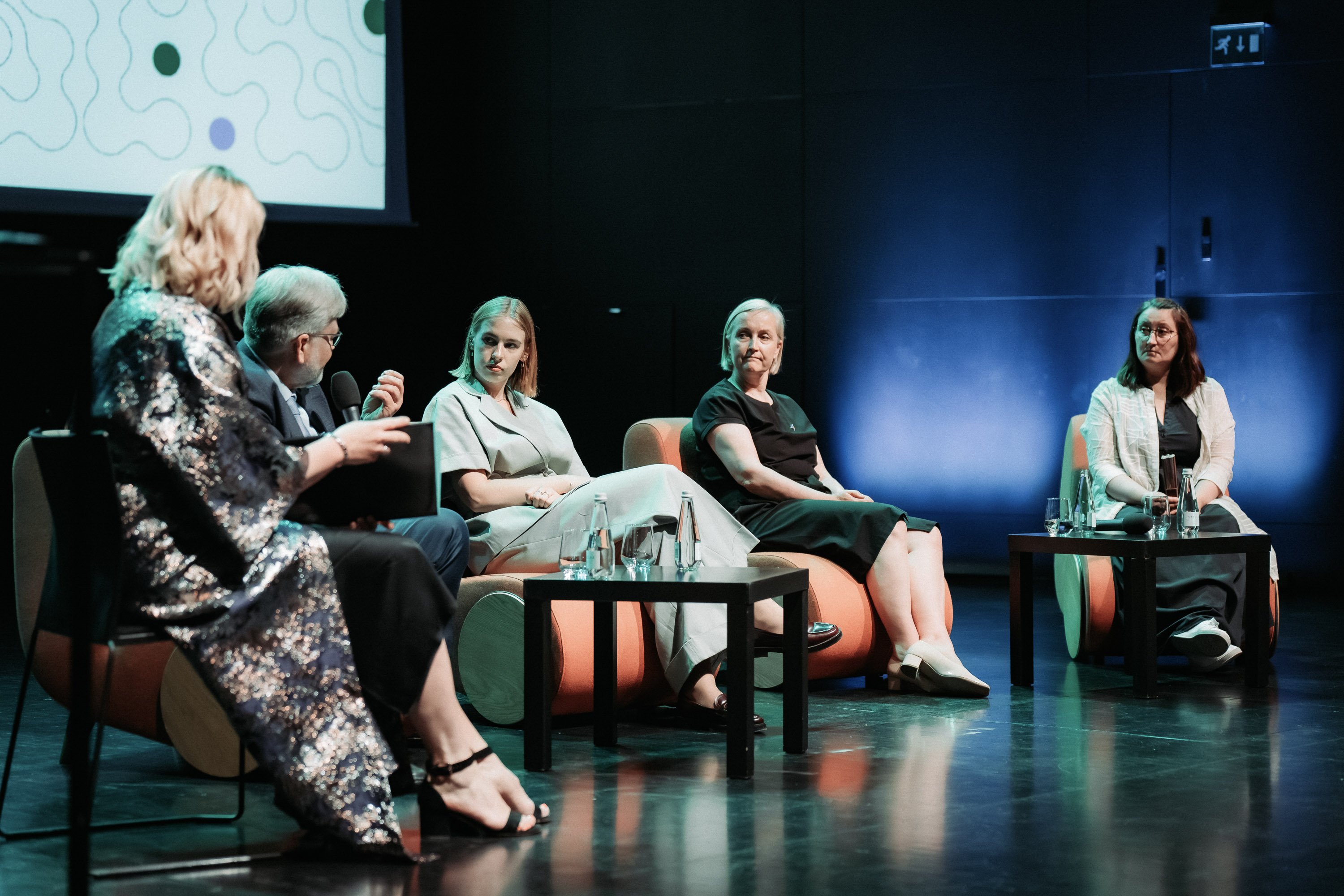
Annual National Learning Skills Challenge Held on 9 May
Every year, Tallinn University organises a nationwide Learning Skills Challenge for Grade 5 students from across Estonia. By completing a complex task, students have the opportunity to test their teamwork skills in a novel learning situation.
The 30th national Learning Skills Challenge was held on 9 May at Rakvere Vabaduse School. Our educational psychologists Kati Aus and Elina Malleus-Kotšegarov are among the members of the organising team. They help to ensure that the complex task offers learners an engaging opportunity to analyse and apply a range of learning skills, while also providing them with new and valuable insights into the learning process each year.
Further information and a photo gallery are available here: https://www.tlu.ee/hti/opioskuste-talgud
New Open-Access Article on Teachers Published
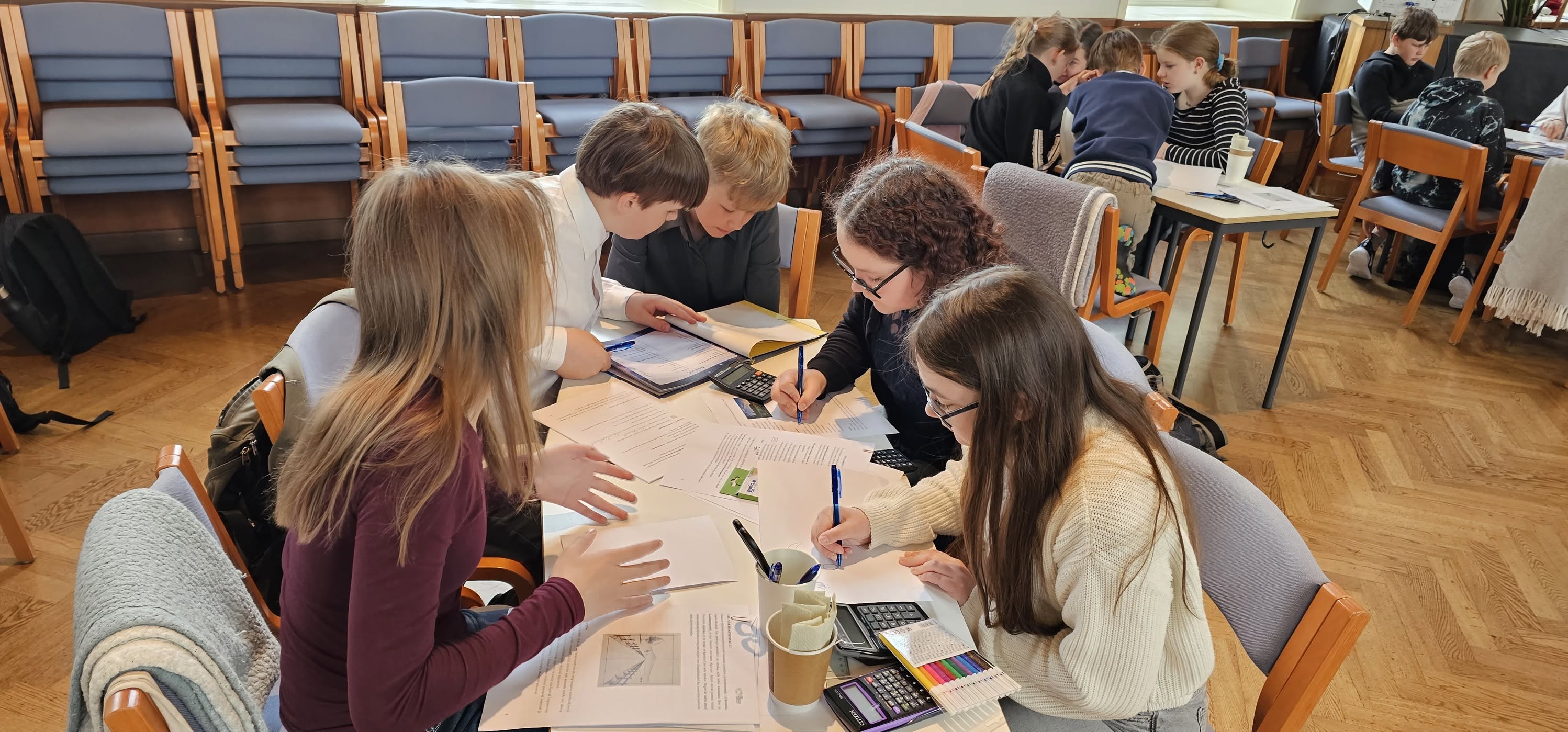
A study by Kristi Jakobson, Piret Soodla and colleagues found that teachers’ knowledge of reading instruction was generally limited. Special education teachers demonstrated greater knowledge than primary school and subject teachers. The findings also revealed that teachers’ self-assessments did not always correspond to their actual knowledge: some may have overestimated their abilities, while others were highly critical of their own competence.
The article is available here: https://doi.org/10.1007/s11145-025-10748-3
Eve Kikas and Kati Aus Appear on “Expert on Air”
Eve Kikas and Kati Aus appeared on the programme Expert on Air (Ekspert eetris) to discuss Estonia’s proposed assessment reform, which aims to introduce a gradual transition to narrative assessment in the primary grades.
Eve and Kati explained how assessment differs from the mere awarding of grades and why the five-point grading scale may not support students’ individual development, motivation to learn or confidence in their own abilities. They discussed the educational psychology underpinning the value of narrative feedback, the experiences of Estonian schools to date and teachers’ readiness to adopt new approaches to assessment.
The discussion also addressed how to involve parents and increase their confidence as traditional grades are replaced by a more meaningful dialogue about learning, development and support. The programme became one of the most-listened-to episodes of its seventh season.
The episode is available to watch on YouTube: https://www.youtube.com/watch?v=TqTcphtoXJU&t=1s
Anne-Mai Meesak Defends Her Doctoral Dissertation on 3 June
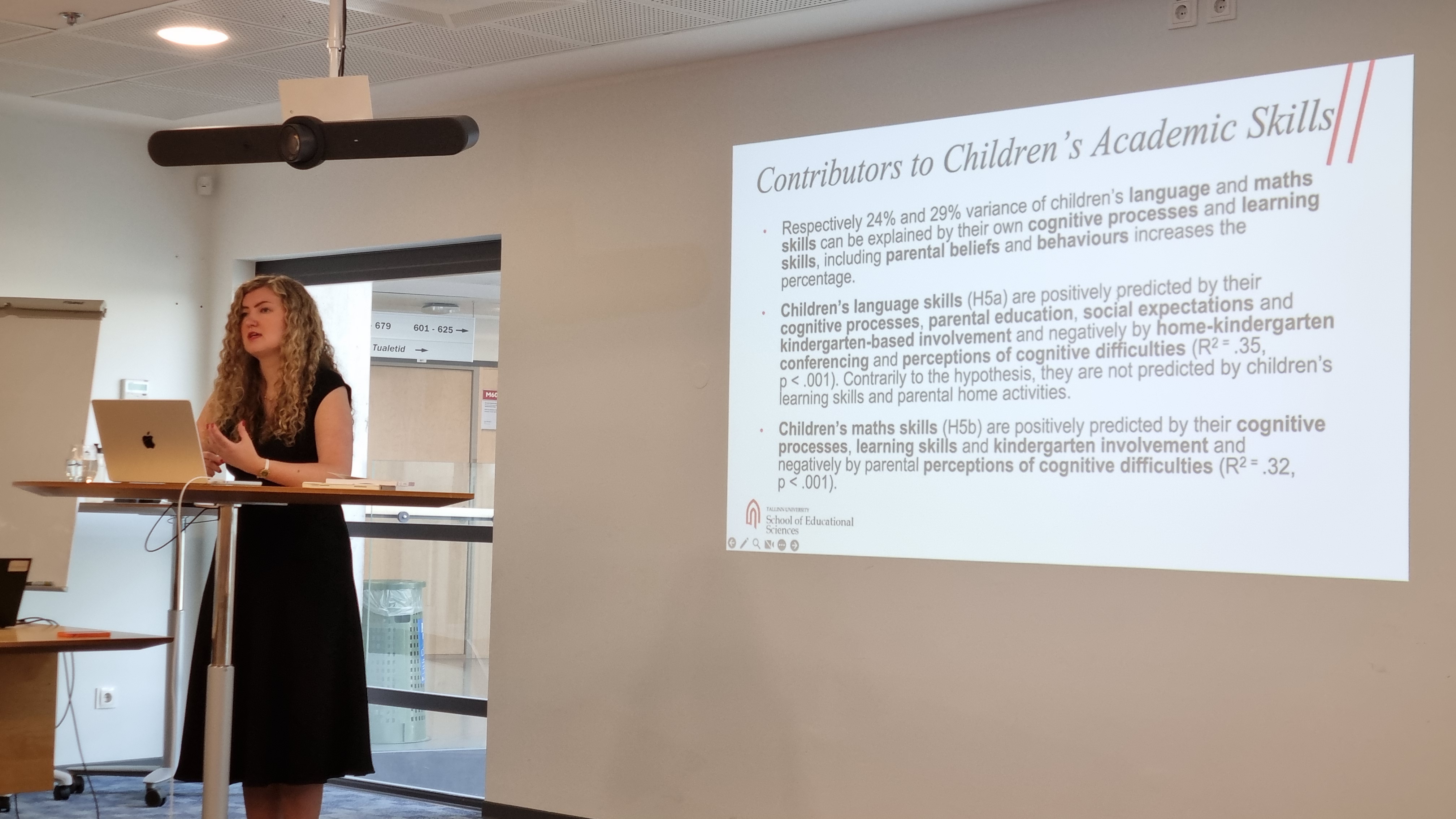
On 3 June, Anne-Mai Meesak defended her doctoral dissertation, The Underlying Relations Between Children’s Early Academic Skills, Parental Beliefs, and Behaviours. The Doctoral Council of Educational Sciences awarded the dissertation laudatur in recognition of its outstanding quality. The dissertation was supervised by Eve Kikas, Dimitri Löchner and Tiia Õun.
As part of the study, children’s cognitive processes and their learning, language and mathematics skills were assessed individually on a tablet using the LAHE digital child development assessment tool. At the same time, parents completed a questionnaire about their beliefs and expectations, cooperation with their child’s preschool and activities undertaken at home.
The findings showed that although children’s early skills are interrelated, they can also be distinguished and assessed separately. Children’s cognitive processes and learning skills significantly predicted their academic skills. Although girls performed somewhat better in language skills and Russian-speaking children achieved slightly higher results in learning skills, the skills of five-year-old children in Estonia were broadly similar across groups.
The study also found that parents who perceived their children as experiencing cognitive difficulties engaged least frequently in shared activities at home that supported their children’s skills. However, the frequency of home-based activities did not predict children’s academic skills; cooperation with the preschool proved more important.
It is therefore essential to help parents recognise their children’s strengths and areas in need of support, enabling them to better support early learning, and to actively involve parents in preschool activities.
Winners of Tallinn University’s Student Research Competition Recognised on 4 May
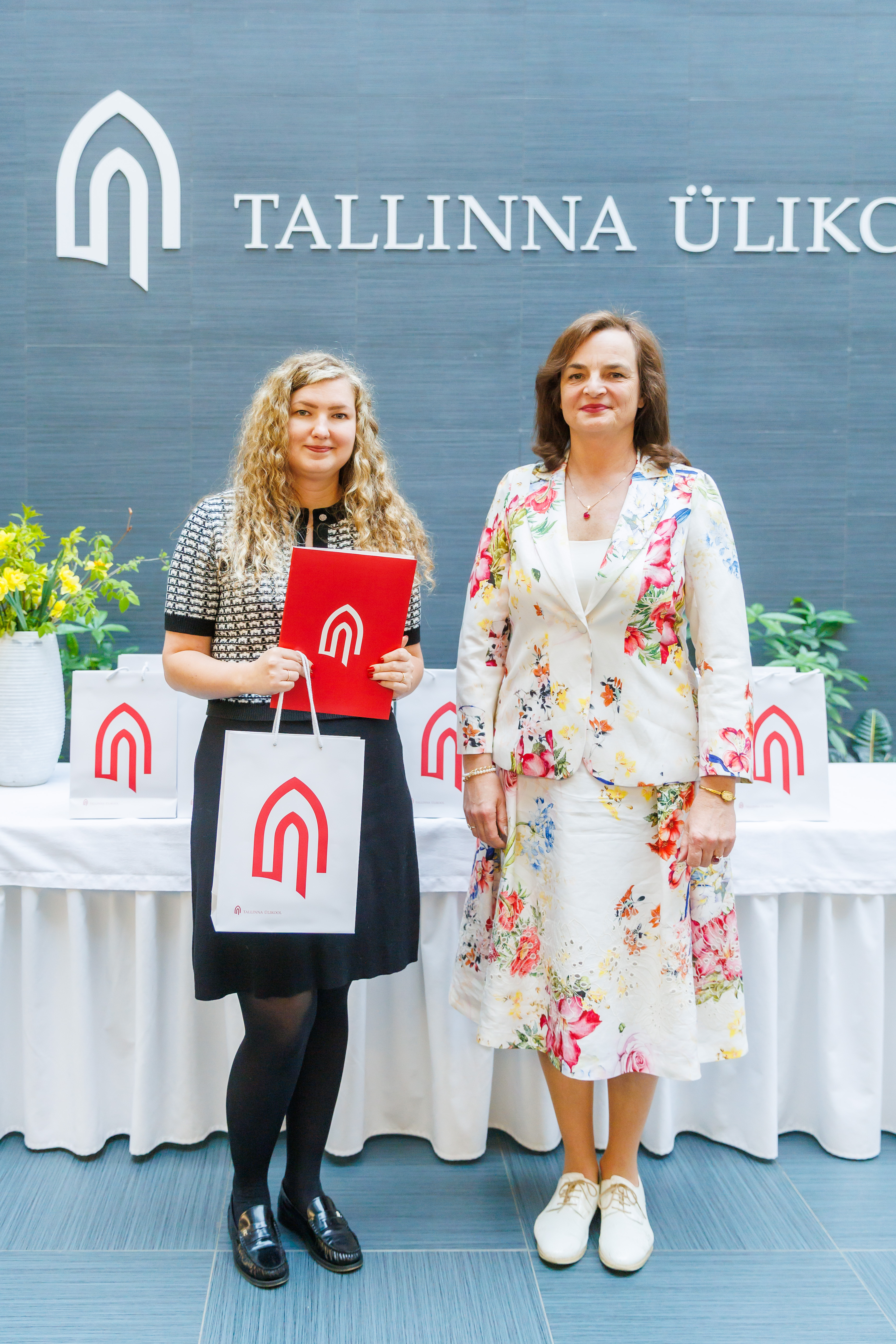
The best submissions to Tallinn University’s Student Research Competition were recognised at a reception hosted by Vice-Rector for Research Katrin Niglas.
Among the HPK members receiving an award was Anne-Mai Meesak, the Centre’s Development Manager. Her article, co-authored with her supervisors and entitled “Unlocking Early Academic Skills: Children’s Cognitive Processes, Learning Skills, and Parental Beliefs and Behaviors Predicting Children’s Language and Math Skills”, received third prize in the educational innovation category for research publications.
HPK Represented at a Conference in New Zealand
Heli Aomets presented a poster entitled “Relationships Between Understanding System Properties and Conceptual Development” at the Capital City Complex Systems Symposium, held in Wellington, New Zealand, on 24–25 February.
The speakers included both local researchers and several prominent scholars in the field, such as Brian Castellani, Diane Finegood and Carl Bergstrom, who explored complexity from a broad range of perspectives. Several local studies had been conducted in collaboration with Indigenous Māori communities and examined their complex understanding of the natural environment and their relationship with it.
In a practice unusual for an academic conference, yet exceptional as a cultural experience, the event opened with a welcoming ceremony led by a tribal leader from the wider Wellington region. Afterwards, all participants joined together in singing a song in the Māori language.
The presentations and posters addressed complex systems in fields ranging from transport, physics, chemistry and biology to anthropology, politics and even art. Heli’s poster was the only contribution focusing on psychology, and for most of those interested in her work, considering the relationship between the human mind and complex systems offered an entirely new perspective.
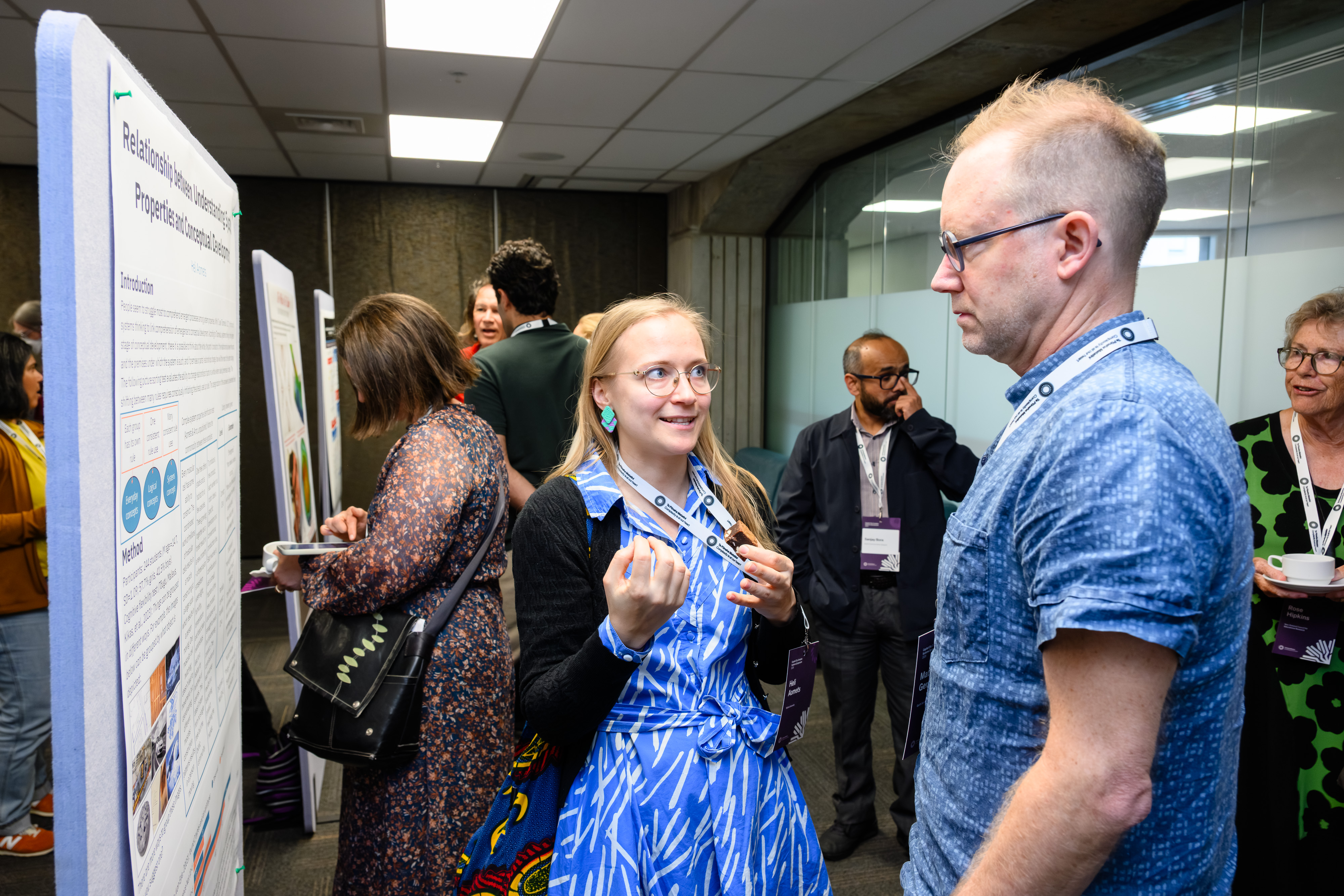
New Open-Access Article Published
An increasing number of children born prematurely are entering education. Many experience developmental immaturity, particularly difficulties with executive functioning, which may contribute to cognitive, emotional, behavioural and motor difficulties, as well as academic underachievement.
Teachers’ knowledge of the potential long-term effects of developmental immaturity associated with premature birth is a key factor in improving developmental outcomes for children at risk. Õnne Uus’s study identified differences between more and less experienced teachers in their knowledge of prematurity. It also found variation in the methods used by preschool teachers when working with children born prematurely. Teachers expressed a desire to be better prepared to address challenges related to developmental immaturity resulting from premature birth.
Read the article here: https://www.frontiersin.org/journals/education/articles/10.3389/feduc.2026.1758593/full
New SELC EDU Research Group
On 24 April, researchers gathered at Tallinn University to establish a new research group dedicated to studying and developing social, emotional and learning competences. The group was named “Social, Emotional, and Learning Competences in Education”, or SELC EDU for short.
The research group is led by Professor of Educational Psychology Xin Tang. Its members are Elina Malleus-Kotšegarov, Eve Kikas, Valeri Murnikov, Mikk Granström, Anne-Mai Meesak, Astra Schults, Karin Lillemaa, Marilyn Jurman, Kristiina Treial, Ita Puusepp, Kati Aus and Triin Ulla.
The group aims to conceptualise, investigate and apply social, emotional and learning competences within a changing educational environment.
.jpeg)
Three New Open-Access Research Articles Published!
Anne-Mai Meesak, Dimitri Löchner, Tiia Õun and Eve Kikas investigated the extent to which parents’ beliefs about their five-year-old children and their skills, as well as parents’ engagement with the preschool, predict the activities they undertake at home. The findings showed that higher parental academic expectations were associated with more frequent language, mathematics and social activities at home. Closer cooperation with the preschool also predicted more frequent mathematics and social activities. Perceiving fewer cognitive difficulties in their children was associated with more frequent language and mathematics activities. Parents were more likely to engage in social and language activities with girls. The study highlights the importance of cooperation between the home and preschool, as well as the need to recognise gender differences in parents’ home-based activities. Read the article here: https://doi.org/10.1080/02568543.2025.2604093
The article by Joosep Norma, Eve Eisenschmidt and Eve Kikas focuses on teachers’ motivation to implement what they learned in professional learning communities aimed at supporting students’ self-directed learning. The findings showed that teachers’ expectations of success, perceived value and perceived costs were associated with practices supporting self-directed learning. A novel aspect of the study was its focus on four distinct types of cost. Read the article here: https://doi.org/10.1016/j.tate.2026.105518
The systematic review by Liia Ots, Grete Arro, Kati Aus and Piret Oppi evaluates school-based interventions addressing adolescents’ problematic use of digital technology, with a particular focus on programmes delivered by school staff. The findings indicate that few effective interventions are available for school staff to implement independently. Schools need theory-based, scalable and long-term interventions to address the growing problem of excessive digital technology use among adolescents. Read the article here: https://doi.org/10.3389/feduc.2026.1747573
AlusEST Digital Handbook Supporting Estonian Language Learning Wins Tallinn University Award for Best Textbook
The AlusEST digital handbook, A Digital Handbook for Early Childhood Education Supporting Estonian Language Learning, was developed through collaboration between experts and practitioners from Tallinn University and the University of Tartu. It received the award for the best textbook for general or higher education in Tallinn University’s Outstanding Publication, Textbook and Creative Project Competition.
The handbook’s 16 chapters provide preschool teachers and support specialists with a comprehensive overview of children’s development and learning; the importance of assessing and studying children’s development; methods for learning and teaching Estonian as a second language; support for children with special educational needs; and approaches to valuing multilingualism and children’s home languages, among many other topics.
Eve Kikas and Anne-Mai Meesak contributed to the handbook as authors. Anne-Mai also served as its project manager and editor. The handbook is freely available to everyone as both an interactive online resource and a PDF on the E-Koolikott platform.
Associate Professor Maria Poulou from the University of Patras Visits HPK through Erasmus+
Associate Professor Maria Poulou from the University of Patras in Greece visited Tallinn University’s Centre for Educational Psychology through the Erasmus+ programme. The purpose of the visit was to develop future collaboration in the study and support of social-emotional competence.
Maria gave a lecture to master’s students in school psychology as part of the Educational Psychology course. She introduced the current state of educational psychology in Greece and provided an overview of research on teacher well-being. Potential collaboration with Elina Malleus-Kotšegarov and Marilyn Jurman was also discussed.
Maria spoke very highly of Estonia, particularly emphasising its safety and freedom. She also enjoyed the snow, the cold weather and walking outdoors.
Kaja Mädamürk and Pirko Tõugu Introduce Entrepreneurship Competence Tests to Economics and Entrepreneurship Teachers
On 10 January, Kaja Mädamürk and Pirko Tõugu gave a presentation at the Winter School for Economics and Entrepreneurship Teachers entitled “Entrepreneurship Competence Tests for Stages II and III of Basic Education and Their Relationships with Basic School Final Examination Results”.
During the two-day winter school, economics and entrepreneurship teachers attended presentations by experts from universities and businesses, participated in a teacher-to-teacher workshop and explored the exhibitions at the Europa Experience Centre, among other activities.
Launch of a Project to Assess and Support First-Year Students’ Learning and Self-Management Competences
On 10 February, the working group of the project “Assessment Tool and Training for Supporting and Assessing Learning and Self-Management Competences in Higher Education” held its first meeting.
Led by HPK, the project aims to develop a shared understanding of general competences among academic staff, programme directors and educational development specialists. It will also provide research-based solutions for supporting and assessing the development of general competences, thereby helping to reduce dropout rates among first-year students.
The project will develop a test of first-year students’ learning and self-management competences, a questionnaire assessing their satisfaction and learning environment, and a training programme for academic staff. The project is being conducted in collaboration with TalTech and will continue until mid-2029. After its completion, the assessment tools and training programme will be available for adoption by all higher education institutions in Estonia.
The working group is led by Anne-Mai Meesak and includes Eve Kikas, Aaro Toomela, Kati Aus, Valeri Murnikov (pictured), Mikk Granström and Anneli Veispak.
.jpeg)
The initiative is implemented under the activity “Quality and Internationalisation of Higher Education”, which forms part of the intervention “Quality of Higher Education, Internationalisation and Doctoral Schools” within measure 21.4.4.2, “Links Between Education, Society and the Labour Market”, of the Education and Youth Programme and the Cohesion Policy Funds Operational Programme.
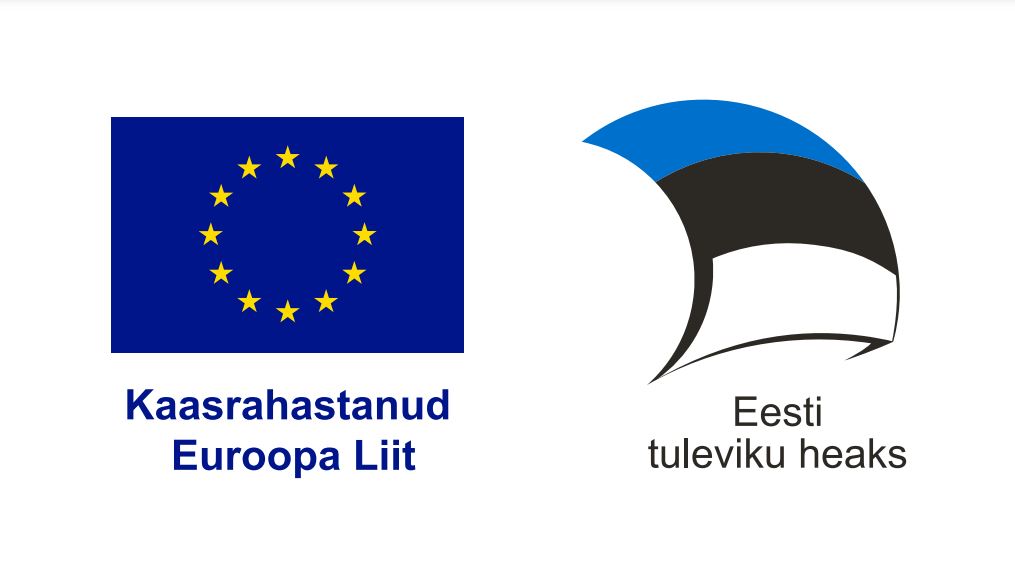
HPK Members Achieve Excellent Results in Tallinn University’s Student Research Competition
The winners of Tallinn University’s Student Research Competition were announced on 16 February, with several HPK members receiving recognition.
Triinu Kilp-Kabel’s doctoral dissertation, Students’ Math Motivation and Math Skills in Basic School, defended in 2025, was named the best submission in the social sciences. The dissertation was supervised by Kaja Mädamürk.
The article “Providing Feedback in Simulated Investigative Interviews with Adult Witness Avatars Increases the Use of Free Recall and Open Questions”, written by Kristjan Kask’s doctoral student Mari-Liis Tohvelmann and her co-authors, received third prize in the “Healthy and Sustainable Lifestyle” category for research publications.
The article “Unlocking Early Academic Skills: Children’s Cognitive Processes, Learning Skills, and Parental Beliefs and Behaviors Predicting Children’s Language and Math Skills”, written by Anne-Mai Meesak and her supervisors Dimitri Löchner, Tiia Õun and Eve Kikas, received third prize in the educational innovation category for research publications.
Congratulations to all the winners!
HPK Member Mikk Granström Awarded a Presidential Decoration
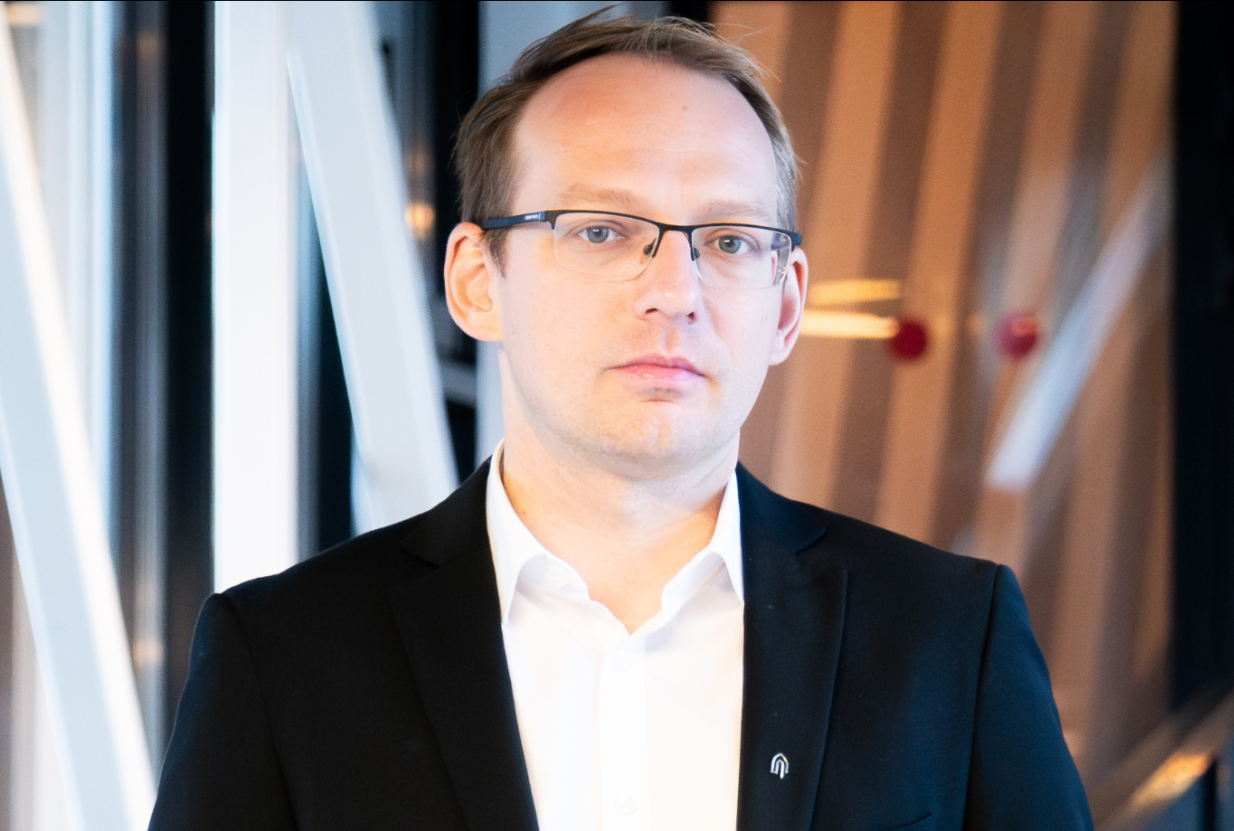
HPK member Mikk Granström was awarded the Order of the White Star, Fifth Class, for his contribution to the advancement of film culture.
For the past two decades, Mikk has led Just Film, the children’s and youth film festival. From this year, he continues his work as Administrative Director of the Tallinn Black Nights Film Festival. Alongside his work at the festival, Mikk is a researcher at HPK, where he studies learning strategies and topics related to the use of artificial intelligence.
HPK Members Meet Xin Tang, the Newly Appointed Professor of Educational Psychology
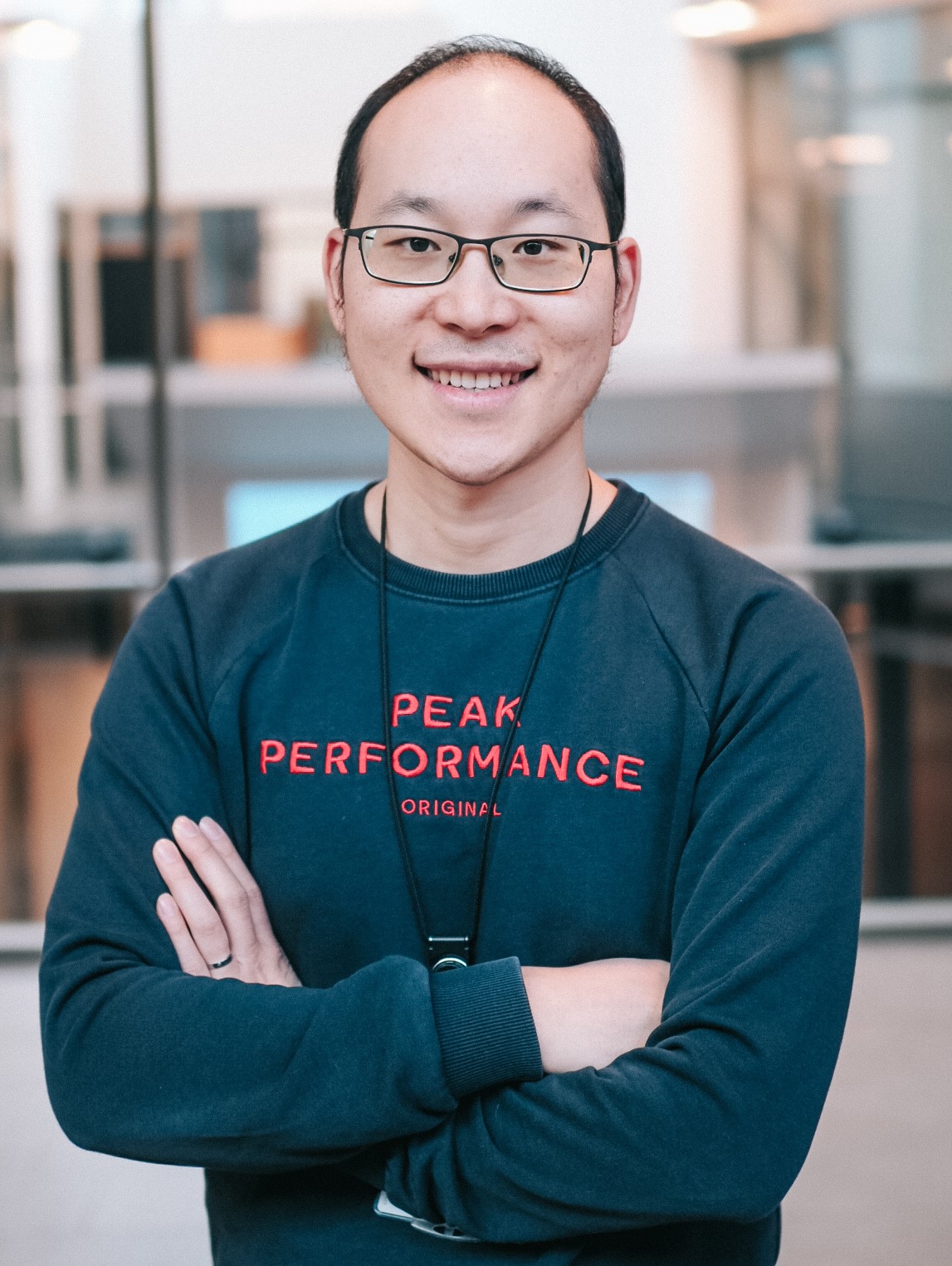
During the meeting between HPK and Xin Tang, participants introduced their projects and discussed future collaboration. Xin Tang presented an overview of his principal research findings and previous projects.
HPK members introduced their current projects, including those focused on advancing the assessment of general competences, factors shaping upper secondary school students’ learning, and the recently launched project on assessing and developing learning and self-management competences in higher education.
The participants discussed opportunities for collaboration in applying for project funding and supervising new doctoral students. Xin Tang will take up his position on 15 February.
Cooperation Agreement Signed Between Tallinn University’s School of Educational Sciences and ISEC Lisboa
On 16 January, Tallinn University’s School of Educational Sciences and ISEC Lisboa in Portugal signed a long-term cooperation agreement. Their collaboration in educational psychology has been ongoing since early 2025.
The agreement was signed by Õnne Uus, Lecturer in Educational Psychology at Tallinn University’s School of Educational Sciences, and Patricia Pacheco from ISEC Lisboa. The signing ceremony took place at the Estonian Embassy in Lisbon as part of an Estonian state visit, in the presence of Estonian President Alar Karis and Estonian Ambassador Moonika Kase.
%20-%20O%CC%83nne%20Uus.jpeg)
News from 2025
HPK Members Organised Two Seminars on Developing General Competences in Late 2025
The first seminar was held at Ruunawere Post Manor from 24 to 26 November, and the second at Nelijärve Holiday Centre from 15 to 17 December. The seminars formed part of the project “Developing Concepts for the General Sections of Future Curricula and Advancing the Assessment of General Competences”, funded by the Estonian Ministry of Education and Research.
/HTI/HPK/Ruunavere.jpg)
HPK Welcomes Staff from the University of Helsinki’s Centre for Educational Assessment
On 27 October, staff from the University of Helsinki’s Centre for Educational Assessment, led by its director, Risto Hotulainen, visited Tallinn University’s Centre for Educational Psychology. The two centres share several research interests. During the meeting, they agreed to collaborate on the development of assessment tools for general competences, with a particular focus on learning competence.
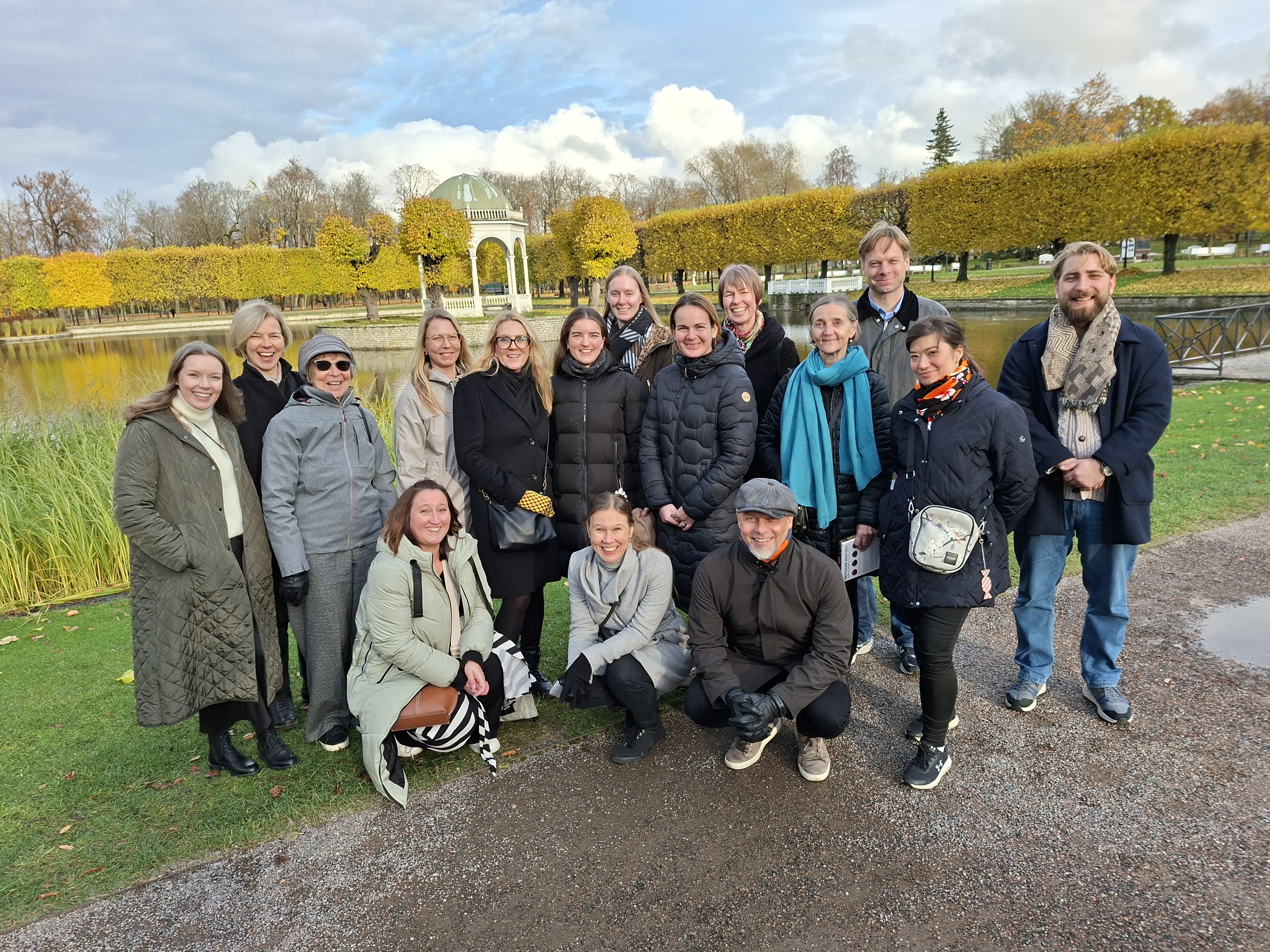
Visitors from the University of Crete
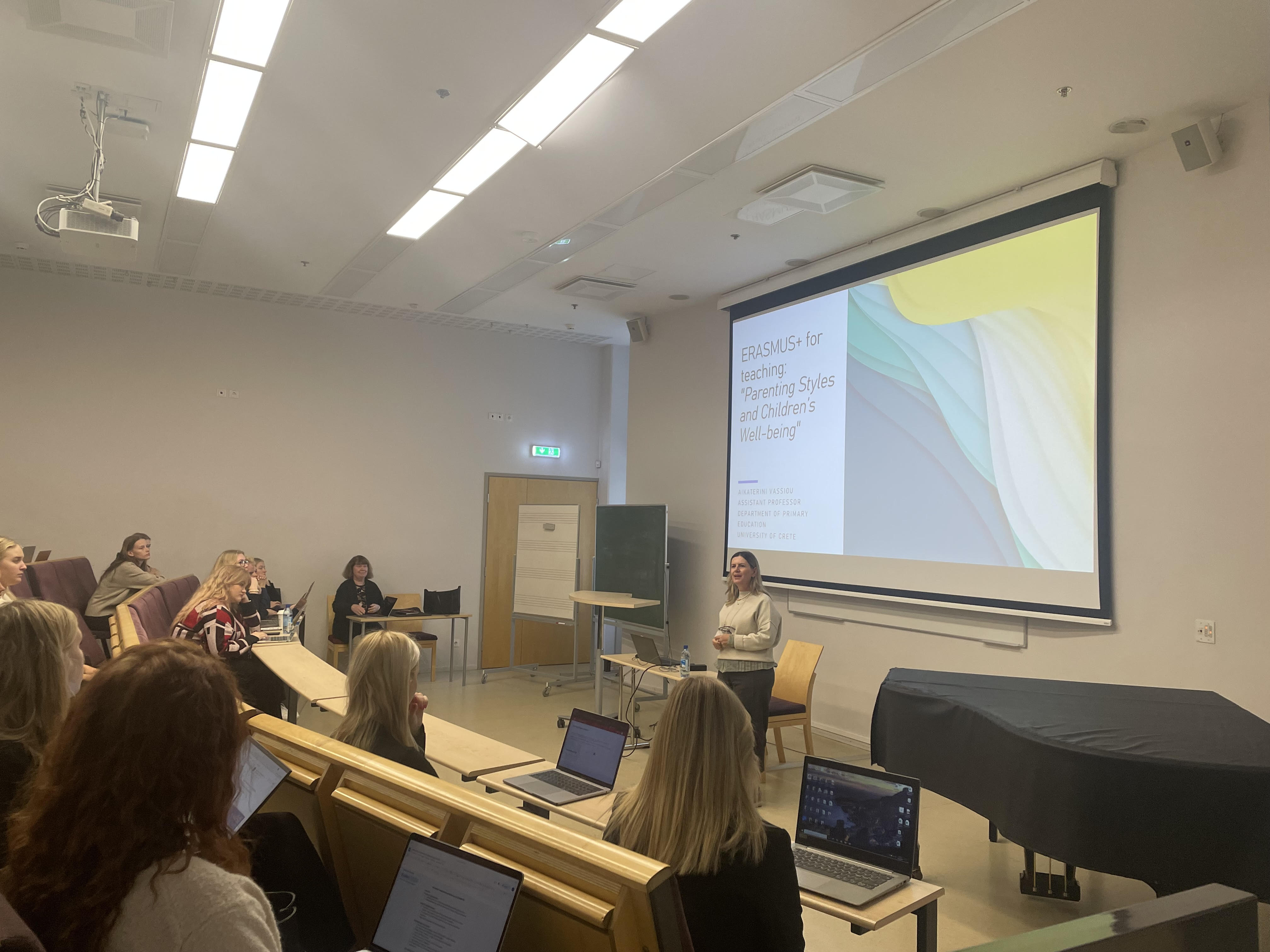
From 29 September to 2 October, Professor of Psychology Eleni Vasilaki and Associate Professor of Educational Psychology Aikaterini Vasiou from the University of Crete visited Tallinn University’s School of Educational Sciences and the Centre for Educational Psychology as part of the Erasmus+ mobility programme. During their visit, they met with HPK members and delivered four guest lectures to our students.
.jpg)
HPK Participation in a Conference in Canada
Maris Juhkam presented a poster at the Society for the Scientific Study of Reading Conference, held in Calgary from 17 to 19 July. The poster, based on research conducted jointly with Piret Soodla, was entitled “Teachers’ Judgements of First-Grade Students’ Reading Skills and the Provision of Special Educational Support at School: Now and Twelve Years Earlier”.
.jpg)
“School and Home” Collaboration – Õnne Uus
In brief, the quality of relationships determines a child’s well-being, which in turn influences their academic achievement. For this reason, the relationship between the child’s two key environments—school and home—has also become an important area of focus internationally.
Last spring, Õnne Uus—an educational psychologist, clinical psychologist and family psychotherapist—initiated an interdisciplinary discussion entitled “School and Home Collaboration”. On 8 July, she organised an international conference at Tallinn University’s School of Educational Sciences. Patricia Pacheco, a developmental and educational psychologist from the University of Lisbon, was invited to speak at the event. Participants included academic staff from Tallinn University’s School of Educational Sciences, as well as school psychologists and family psychotherapists from across Estonia.
The conference generated productive discussion. Participants identified a number of shared concerns and developed many valuable ideas and plans for future collaboration and joint projects. These included cooperation between specialists from different fields, the establishment of research groups, collaborative research and international student exchanges.
.jpg)
A Conference and Hiking in Austria
HPK members attended the conference of the European Association for Research on Learning and Instruction (EARLI) in Graz, Austria. The conference provided an opportunity to present research led by HPK and to learn about educational psychology research being conducted elsewhere in the world. In keeping with HPK tradition, some of our more adventurous members also went hiking in Austria—this time in the mountains rather than in a bog.
.jpg)
.png)
HPK June Seminar
On 4–5 June 2025, HPK held a seminar at the Vana-Veski Holiday Centre. As usual, the event began with a bog hike—this time in Matsimäe Bog. This was followed by in-depth seminar discussions focusing on general competences and their assessment.
.jpg)
_0.jpg)
Research by HPK Members Recognised by Tallinn University
In the competition for the Outstanding Publication, Textbook and Creative Project, the award for the best article in the social sciences was presented to:
-
Mädamürk, K., & Kikas, E. (2024). The development of math skills from grades 1 to 12: Novel findings using a person-oriented approach. Developmental Psychology. Advance online publication.
In Tallinn University’s Student Research Competition, the following doctoral dissertation received an honourable mention:
-
Valeri Murnikov, Toward overcoming fragmentation in psychology theory: Explorative studies on the relationship between word meaning structure, visuospatial perception, and recall accuracy.
In the research publications category “Healthy and Sustainable Lifestyle”, first prize was awarded to:
-
Remy Suurna, Valeri Murnikov and Kristjan Kask, “The relationship between recall accuracy and the use of gestures according to age and word meaning structure”.
HPK’s Participation in the EARLI 2025 Conference
Members of the Centre for Educational Psychology attended the international EARLI 2025 Conference, held in Graz from 25 to 29 August 2025. The theme of the conference was “Realising Potentials through Education: Shaping the Minds and Brains for the Future”. Members of the Centre for Educational Psychology contributed to fifteen presentations:
-
Anna-Liisa Jõgi & Piret Soodla. Reading skills and development of task persistence in Grade 1 – snapshots taken twelve years apart.
-
Anna-Liisa Jõgi & Piret Soodla. Reading skills of first-grade students in Estonia: A comparative cohort study with a 12-year gap.
-
Anne-Mai Meesak, Dmitri Rozgonjuk, Tiia Õun & Eve Kikas. Exploring the relations between five-year-old children’s skills, parental beliefs and behaviours.
-
Danial Hooshyar, Eve Kikas, Elina Malleus-Kotšegarov, Kati Aus & Liina Malva. Key indicators of learning competence in Estonian middle school math: A Bayesian analysis.
-
Elina Malleus-Kotšegarov, Arja Kaasinen, Silvia Grabner, Anttoni Kervinen, Davia Grabner, Grete Arro, Jaanus Terasmaa, Esta Kaal, Hannu Salmi, Arko Olesk, Mihkel Kangur & Alexandros Pantazis. “Avastusrada” – A digital outdoor learning tool for shaping future-orientated minds and brains.
-
Eve Eisenschmidt, Piret Oppi & Daniel Reinaru. Identifying school culture profiles and their relationship with teachers’ work-related experiences.
-
Eve Kikas & Mikk Granström. Knowledge of learning strategies and motivation to use them as indicators of L2L competence.
-
Joosep Norma. Teachers’ expectancy-value-cost profiles in professional development for supporting SRL.
-
Kaja Mädamürk & Eve Kikas. Developmental trajectories of math self-efficacy from Grades 2–12.
-
Kaja Toomla, Xiaojing Weng, Eve Kikas, Elina Malleus-Kotšegarov, Kati Aus, Liina Malva, Roger Azevedo & Danial Hooshyar. Measuring (meta) emotion, motivation, cognition using digital trace data: A systematic review.
-
Kirsi Tirri & Ita Puusepp. Finnish parents’ learning-related mindsets and parental praise.
-
Kristi Jakobson, Anna-Liisa Jõgi & Piret Soodla. Enhancing teachers’ reading-related knowledge and skills through professional development programs.
-
Liina Malva, Eve Kikas & Danial Hooshyar. When time and energy cost math results – students’ motivation to learn basic algebra concepts.
-
Sonja Laine, Ita Puusepp & Kirsi Tirri. A qualitative study on student teachers’ feedback to their students after failed performance.
-
Triinu Kilp-Kabel & Kaja Mädamürk. From classroom to reality: Enhancing students’ skills with real-life linear function tasks.
Photos from the Event:
.jpg)
.png)
.jpg)
News from 2024
HPK November Seminar
At the end of November, HPK members gathered in Kõrvemaa for a two-day seminar. As is customary, we began the first day with a hike through the bog—this time following the Paukjärve and Kõnnu-Suursoo trail. As the accompanying photograph shows, the hike was thoroughly enjoyable and attracted considerably more participants than before.

We then turned our attention to more work-related topics. We discussed the present and future of educational psychology, HPK’s training programmes and general competences, and officially welcomed two new members to our team.
HPK Visits Vrije Universiteit Amsterdam
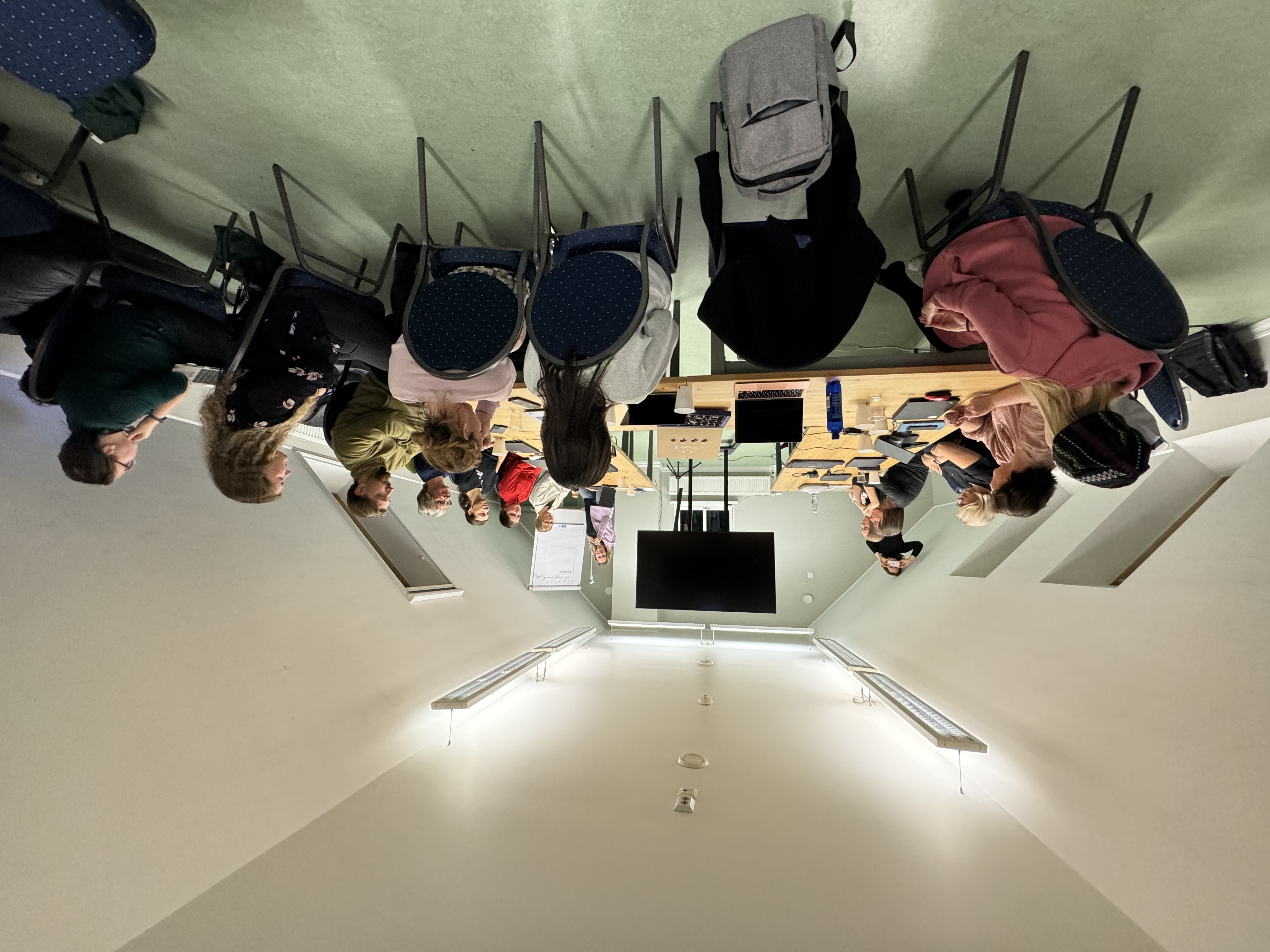
Early on the morning of 8 October, three members of the Centre for Educational Psychology (HPK) set off for the airport to spend a few days visiting colleagues at Vrije Universiteit Amsterdam. They received a warm welcome from Professors Martijn Meeter and Nienke van Atteveldt. The three eventful and productive days passed quickly, and the inspiring conversations with Martijn Meeter on education and psychology provided much food for thought.
Associate Professor Hanna Westbroek, who works at the university’s Teacher Academy, offered an in-depth overview of the Dutch teacher education system. Together, we discussed the challenges facing teacher education in Estonia and the Netherlands, as well as solutions that have already proved effective.
On the final day of the visit, a seminar organised by Nienke van Atteveldt provided an opportunity to meet researchers and doctoral students from Vrije Universiteit Amsterdam’s LEARN! Institute. We introduced them to HPK’s activities, while they presented their own work and research. The seminar generated several new ideas and proved so engaging that the two hours passed without anyone remembering to take photographs. After the seminar, however, we did manage to put the collaborative skills of HPK and Vrije Universiteit Amsterdam colleagues to the test over a game of table football in the university common room!
HPK’s First Bog Hike and Manor Seminar
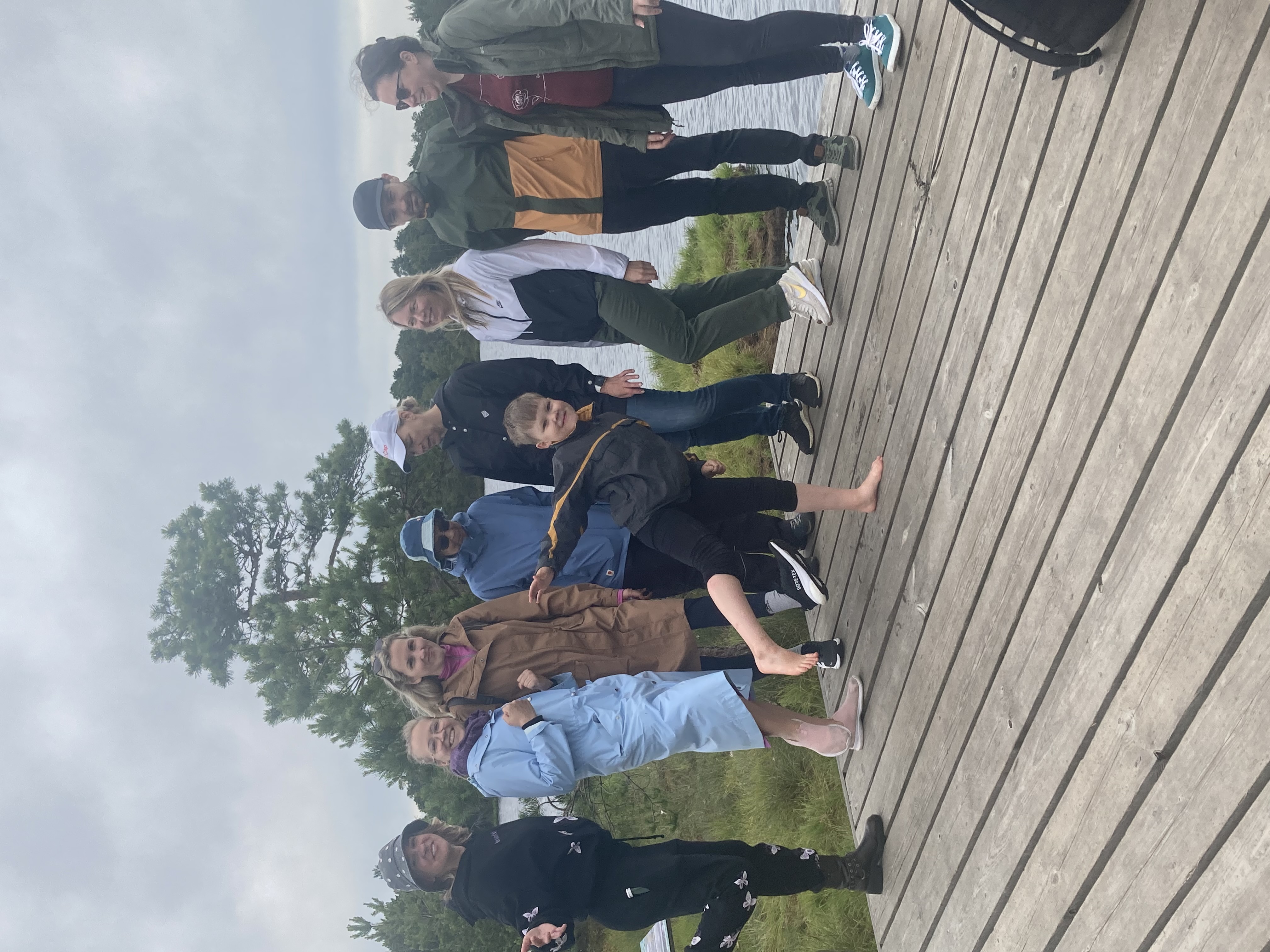
On Wednesday, 19 June, half of the Centre for Educational Psychology (HPK) set out on a hike in Kakerdaja Bog, continuing a tradition established by doctoral students in psychology. We were delighted that future educational psychologists also joined us—the youngest participant completed the trail in their father’s arms. At least on this occasion, the weather forecast proved accurate: halfway through the hike, it began to rain, just as predicted—and as befits a proper hiking trip.
Refreshed by the fresh bog air and physical activity, we continued our discussion of the Centre’s past, present and future at Anija Manor.
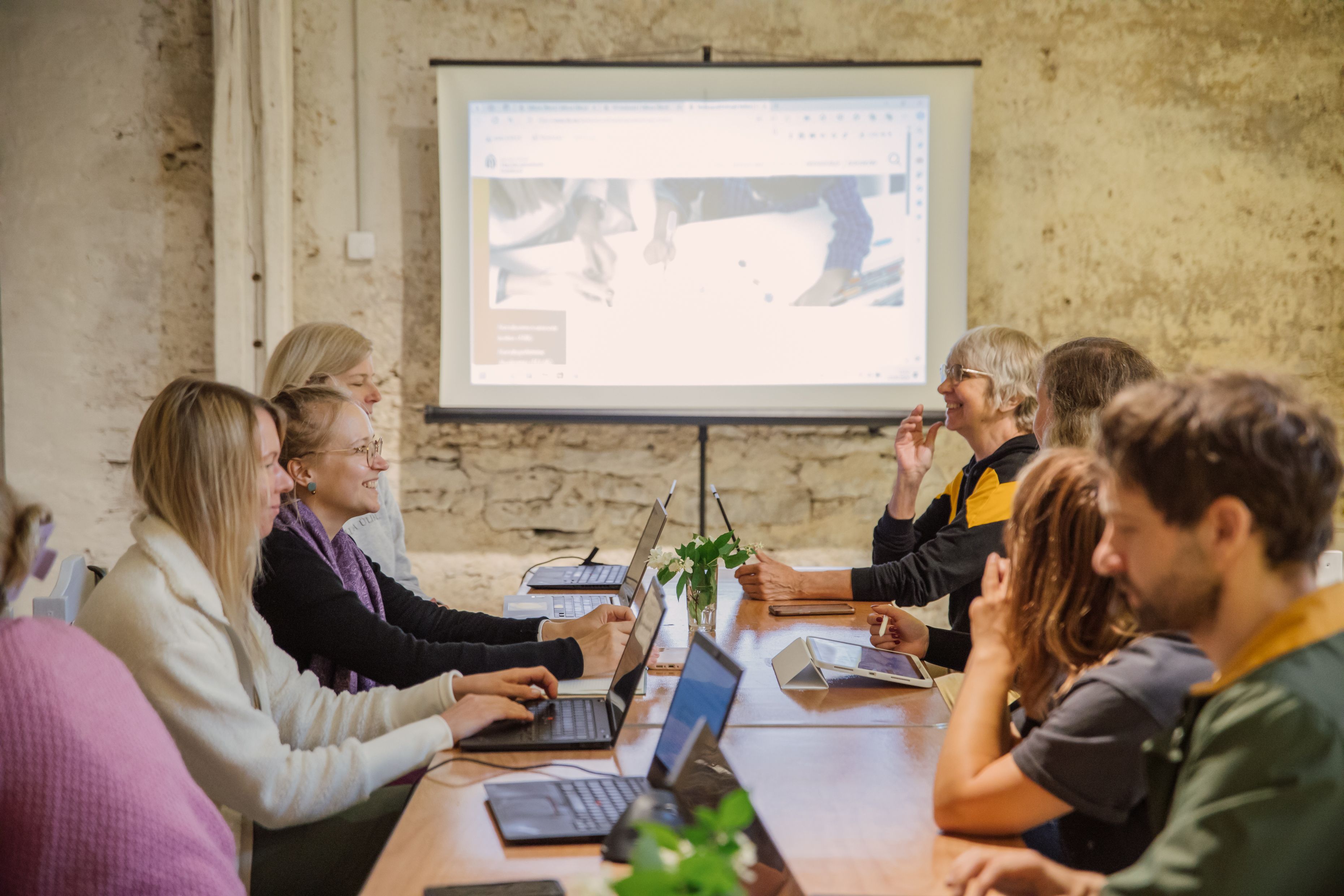
The discussion generated several promising and ambitious ideas, which we made sure to record.
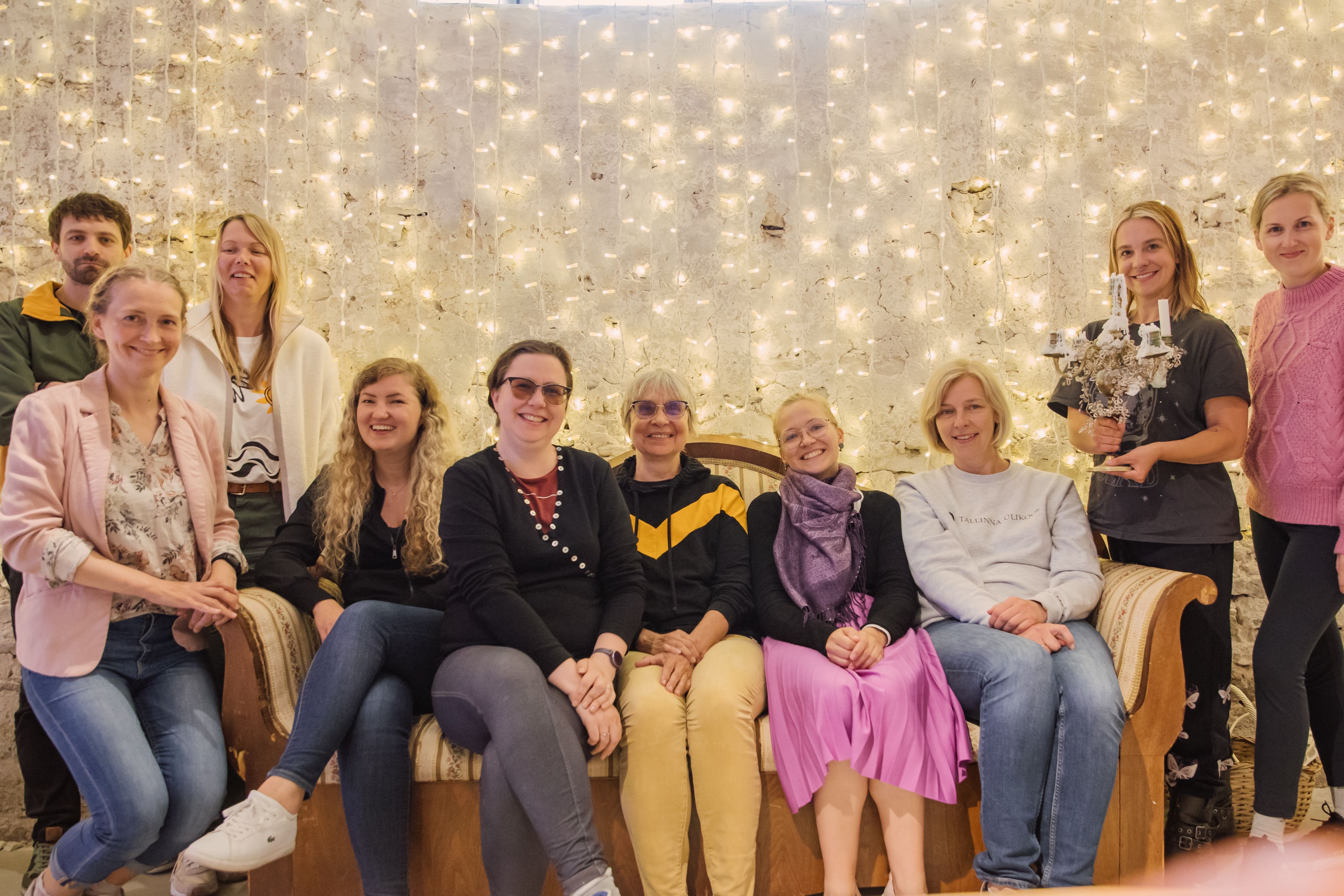
The HPK group photo remained incomplete, however.