




Otseteed: sisu | otsing | sektsiooni alammenüü

Institute of Germanic-Romance Languages and Cultures  

Call for papers

The first international bilingual conference on international academic mobility took place at the University of Turku (Finland) in 2006. Throughout the discussions at the conference and in the ensuing publications, it became clear that academic mobility has matured into a legitimate research field in its own right. We hope that this new conference will contribute to further advance knowledge and practice in the field.


After having celebrated the twentieth anniversary of the European exchange programme Erasmus in 2007, the year of intercultural dialogue in 2008, and multiplied mobility initiatives worldwide (the late Scholar Ship, intercontinental programmes, etc.), what sort of research has been done in the last few years and what perspectives will we need to meet the critical challenges of academic mobility both in research and practice?


Many studies have recently emerged which question the achievement and value of academic mobility, through e.g. delineating the inequality in its access (immobility/sedentarisation - « mobility to neighbouring countries or to the same continent » vs. « mobility to the outside world »). Besides, as any type of contemporary hypermobility, academic mobility often has two (or more contradictory) aspects: it can be « chosen » (young students who want to experience something new, they may have a need for « difference » and « renewal ») but it can also be imposed on its actors (for career advancement, family pressure, exile).


While more and more money is spent on mobility, and with increasing virtual academic mobility, the rationale of « everything mobile » in the academia must be further questioned. Is academic mobility satisfactory in terms of encounters, knowledge, competences, sociability, etc.? In other words, why and how should we continue to be mobile in worldwide higher education?


Starting from these basic questions, and working toward providing an understanding of what we know, the following issues will be addressed:


1. Competences of the « mobile Person » (language(s), interculturality, identities but also academic knowledge, savoir-faire, learning-to-learn, technology…) and how to develop them – « incompetences » and « non-learning » can be addressed too!

2. The local, global and glocal in academic mobility,

3. Academic mobility vs. or in complement to other types of mobility (tourists, migrants, anthropologists, etc.),

4. Social and daily life/lives of mobile people,

5. « New academic mobility »: North/South, South/South, clandestine mobility, intranational mobility, cross-border mobility, virtual mobility (courses, virtual worlds, telecollaboration), multi-movers…

6. Diachronic and/or synchronic societal and institutional discourses on academic mobility

7.  The failures and successes of academic mobility in terms of economic but also pedagogical/didactical investments.


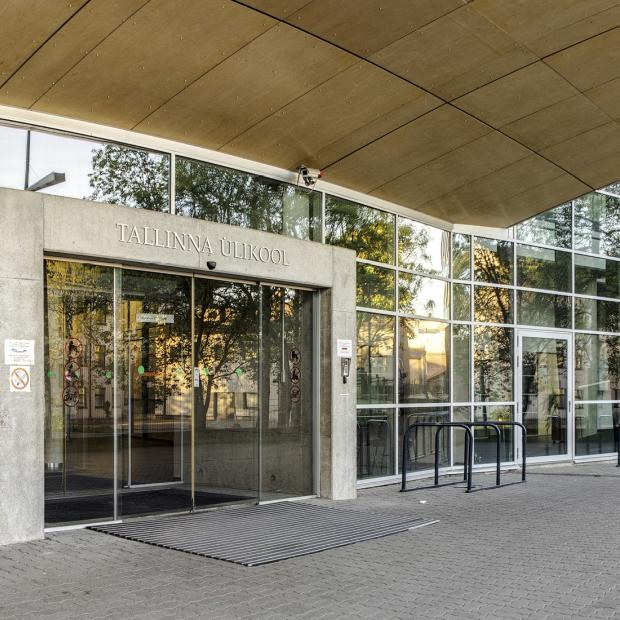
This interdisciplinary conference, which will be held at the University of Tallinn in Estonia, will be a great opportunity to share results but also to listen to, discuss and meet colleagues from all over the world. Young researchers and doctoral students are encouraged to participate.


Target audience:


Teaching staff involved in student mobility, (young) researchers in higher/international education, graduate/postgraduate students, international educators, administrators in charge of mobility programs, policy makers, directors and staff in international offices, Erasmus/Socrates offices.


Keynote speaker :


Michel Maffesoli, University of Paris V & Institut de France, France


Plenary speakers:


Marie-José Barbot, University of Lille, France

Robert O’Dowd, University of Léon, Spain

Karen Risager, Department of Culture and Identity, Cultural Encounters, Roskilde University, Denmark


Submissions in English or in French are invited in the following categories:


(1) Research papers (20 minutes + 10 minutes for questions)

These papers should document established results and/or present theoretical reflections.

(2) Presentations on work in progress (20 minutes + 10 minutes for questions and comments from audience)

These papers may address issues still being worked upon.

(3) Round tables (between 1h and 1h30)

Round tables may combine the two previous formats.


The author(s) should submit one 300-word abstract by e-mail (freder@utu.fi and alexa@tlu.ee) by 1st March 2009 


For round tables, please send one 150-word abstract for each paper as well as a 200-word description of the round-table to freder@utu.fi and et alexa@tlu.ee by 1st March 2009.


The abstract should include: 

- the name, institution phone numbers, and e-mail addresses of each author; 

- the title; 

- objectives or purposes; 

- perspective(s) or theoretical framework; 

- methods, techniques, or modes of inquiry; 

- data sources or evidence; 

- (results and/or conclusions/point of view).


Abstracts will be reviewed by the scientific committee for originality, significance, clarity and academic rigour. Links with theory must be explicit.

Authors are requested to submit their papers before the conference (September 1st 2009). Please follow the APA formatting,

cf. http://owl.english.purdue.edu/owl/resource/560/01/

Your article should contain between 5000-7000 words (bibliography included).

A publication of the proceedings with refereed status will follow the conference.

Important dates:

-          Closing date for submission of proposals: 1st March 2009

-          Decisions about the submitted papers: 15 March 2009

-          Early-bird Registration from 1st February to 30 April 2009

            Master students : 40 euros (625 EEK)

            PhD students : 60 euros (935 EEK)

            Others : 120 euros (1875 EEK)


        - After May 1st 2009:

                    Master & PhD students: 80 euros (1250 EEK)

                    Others: 150 euros (2345 EEK)


-          Paper submissions: 1st September 2009

-          Conference: 24-26 September 2009

Please note that we are unable to refund registration after 1st August 2009. Thank you for your understanding.


Scientific committee:


·Magali Ballatore, University of Provence, France

·Mike Berry, Turku School of Economics, Finland

·Mike Byram, University of Durham, UK

·Fred Dervin, University of Turku, Finland

·Māra Dirba, University of Riga, Latvia

·Stéphanie Garneau, University of Ottawa, Canada

·Suliko Liiv, Tallinn University, Estonia

·Aleksandra Ljalikova, Tallinn University, Estonia

·Stefano Montes, Tallinn University, Estonia

·Mihai Paunescu, Faculty of Political Sciences, Department of Sociology - National School of Political and Administrative Studies – Bucharest, Rumania

·Jean-Paul Roumegas, Centre National des OEvres Universitaires et Scolaires, France

·Licia Taverna, Tallinn University, Estonia

·Anthony Welch, University of Sydney, Australia 

Contact details:

Fred Dervin

Aleksandra Ljalikova

Kateryn Mänd


Tel: +372 6409 325

Fax: +372 6409 327

E-mail: freder@utu.fi et alexa@tlu.ee

Website : www.tlu.ee/colloque2009


Post address:

Tallinn University

Institute for Germanic and Romance languages and cultures

Narva mnt. 25

Tallinn 10120

Estonia


Bank details

Account holder: Tallinna Ülikool

Bank: SEB Address: Tornimäe 2, 15010 Tallinn, Estonia

Account number: 10002006943007
VAT: EE100251335
IBAN: EE071010002006943007
SWIFT: EEUHEE2x

Payment: Please transfer the payment to the Tallinn University account and indicate: S09001


Please note that we are unable to refund registration after 1st August 2009. Thank you for your understanding.

Back