FEWL events
FEWL Project Final Seminar in Brussels
On 19th of November 2025, the final seminar
"General Education Reimagined: Connecting Learning with the World of Work" of the FEWL project (Enhancing Research on the
Integration of Formal Educational Programmes and Workplace Learning) took place at the
Permanent Representation of Estonia to the European Union in Brussels. The event was
organised by Merle Pajus, Head of Research Coordination at the School of Educational
Sciences, together with Kristel Oitmaa and Karmen Kivistik from the Estonian Research
Council’s Brussels office. The results of the three-year European Union–funded Horizon
Twinning project were presented from the perspective of primary education by the project
leader, Professor Inge Timoštšuk, and Junior Research Fellow Kaidi Nurmik; from the
perspective of secondary education by Associate Professor Maria Erss and Professor Krista
Loogma from Tallinn University; and from the perspective of vocational education by
partners Jana Schwede from the University of Paderborn and Katarzyna Kärkkäinen from the
University of Jyväskylä.
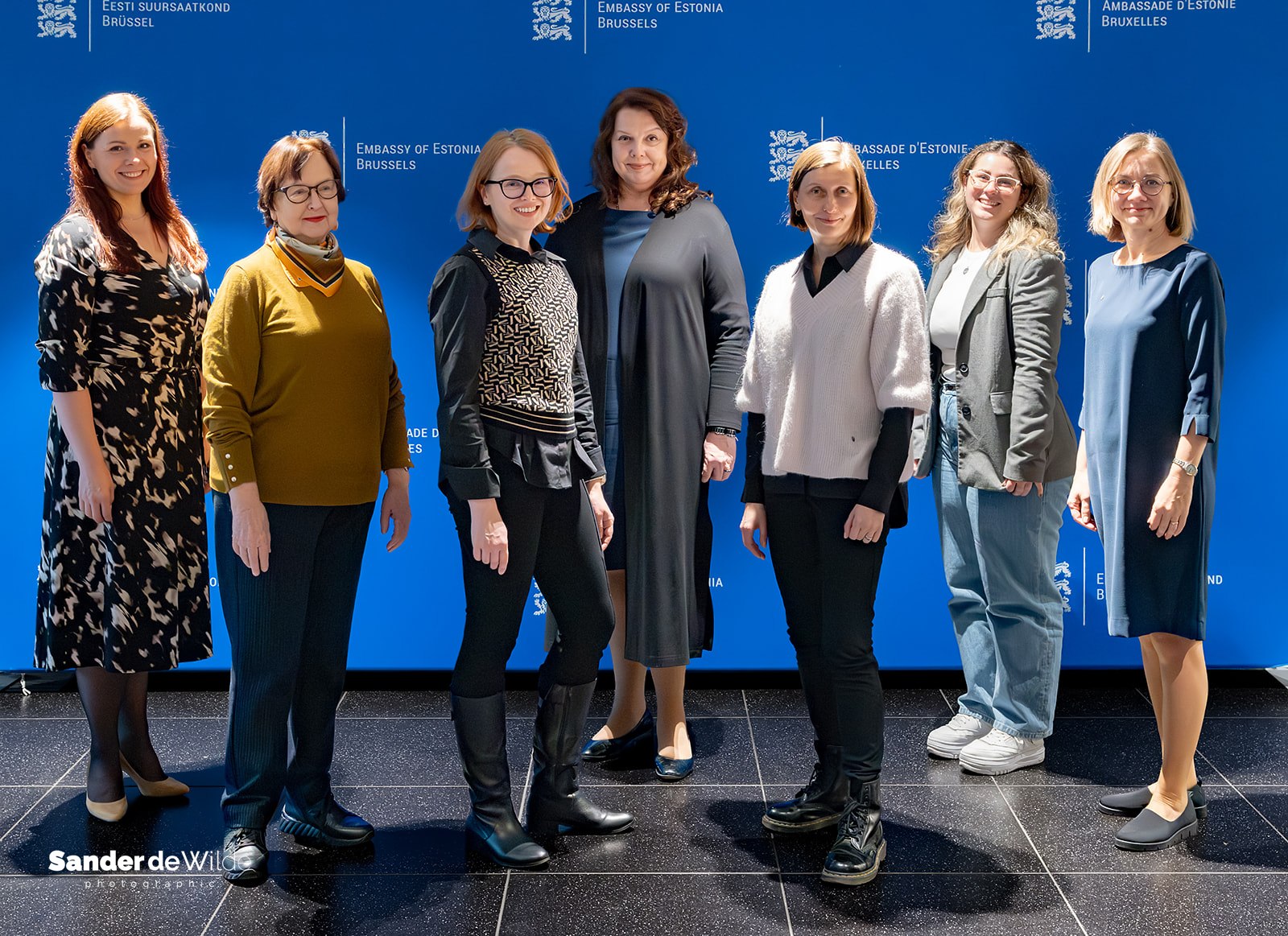
Photo: FEWL team.
This was followed by a panel discussion moderated by Merle Pajus. The panellists included
Brian Talty, Policy Officer of the Young European Research Universities Network
(YERUN); Nathalie Baïdac, representative of the European Education and Culture Executive
Agency of the European Commission and coordinator and co-author of the European report
on entrepreneurship education in schools; Peep Peterson, former head of the Estonian Trade
Union Confederation, former Minister of Labour and Health, and current leader in the
industrial sector; and Kaidi Nurmik, who contributed from a primary school teacher’s
perspective.
Audience engagement was facilitated by Jana Schwede and Katarzyna Kärkkäinen, who
invited participants to note down the ideas that resonated most with them during the day and
propose policy recommendations for better integrating working life and general education.
The FEWL project highlighted several key insights: Early work experience benefits learners
in many ways, as it strengthens their motivation, skills, and agency. In Estonia, certain
inequalities can be observed regarding young people’s work experience and agency: attention
should be paid to the reasons why girls and Russian-speaking youth tend to have less work
experience and lower levels of agency. Integrating work-life topics into school teaching is not
easy for teachers, as conceptions of work vary and parents, teachers, and employers have
different expectations. This cannot be left solely to teachers’ personal initiative; more
systematic support is needed, including resources from school owners, school leaders,
parents, and employers. Employers expect strong general competences from young people,
but especially smaller companies are not prepared to invest in their development.
Cooperation between schools and employers—both formal and non-formal—could be
improved in vocational education, not to mention general education. To achieve this,
collaboration partners should be better recognised, cooperation should be supported with
adequate resources, and good examples of collaboration should be more widely shared. A
large proportion of Estonian upper secondary students (80%) already have some form of
work experience alongside school. One low-cost but valuable practice that would help
students become aware of and analyse the skills and experiences gained at work is creating
opportunities at school—facilitated by teachers—to reflect on what they have learned through
working.
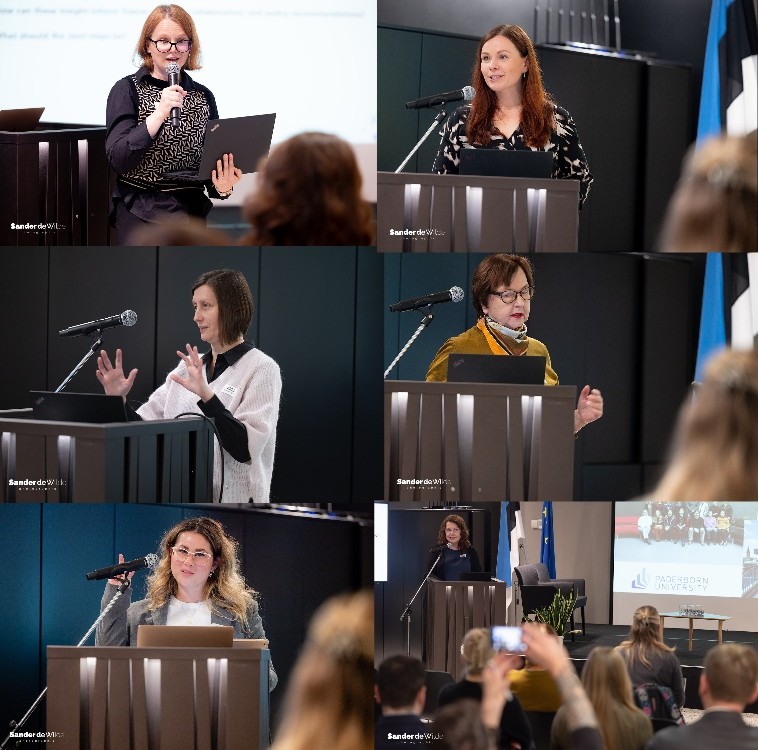
Maria Erss, Kaidi Nurmik, Katarzyna Kärkkäinen, Krista Loogma, Jana Schwede, Inge Timoštšuk.
Photo: Sander de Wilde photographic.
On 18 November, as part of the FEWL seminar preparations, we met in Brussels with
representatives of Estonian Research Council—Kristel Oitmaa and Carmen Kivistik—as well
as advisors Heidi Paju and Anu Peljo from the Permanent Representation of Estonia to the
EU; Massimo Busuoli, Chair of the Brussels Office of the UniLion network of European
universities, and H.E. Helen Kaljuläte, Estonia’s bilateral Ambassador to Belgium and
Luxembourg. We discussed opportunities for funding research and educational cooperation,
as well as the interests and needs of the education sector within European Union research
programmes.
Links to Posters
1) Kaidi Nurmik and Inge Timoštšuk: Children Need Experiences of Work Today to Dream of Tomorrow's Professions
2) Maria Erss and Krista Loogma: The Benefits of Work Experience for General Secondary Education Students in Estonia
3) Jana Schwede: Building Bridges in Vocational Education and Training. How School–Workplace Cooperation Remains a Challenge
4) Katarzyna Kärkkäinen: Migrant Students' Learning at the School-Workplace Interface in Vocational Education. What can General Education Learn?
Seminars
International FEWL Autum School in Tallinn
From September 15 to 19, an international autumn school for young researchers and senior researchers took place at the Institute of Educational Sciences of Tallinn University as part of the FEWL project, which focuses on the integration of work-based learning and formal education. Participants included partners from the FEWL project from the University of Paderborn in Germany, the University of Jyväskylä in Finland, and Tallinn University in Estonia.
In total, 11 doctoral students and young researchers practiced presenting their doctoral thesis topics, reading academic articles, and educating themselves on quantitative methods, research quality, defending doctoral theses, and the use of artificial intelligence in research.
Additionally, young researchers had the opportunity to consult with experienced scientists on career development and questions regarding their doctoral work, as well as to learn about the experiences of museum educators at the Seaplane Harbour in introducing professions.
At the same time, senior researchers and the support team discussed the project's progress so far and the next steps. The project will conclude in December 2025, and the final major event will take place on November 19 at the Estonian Research Agency's representative office in Brussels, where the project results will be presented and policymakers at the European level will be addressed.
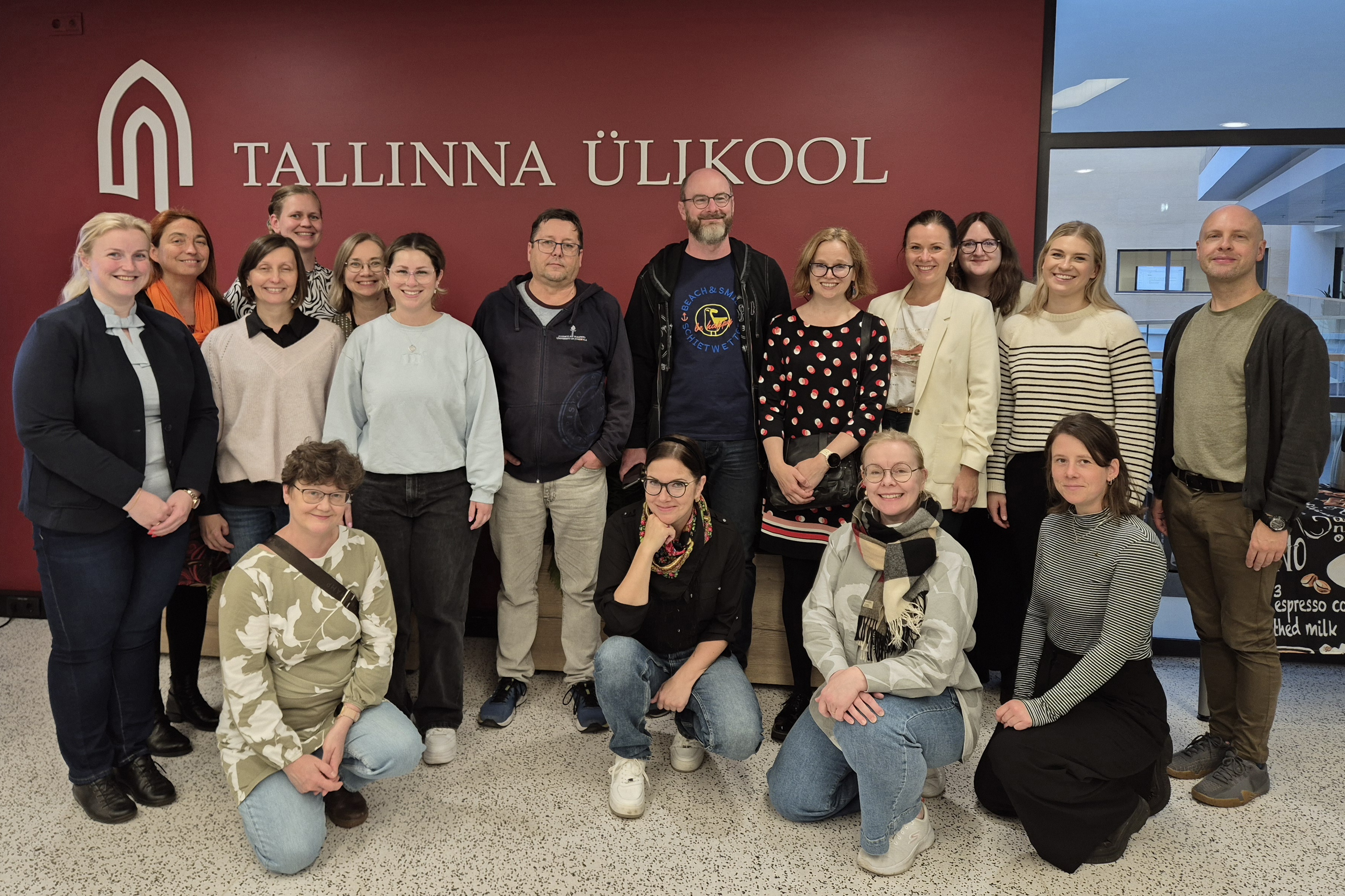
FEWL project meeting at Jyväskylä University
From August 19–23, 2024, a meeting of the FEWL project partners took place at the University of Jyväskylä, where workshops supporting the completion of doctoral theses for junior researchers and brainstorming sessions for senior researchers to write a new project proposal were held. For example, junior researchers learned how to prepare a poster presentation, how to manage their time better, and how to use quantitative methods in their studies. They also
learned about the specifics of science communication.
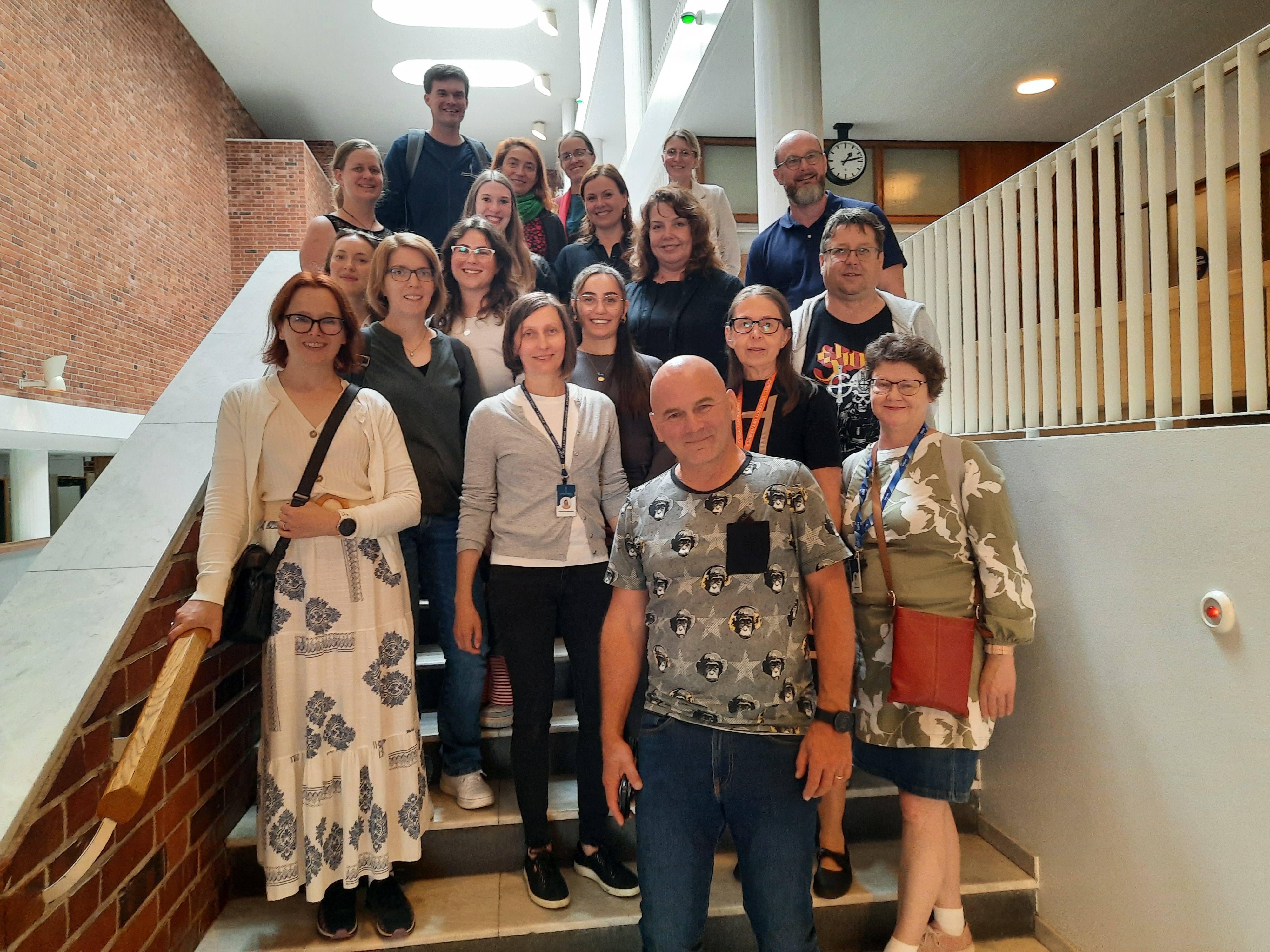
FEWL team participated in the EARLI SIG14 conference in Jyväskylä
The FEWL project team participated in the EARLI SIG14 conference at the University of Jyväskylä from August 19–23, 2024, where an invited symposium on integrating workplace learning and formal education was conducted. For the first time, this symposium addressed the integration of workplace learning with school education at various educational levels: primary, secondary, vocational, and higher education, as well as non-formal workplace learning. The symposium was led by the FEWL project leader, Professor Inge Timoštšuk from Tallinn University, who also gave a presentation. Other presenters were Birgit Peterson, a doctoral student from Tallinn University, Professor Päivi Tynjälä from the University of Jyväskylä, and Professor Christian Harteis from the University of Paderborn. The presentations were reflected upon by Professor Stephen Billett from Griffith University in Australia who was in the role of a discussant.
In her presentation, Inge spoke about the possibilities of linking the world of work with primary education, and Birgit focused on the work experiences of high school students, what aspects they find meaningful in workplace learning, and the connections they see between learning at school and at the workplace. Päivi introduced her integrative pedagogy model, created 25 years ago, and its recent developments in integrating what is learned in (vocational) school with work practice. Christian discussed the difficulties in connecting theory and practice in the context of the German dual vocational education system.
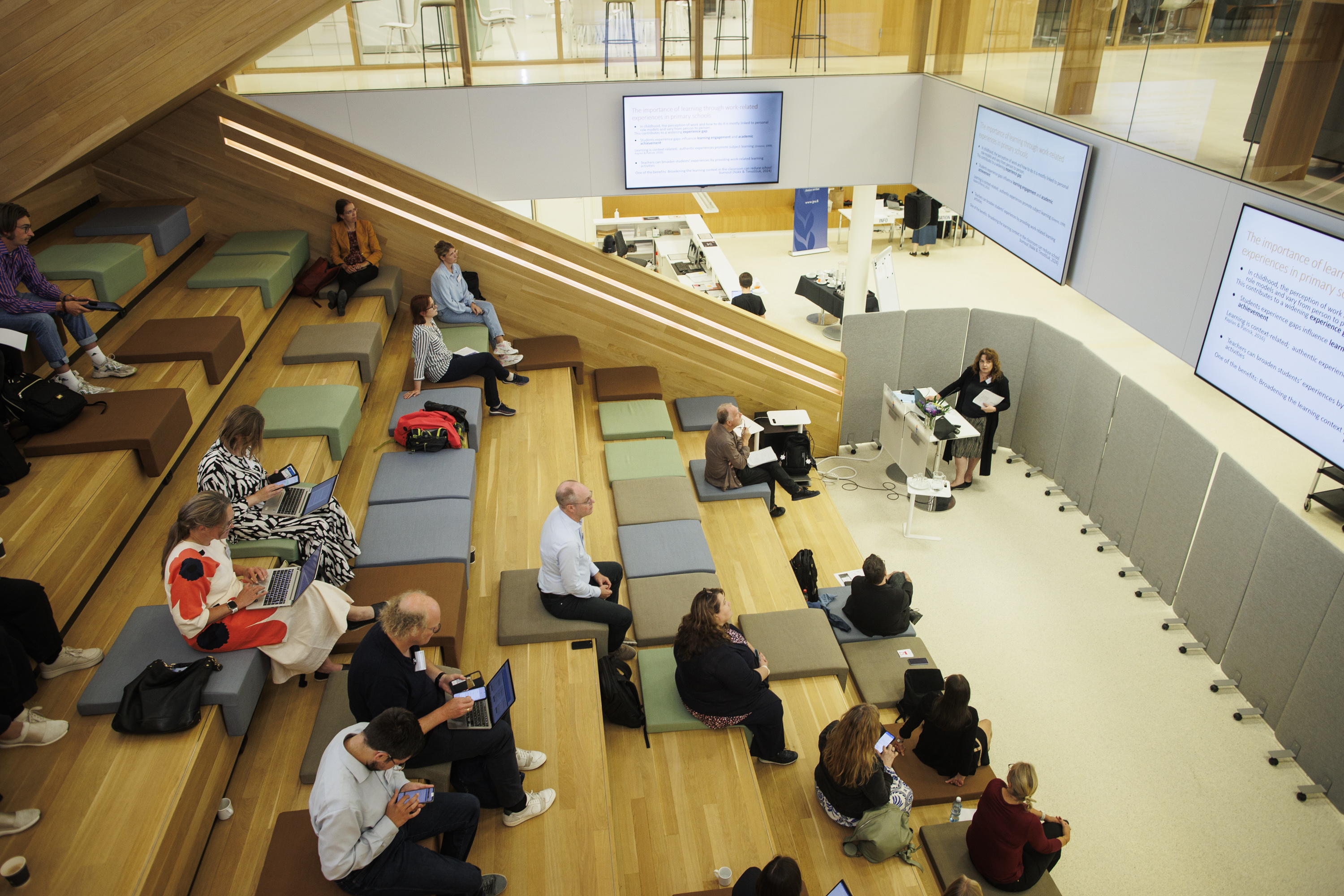
RMA team from TLU visited Paderborn University
In April 2024, research management personnel from the School of Educational Sciences visited Paderborn University to exchange experiences between the two universities. During the visit, they got to know the team dealing with the applications and implementation of projects, and many other employees of the university research support activities. In addition to the academic tour, they also got a practical overview of the university's top-level research and innovative solutions offered in various fields.

Photo: UPB press office
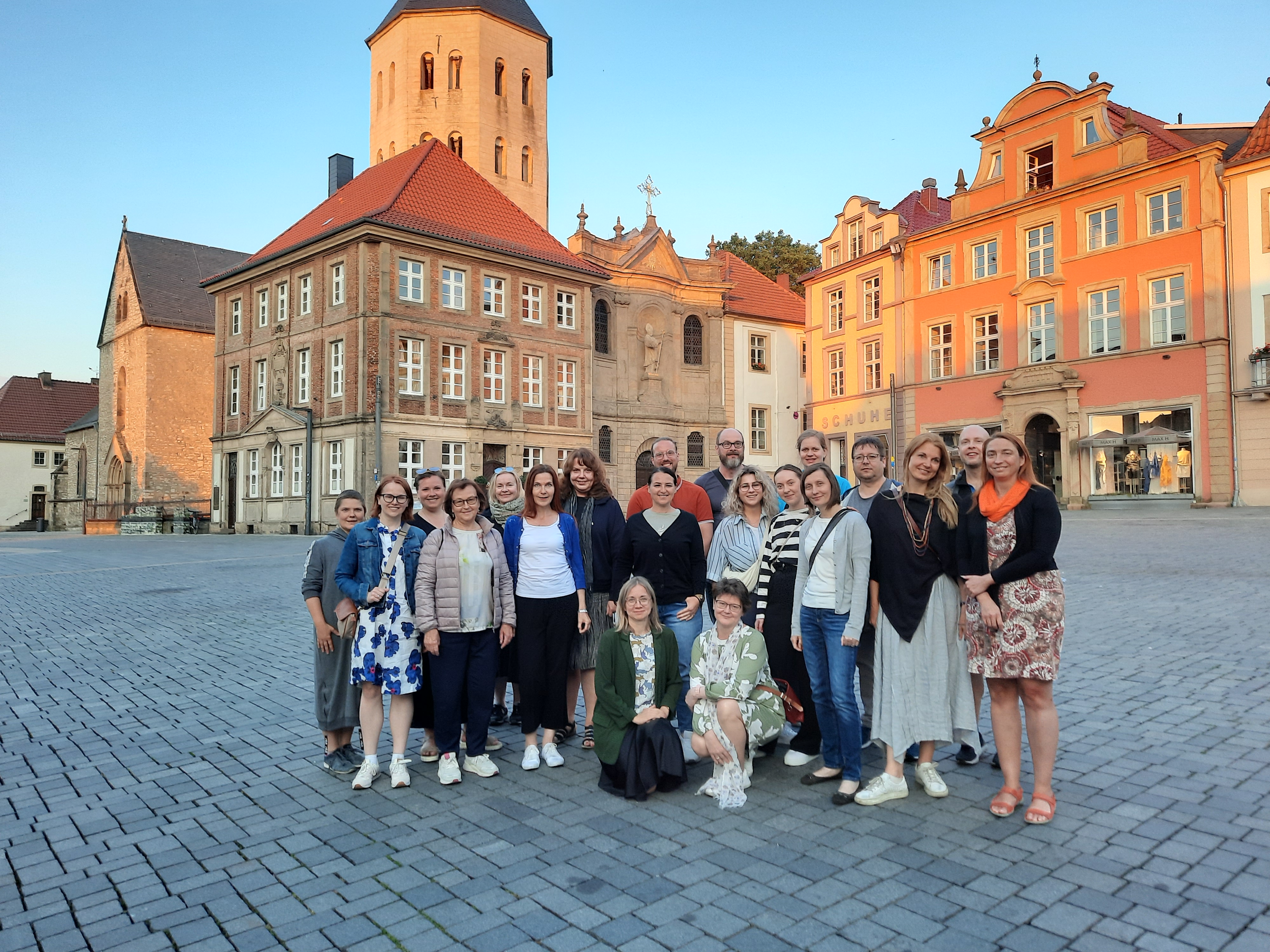
FEWL project seminar at Paderborn University from June 12–15 2023
From June 12–15, a seminar for Early Stage Researchers and a meeting for the lead group of the FEWL project currently took place at the Paderborn University in Germany. There were PhD students from three countries, Germany, Finland and Estonia, who participated in the seminar.
On the first day, Ph.D. students introduced their research topics, mapped common research interests and overlaps with the FEWL project. On the second day, there was a workshop about academic publishing and new research methods such as eye movement tracking and historical analysis. The last day was dedicated to a workshop on academic writing. The feedback of Ph.D. students to the event was very positive.
Simultaneously, the lead group of FEWL project discussed the deliverables of the project that are due in June 2023 such as the communication and dissemination plan and data management plan. Additionally, plans for further research cooperation were discussed. All participants took part in the common dinner in the restaurant Bobberts. There was also some time left for exploring the Old Town of Paderborn. We want to express our gratitude to the Paderborn University team for the excellent organisation of the seminar!
Project meetings
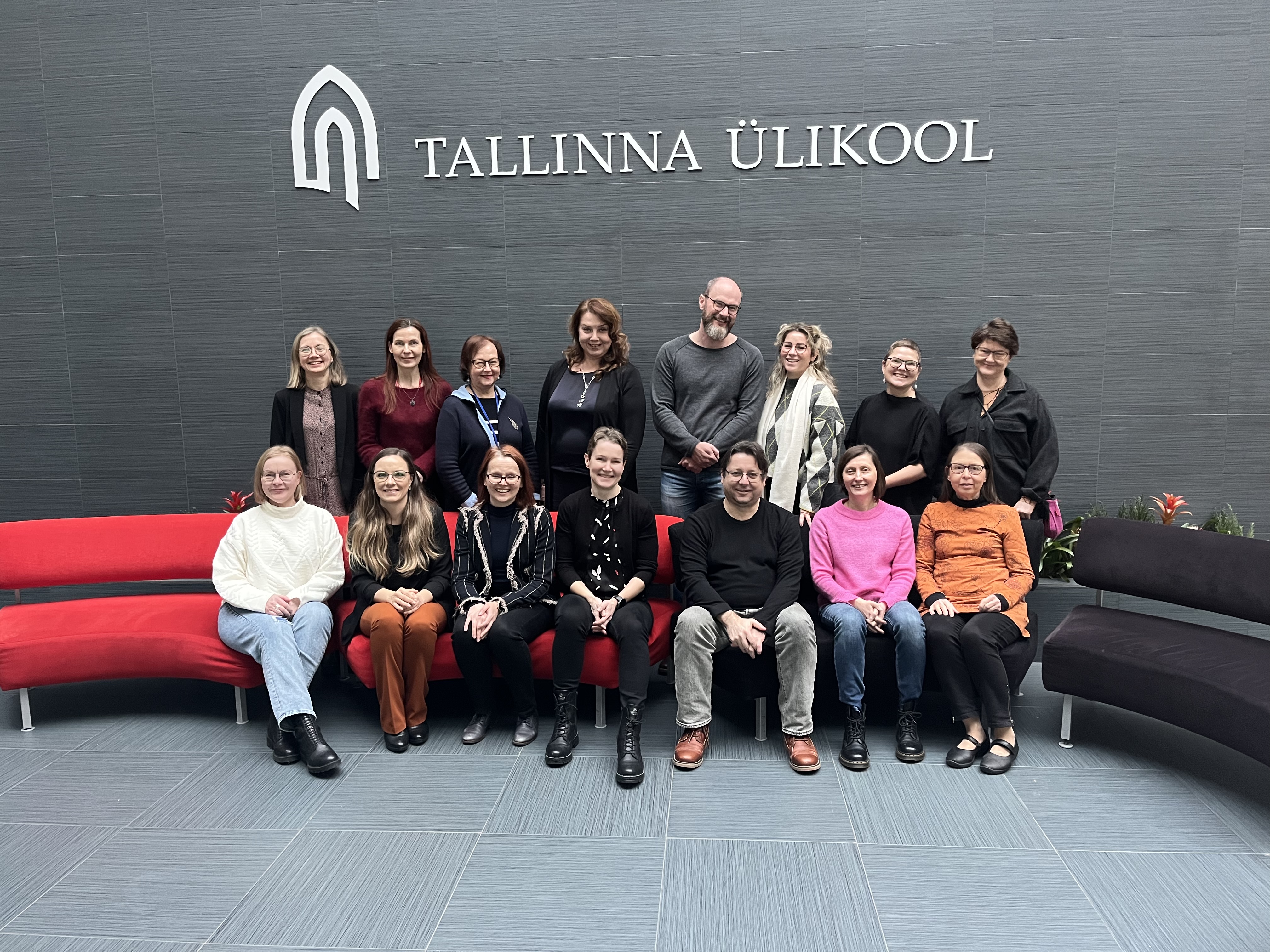
On the 19th of January 2023, the kick-off meeting of the project took place at Tallinn University, where partner organizations and project participants introduced the vision and schedule of each work package, and the following meetings and activities were planned. Maria Erss, the project's communication manager, also conducted an interview with project partners (Christian Harteis and Päivi Tynjälä), where she discussed the partners' expectations for the project, as well as the challenges related to the project. Read the interview here.
Other events
Primary school children were introduced to the world of work and money at the Museum of the Bank of Estonia
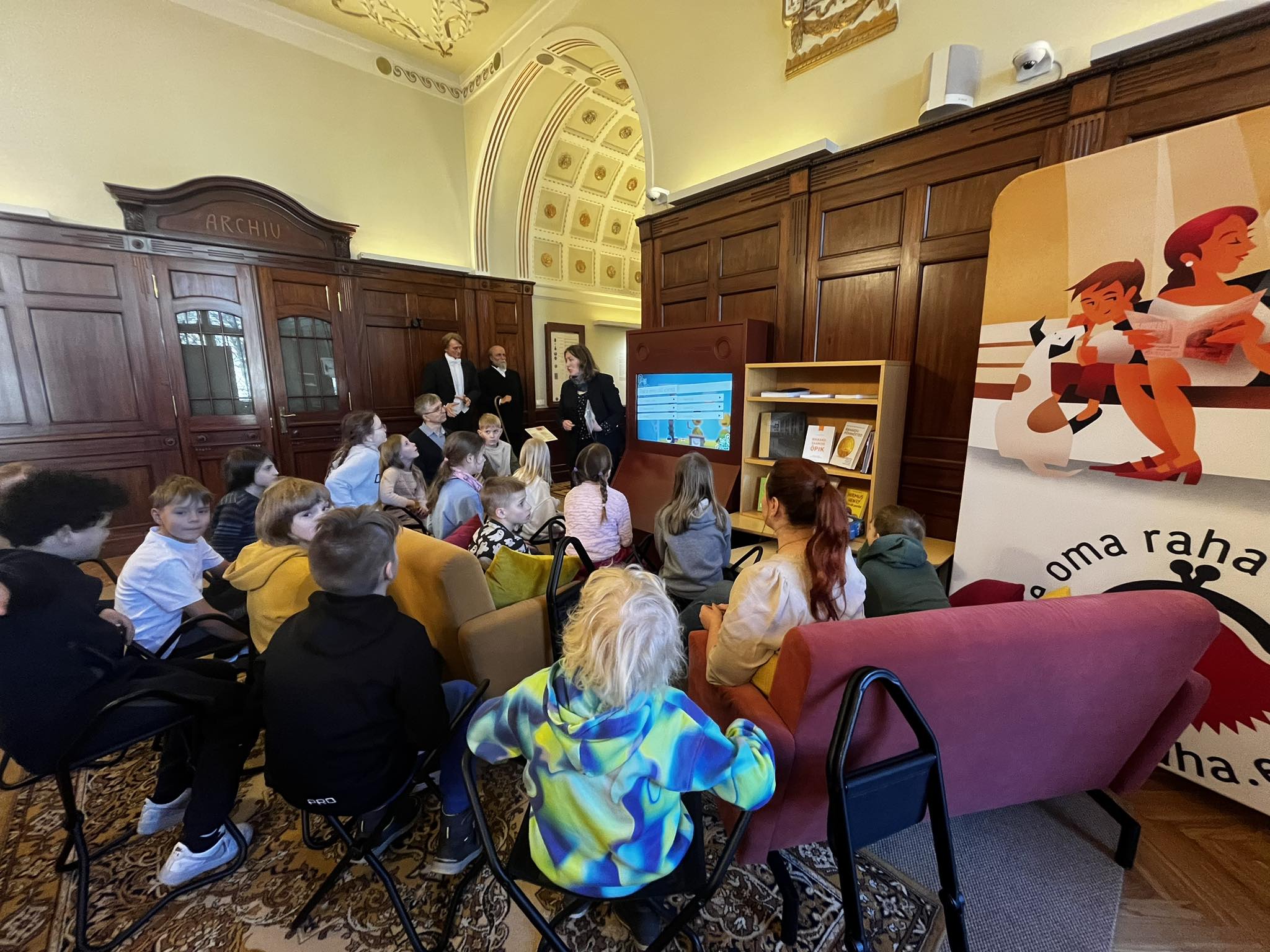
At the School of Educational Sciences of Tallinn University, the FEWL project researchers are investigating how to link formal education and the world of work. Professor Inge Timoštšuk emphasizes that children's understanding of work and the working world is connected to their home experiences, and school can expand these work-related experiences. Teachers can integrate the topic of work into the curriculum and organize suitable field trips. For example, the 3rd-grade students of Gaia School learned financial literacy at the Museum of the Bank of Estonia, where they explored the history of money, discussed earning, saving, and potential risks, and even viewed a real gold bar.
Class teacher and Tallinn University junior researcher Kaidi Nurmik noted that such authentic environments, where learning activities are conducted under the guidance of a specialist, enrich the learning process and make learning more meaningful for students.