
Three Days of Inspiration at Tallinn University
As members of the International Relations Office at the Faculty of Arts, Charles University, our daily work revolves around incoming exchange students, staff mobility, communication, and student support. Through our cooperation within the ELAN network, we reached out to our colleague Maris at the School of Humanities, Tallinn University to explore the possibility of a job shadowing visit.
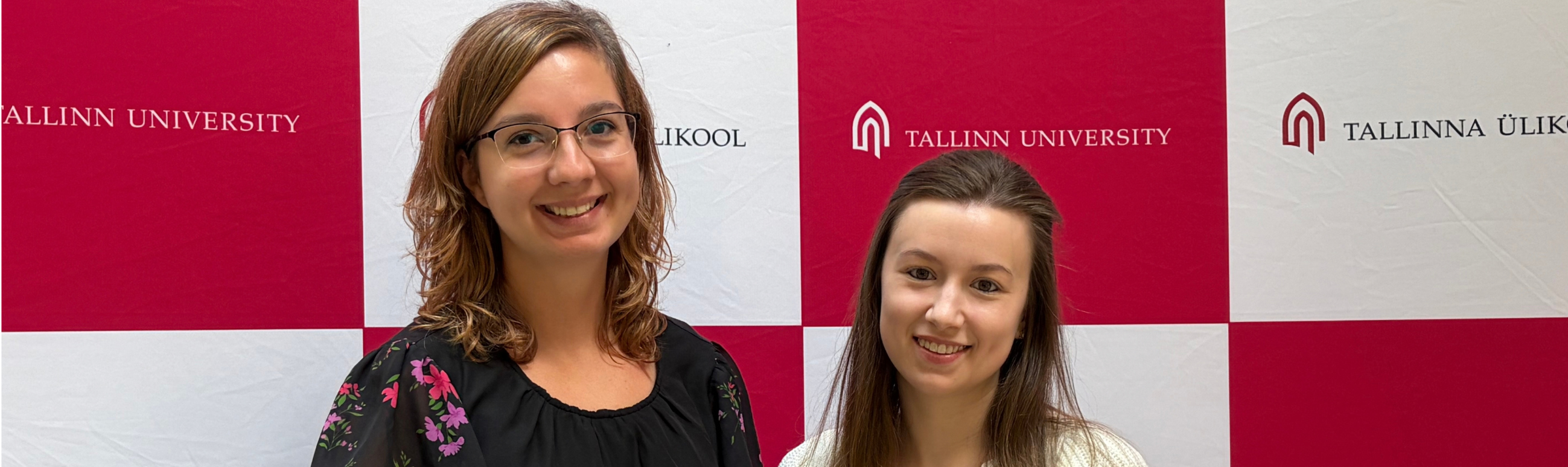
When we first contacted Maris, our initial plan was quite simple. We were looking for a traditional job shadowing experience: a few meetings with colleagues, an opportunity to exchange good practices, and perhaps some new ideas to take home. We certainly did not expect to visit Tallinn University during one of the busiest periods of the semester.
That is why we were genuinely surprised when Maris suggested that we join the Orientation Week for international students. Working in international relations ourselves, we know exactly how intense this period can be. Between arriving students, last-minute questions, registrations, and countless unexpected situations, finding time for visitors is not always easy. The fact that our colleagues were willing not only to welcome us, but also to actively include us in the programme, made us feel especially appreciated from the very beginning.
The kind of welcome every international student hopes for
One of the biggest highlights of our visit was observing the Orientation Week programme.
At first glance, the concept may sound familiar. International students arrive, attend information sessions, learn how the university works, and meet fellow students. What impressed us, however, was the atmosphere. The programme felt less like an administrative necessity and more like a genuine welcome into a community.
Students gathered in a conference hall where practical information was carefully mixed with interactive activities, quizzes, discussions, and opportunities to meet one another. Instead of spending hours listening passively to presentations, students were encouraged to engage from the very beginning.
We particularly enjoyed seeing how actively students were involved in the programme itself. Student representatives introduced university life from their own perspective and helped create a friendly environment where newcomers immediately felt at ease. The role of the Student Union especially caught our attention. It demonstrated how student organisations can become valuable partners for university staff while simultaneously helping international students build social connections.
Another thing we appreciated was how many different people contributed to the programme. International Office colleagues were joined by specialists from the Student Support Centre, representatives of the university sports club, and even local police officers, who offered practical advice on safety and everyday life in Estonia. Some sessions were organised in a talk-show format, which brought an extra level of energy and engagement to the event.
The programme also acknowledged that studying abroad is not just about academics. We particularly appreciated the open discussion about cultural shock, homesickness and the challenges that international students may face during the long northern winter months.
By the end of the week, it was not difficult to understand why the students we spoke with were so positive about their experience. Several ideas from the programme even found their way into our own planning for the upcoming registration period at the Faculty of Arts.
Conversations that sparked new ideas
Beyond Orientation Week, we spent time meeting colleagues whose work closely relates to our own.
Discussions with Nele, Arabella, Janeli and Ingrid from the Central International Office gave us an opportunity to compare practices related to incoming exchange students and staff mobility. Although our institutions are organised differently, we discovered that many of the challenges we face are remarkably similar. Sharing solutions and perspectives was valuable for both sides. We were fascinated by the way support for students with special needs is coordinated and communicated to teaching staff through the student information system.
As part of our daily work, we regularly create content for our own social media channels aimed at international students. We were therefore particularly interested in discussing communication strategies, website management, and the growing role of artificial intelligence in student engagement. The meeting with Brita and Ellu-Marie provided plenty of ideas and food for thought that we could relate directly to our own practice.
We also had a fruitful discussion with Marika, who oversees outbound staff mobility. Particularly inspiring was learning about an internal system that integrates mobility applications and financial reporting into one platform. Like many international offices, we know how much administrative time can be saved when processes are well integrated.
Finally, we had the opportunity to meet with Maris in person, who is the Internationalisation Coordinator at the School of Humanities. We exchanged experiences regarding course catalogues, language requirements, Learning Agreements, digitalisation, timetable support, and our shared cooperation within the ELAN network.
Beyond the university: discovering Tallinn
While professional development was the main purpose of our visit, Tallinn itself became an important part of the experience. We were fortunate to enjoy beautiful weather throughout our stay, allowing us to explore the city after meetings.
We joined a city tour and learned more about the city's fascinating history. We wandered through Kalamaja, explored the area around Fotografiska, visited Balti Jaam Market, and discovered the seaside atmosphere of Noblessner Harbour. One particularly memorable visit was the Seaplane Harbour Museum, which turned out to be much more impressive than we had expected.
We also spent time in the beautiful Kadriorg Park and its peaceful Japanese Garden. One afternoon led us along the coast to the famous Russalka Memorial, where the statue of the angel-like mermaid looks out across the sea. Walking along the nearby beach provided a perfect contrast to our busy schedule and offered a chance to slow down and simply enjoy the surroundings.
And we can’t forget one of our favourite discoveries, kaneelirull, local cinnamon buns. We somehow managed to find one almost every day. Purely for research purposes, of course.
Taking inspiration home
The greatest value of our visit was not a particular meeting, presentation, or system. It was the opportunity to observe, compare, ask questions, and reflect on our own work.
We returned to Prague with plenty of practical ideas, new contacts, and a fresh perspective on our work. We also returned, admittedly, with a healthy dose of professional envy. Seeing so many well-thought-out initiatives in action was both inspiring and motivating. Fortunately, that is exactly what job shadowing is for: bringing home not only good memories, but also the desire to keep improving.
Our sincere thanks go to Maris and all colleagues at Tallinn University for their hospitality, openness, and willingness to share their experiences. Looking back, it is hard to believe how much inspiration could fit into just three days.