Doctoral thesis: In the future, a blood test may be able to replace a biopsy
Doctors often have to take a tissue sample to understand what is happening inside a tumour or another affected organ. Biomedical scientist Danilo Mladenović is working to find the same information from a blood sample. Therefore the research may help doctors detect diseases at an earlier stage in the future and monitor the effectiveness of treatment more effectively, without having to take repeated tissue samples.
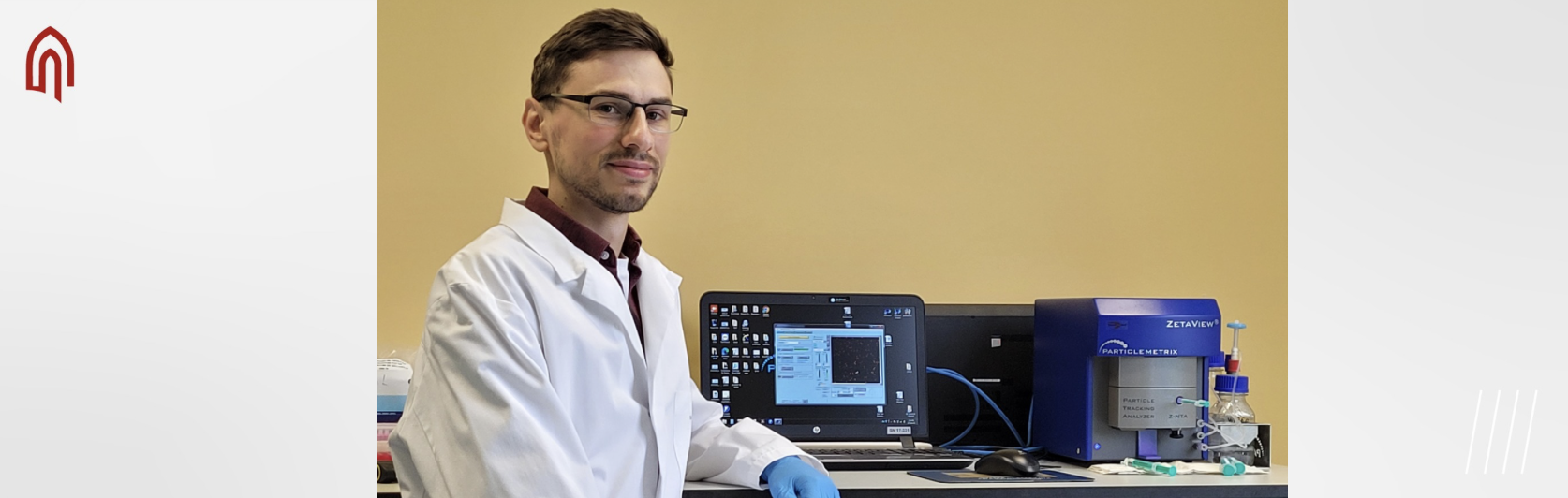
Without any formal training in the field, understanding Danilo Mladenović’s development work requires a good imagination. One way to think about it is to imagine that every cell in the human body is a tiny house. All the houses are constantly sending each other tiny packages. Some packages contain proteins, while others contain fragments of genetic information that carry messages about their origin. Billions of these tiny little packages circulate in the human bloodstream every day. The packages are so small that you could fit millions of them on the tip of a needle.
If one of the houses falls ill, the package it has sent may also be affected. By detecting these packages in the blood and reading the messages they contain, researchers and doctors can find out what is happening inside the body without having to examine the affected organ directly.
The right information can be found in the blood, but how do you find it?
The problem is that blood vessels are extremely narrow. Blood contains millions of different particles and molecules. Finding these packages – or extracellular vesicles – is like trying to find an important letter in your letterbox, while your letterbox is full of newspapers, adverts and thousands of unread letters. “My research has developed methods that make finding the right one easier,” explains Danilo Mladenović, a biomedical scientist who has just defended his PhD at Tallinn University. “In one approach, I used controlled changes in the acidity of blood plasma to separate extracellular vesicles from unwanted particles. As a result, under optimal conditions, the number of extracellular vesicles in the sample increased by up to 3.3 times, while unwanted lipoprotein contamination was reduced by over 60 per cent.” This means that the information being sought stood out more clearly.
The information found also needs to be interpreted
Finding the information – or packages – is only part of the challenge. Researchers must also be able to read the letter inside the package. “To address this, I investigated how to identify and better measure the molecular markers of extracellular vesicles or, in other words, how to understand the information contained within these packages," says the biomedical scientist. “This has not been fully resolved before. I’ve now found a method that highlights key information, so we can interpret it more effectively.”
Danilo Mladenović believes that his research could play a significant role in the future of medicine. While doctors currently have to often take tissue samples to understand what is happening inside a tumour or some other affected organ, this may become a thing of the past in the future. “We need an alternative to the current practice, because a biopsy can provide valuable information about a particular organ, but not about the whole body,” the researcher emphasises. A blood test, on the other hand, can potentially provide information about many parts of the body at once, and as taking a blood sample is also relatively straightforward, it can be carried out more frequently than a tissue sample.
In the future, a blood test may help detect diseases at an earlier stage
This is precisely the great promise of the development of liquid biopsy – blood becoming a ‘window into the body’. In the future, this could help doctors detect diseases at an earlier stage, see whether treatment is working, identify changes in the course of the disease, or detect a cancer recurrence, without having to take repeated tissue samples. However, before the method can be put into practice, thorough clinical trials are required.
“The findings of my doctoral thesis are a step closer to a future where a small blood sample could reveal much more about what is happening inside the body,” says Danilo Mladenović.
Thesis defence
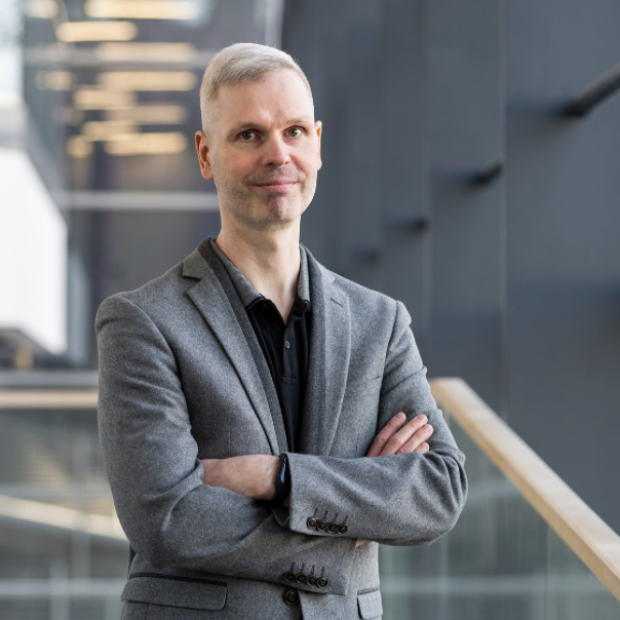
Danilo Mladenović defended his PhD at Tallinn University’s School of Natural Sciences and Health on 16 October 2026.
His doctoral thesis is entitled Advancing methods for enrichment and analysis of extracellular vesicles from complex biofluids (“Ekstratsellulaarsete vesiikulite rikastamise ja analüüsi meetodite arendamine komplekssetest biovedelikest”).
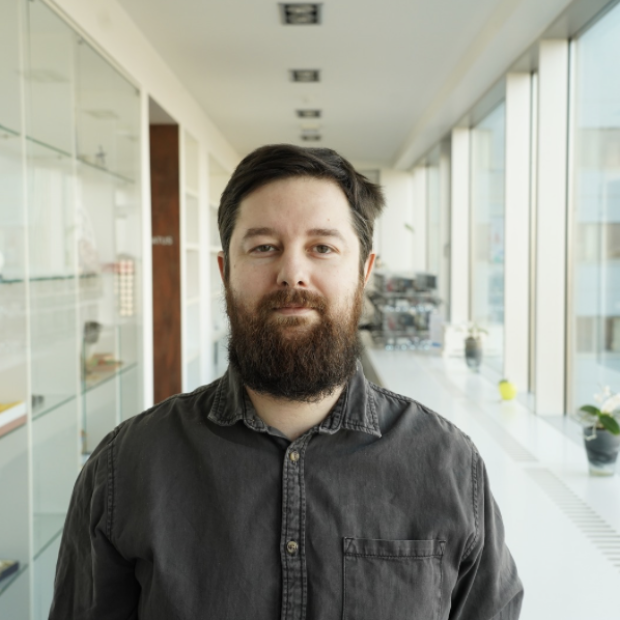
The supervisor for the doctoral thesis is Nataša Zarovni, Scientific Officer at RoseBio.
The consultant is Kairi Koort, a Junior Lecturer of Systems Biology at Tallinn University.
The opponents are Metka Lenassi, Associate Professor of Biochemistry and Molecular Biology at the University of Ljubljana, and Pia Siljander, Senior Lecturer in Biochemistry at the University of Helsinki.
The doctoral thesis can be read in the ETERA digital environment of the Tallinn University Academic Library.