Researchers from School of Digital Technologies contributes to European AI-Mind project on dementia prevention
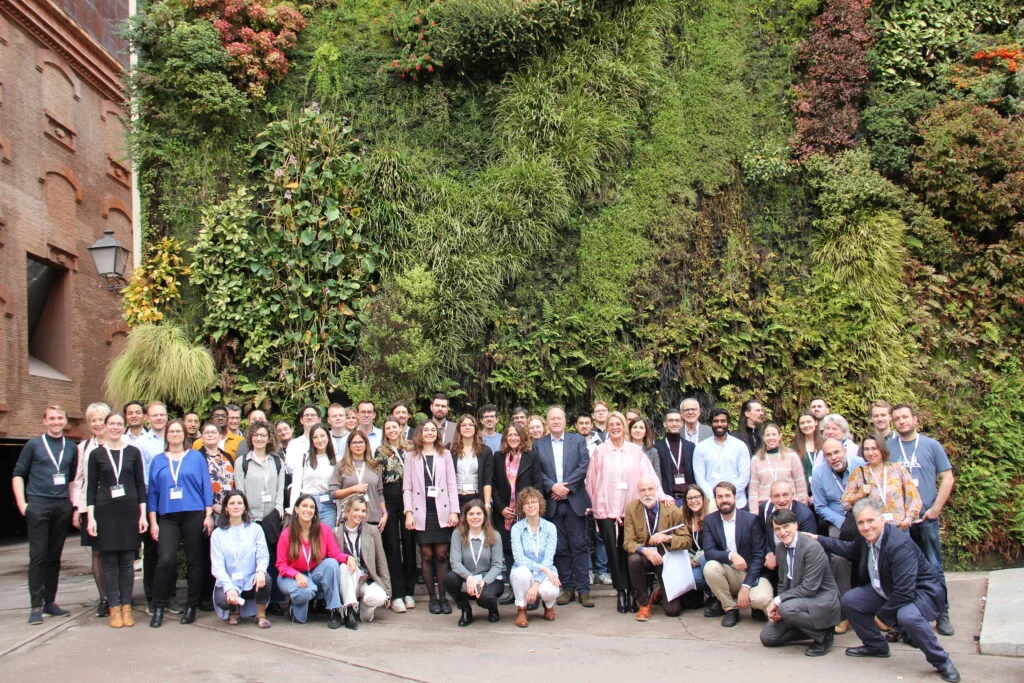
After five years of international collaboration, the Horizon 2020-funded research project AI-Mind has come to an end. Bringing together 17 partners from eight European countries, the project developed artificial intelligence-based tools to help healthcare professionals identify people at risk of developing dementia earlier and more accurately.
Researchers from Tallinn University's School of Digital Technologies contributed to the AI-Mind project through their expertise in artificial intelligence and digital health technologies. Sonia Sousa and her team were involved in advancing innovative approaches that support the project's vision of improving dementia prevention through data-driven healthcare solutions.
"AI-Mind demonstrated the potential of combining advanced artificial intelligence methods with clinical expertise to address one of the most pressing healthcare challenges of our time. It was particularly rewarding to contribute to a project that not only advances scientific knowledge but also has the potential to improve the lives of people at risk of dementia," said Sonia Sousa.
More than 10 million Europeans are estimated to have Mild Cognitive Impairment (MCI), a condition associated with an increased risk of developing dementia. To support earlier intervention, AI-Mind aimed to shorten the often lengthy diagnostic process by developing digital tools capable of providing highly accurate individual dementia risk predictions.
At the heart of the project was a large-scale clinical study involving more than 1,000 participants with MCI across Finland, Italy, Norway and Spain. The resulting dataset enabled researchers to develop and validate the project's two core tools: the AI-Mind Connector, which identifies dysfunctional brain networks, and the AI-Mind Predictor, which estimates an individual's future risk of dementia using brain activity and clinical data.
Reflecting on the project's achievements, AI-Mind coordinator Ira Haraldsen emphasised the importance of international collaboration: "Over the past five years, AI-Mind has brought together experts from across Europe to tackle one of the biggest challenges in dementia research. Throughout the project, we have made significant strides in developing innovative AI-based tools to support healthcare professionals in diagnosis and enable more timely interventions for patients."
Although the project formally concluded in February 2026, its impact is expected to continue. The tools, datasets and clinical insights generated through AI-Mind provide a strong foundation for future research and for the integration of AI-supported dementia risk assessment into healthcare systems.