
Estonia’s Largest Archaeological Collection Receives a Modern Storage Facility
Tallinn University’s archaeological research collection has moved into a new, modern facility specifically designed for the preservation of archaeological finds.
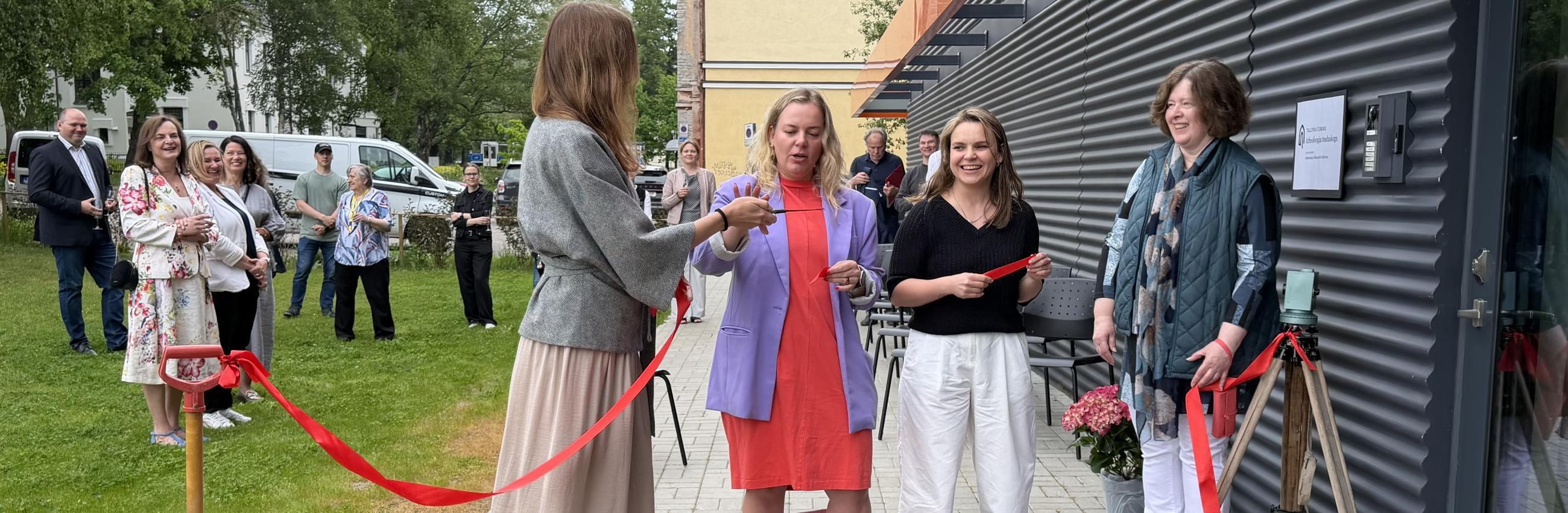
The finds held in Tallinn University’s archaeological research collection—approximately 1.5 million artefacts, the oldest of which date back 10,000–11,000 years—have been relocated to a new, purpose-built storage facility at Ankru Street 4a in Tallinn.
Speaking at the opening of the building, Head of the Archaeological Research Collection at Tallinn University, Lembi Lõugas, emphasised that buildings always reflect the values and priorities of their time. “This building is not designed solely as a functional space for work, activity or storage. It has been created with the future in mind—offering a modern, comfortable and inspiring environment where people can learn, work, create, meet and develop ideas, while safely preserving valuable objects that reflect our distant past,” she said.
Archaeological collections are not intended for storage alone; they are actively used in research. Safeguarding and preserving cultural heritage also places an important responsibility on collection managers to make the material accessible to researchers, students and scholars from Estonia and abroad. “I hope this building will be full of life, good ideas and successful initiatives. Inevitably, some spaces here also contain lifeless remnants of past lives and discarded objects from ancient times, but these are the basis for new ideas and knowledge within archaeological communities,” Lõugas added.
The archaeological research collection held at Tallinn University forms the largest part of Estonia’s national archaeological collection. Its formal establishment dates back to 1947, although the origins of its oldest constituent collections extend much further, to 1838. Over time, the collection has been assembled from materials originating from several institutions, including the Learned Estonian Society, the Estonian Literary Society, the University of Tartu Archaeology Cabinet, the Estonian National Museum, the Estonian History Museum, the Institute of History of the Estonian Academy of Sciences, and others. Since 2006, the collection has been registered as state property.