SOGOLAS Research Seminar: Children Affected by Armed Conflict in the Jurisprudence of the European Court of Human Rights
On 8 May 2026, we had the pleasure of attending a research seminar by Professor Dr. Vasilka Sancin, a Judge of the European Court of Human Rights (ECtHR).
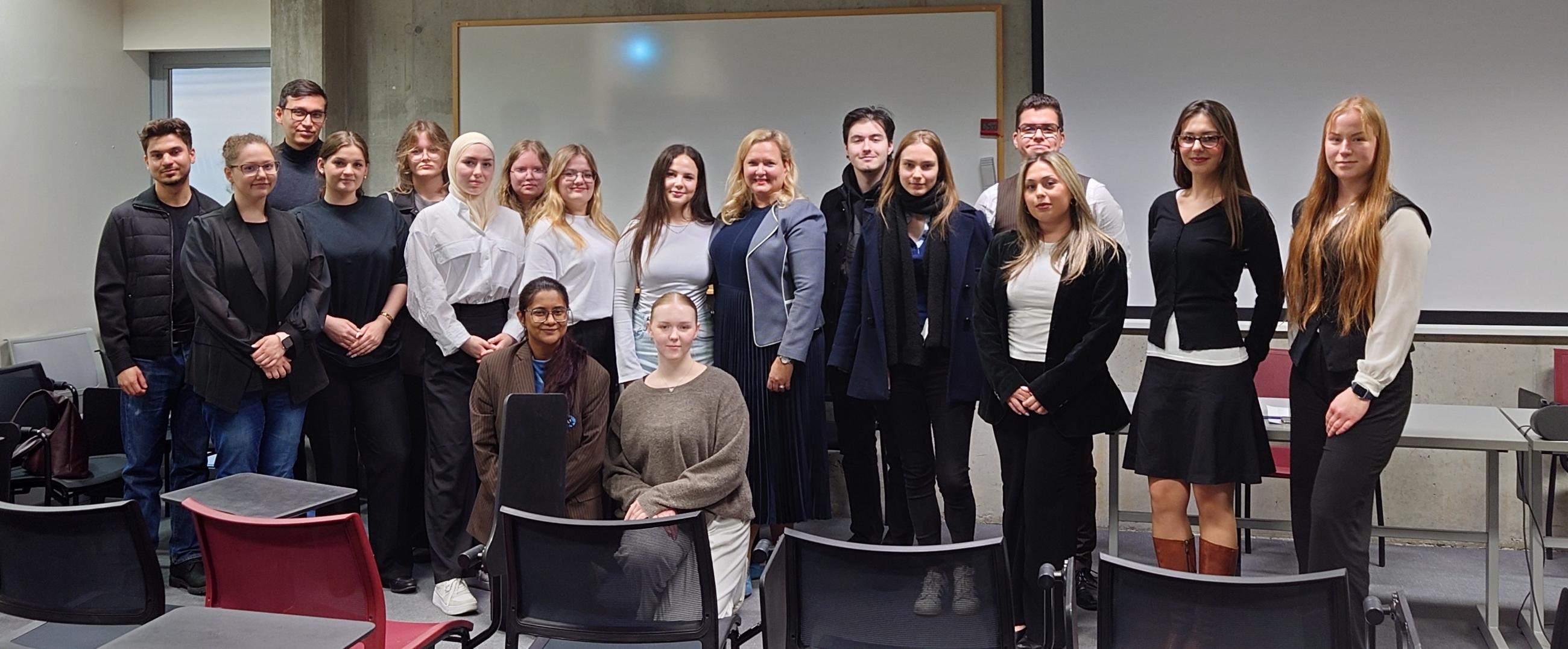
On any given week at the ECtHR in Strasbourg, cases drop at a relentless pace. It is a testament to an institution frequently described as "a court for everyone", as it is the closest entity the modern world has to a functional world court of human rights. In the seminar, Professor Dr. Vasilka Sancin provided a rare behind-the-scenes look into the structural mechanics, judicial pathways, and evolving jurisprudence of the Court. Crucially, the seminar focused on how the ECtHR navigates the harrowing intersection of childhood and active warfare, detailing how the Court is pioneering child-sensitive approaches and carving out a doctrine of "enhanced state responsibility."
To understand how the ECtHR protects vulnerable populations, one must first understand its unique institutional structure. While many international human rights mechanisms suffer from a lack of enforcement, the ECtHR has a highly effective system for implementation across its contracting states. Following recent geopolitical shifts, 46 States currently accept its jurisdiction, and their compliance is closely monitored by the Committee of Ministers. Judge Sancin pulled back the curtain on the internal mechanics that keep this massive legal apparatus working. She started by giving us an overview of the Court’s structure, which was followed by a description of the Grand Chamber lottery, a system put in place to ensure absolute impartiality. When a case is deemed significant enough to be relinquished or appealed to the Grand Chamber, the 17-judge panel is selected through a rigorous lottery system. Furthermore, the Court actively welcomes the democratic landscape into its chambers. In every case, there is an option for third-party interventions, allowing NGOs, ombudsmen, and foreign governments to submit observations that shape systemic human rights standards. Additionally, Constitutional and Supreme courts of member states can request advisory opinions from the ECtHR, fostering a dialogue that harmonizes domestic law with European human rights standards before a formal violation even occurs.
A core conflict addressed by the seminar was which law applies in active warfare. It is often argued that International Human Rights Law (IHRL) ceases to matter in the chaos of war, leaving only International Humanitarian Law (IHL) in charge. Historically, the International Court of Justice (ICJ) has issued advisory opinions stating that both bodies of law matter concurrently, though IHL traditionally takes precedence because it was specifically designed for wartime (lex specialis). Furthermore, past ECtHR cases like Georgia v. Russia danced around the issue without definitively ruling on which law prevails. However, Judge Sancin highlighted a massive tectonic shift in the Court's jurisprudence. In the landmark decision of Ukraine and the Netherlands v. Russia, the ECtHR explicitly denied that IHL operates strictly as lex specialis. Instead, the Court ruled that both branches of law apply concurrently, even in situations of active armed hostilities. By refusing to switch off human rights protections during wartime, the ECtHR has solidified its mandate to police state actions and protect people’s rights.
As we are currently witnessing the highest number of armed conflicts globally since the Second World War, the topic of this seminar was especially relevant. This reality is compounded by modern catalyst threats: climate change and environmental degradation are triggering mass migrations and resource conflicts, while the rise of cyber warfare introduces untraceable disruptions to civilian infrastructure. In these fractured landscapes, children, particularly girls, are the most exposed to inhumane or degrading treatment, sexual abuse, and systemic violence. Judge Sancin emphasized that a child’s suffering is rarely one-dimensional. The Court increasingly recognizes the concept of intersectional suffering, where a child may face layered, amplified vulnerabilities based simultaneously on their sex, ethnicity, religion, and displacement status. In response to these vulnerabilities, the ECtHR has established a strict doctrine of enhanced responsibility of the state. When evaluating whether a State has fulfilled its positive obligations (the duty to actively protect citizens, rather than just avoid harming them), the Court filters everything through a singular lens: What is in the best interests of the child? This translates into concrete legal burdens for member states. In military planning, States possess a heightened duty of care when designing military strategies. They must actively integrate precautions to protect vulnerable groups and prevent civilian children from suffering. The ECtHR itself has adapted its judicial procedures to adopt child-sensitive approaches, ensuring that legal processes do not re-traumatize or re-victimize the children seeking justice. Additionally, the intersection of child protection and human rights isn't restricted to active battlefields; it frequently plays out in complex custodial and asylum disputes triggered by conflict. To track how domestic courts handle these delicate scenarios, Judge Sancin directed students to the specialized case law guides available on the ECtHR website.
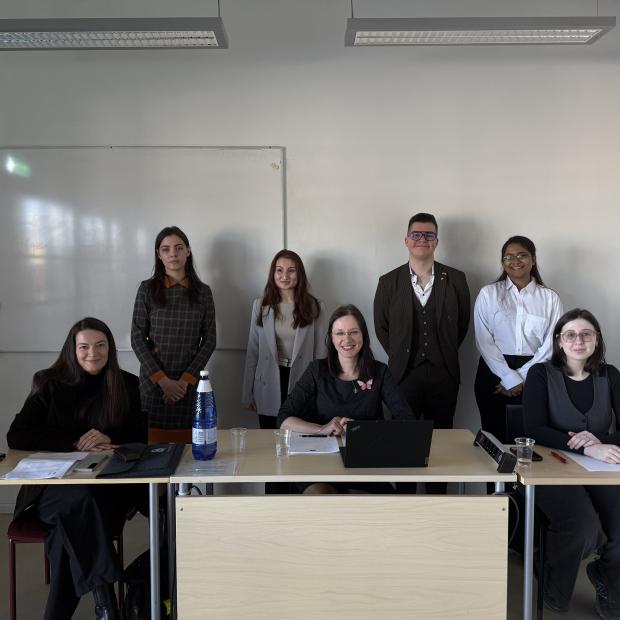
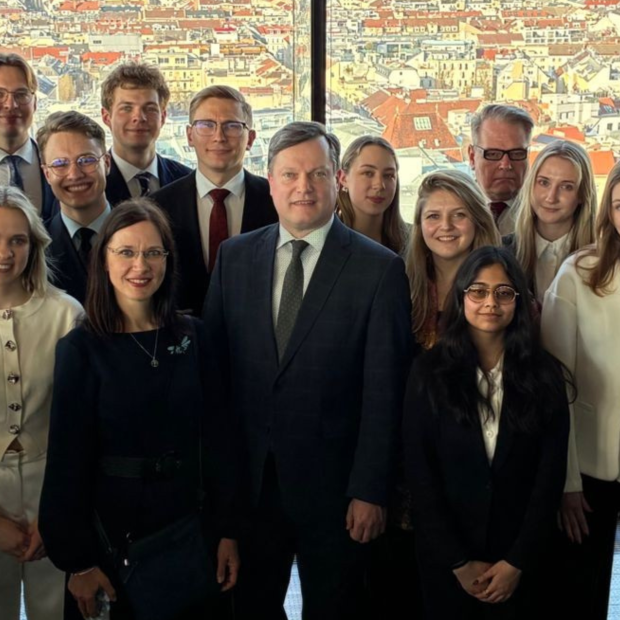
The seminar concluded with an engaging and candid Q&A session between Judge Sancin and the students in attendance. The discussion also veered into contemporary global crises, with students eager to hear her perspectives on the systemic legal challenges. We are especially grateful to the Judge for traveling to Tallinn specifically to meet with us, discuss her work, share invaluable insights, and inspire us to pursue careers in international human rights law. The research seminar was organised by Dr Karolina Aksamitowska, the Head of the Law programme at Tallinn University.