Exploring Equal Treatment, Diversity and Inclusion: A Guest Workshop in Intercultural Communication Course
How do cultural backgrounds shape the way we communicate, give feedback and understand one another? And how can universities create environments in which everyone feels respected, included and treated equally?
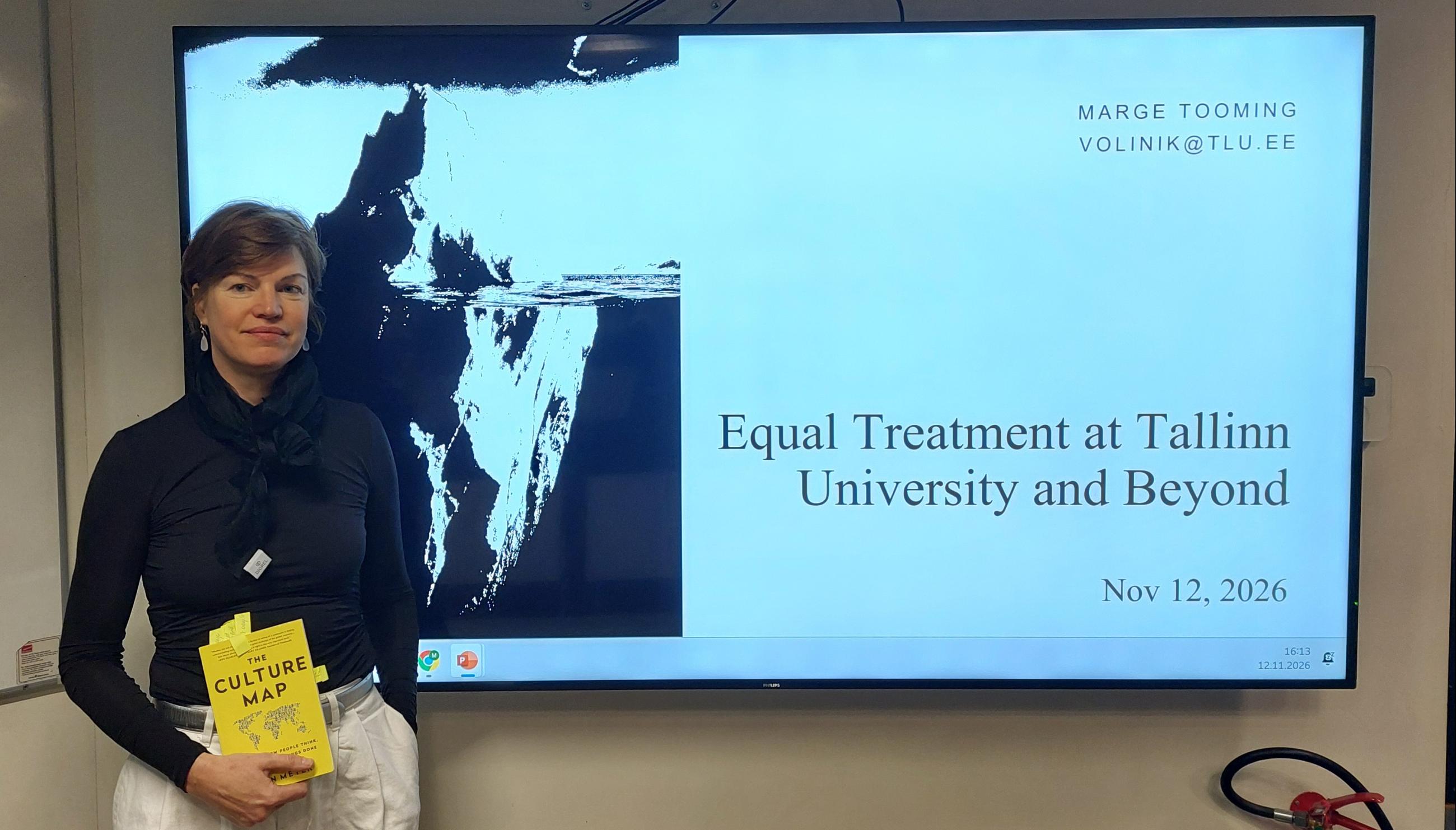
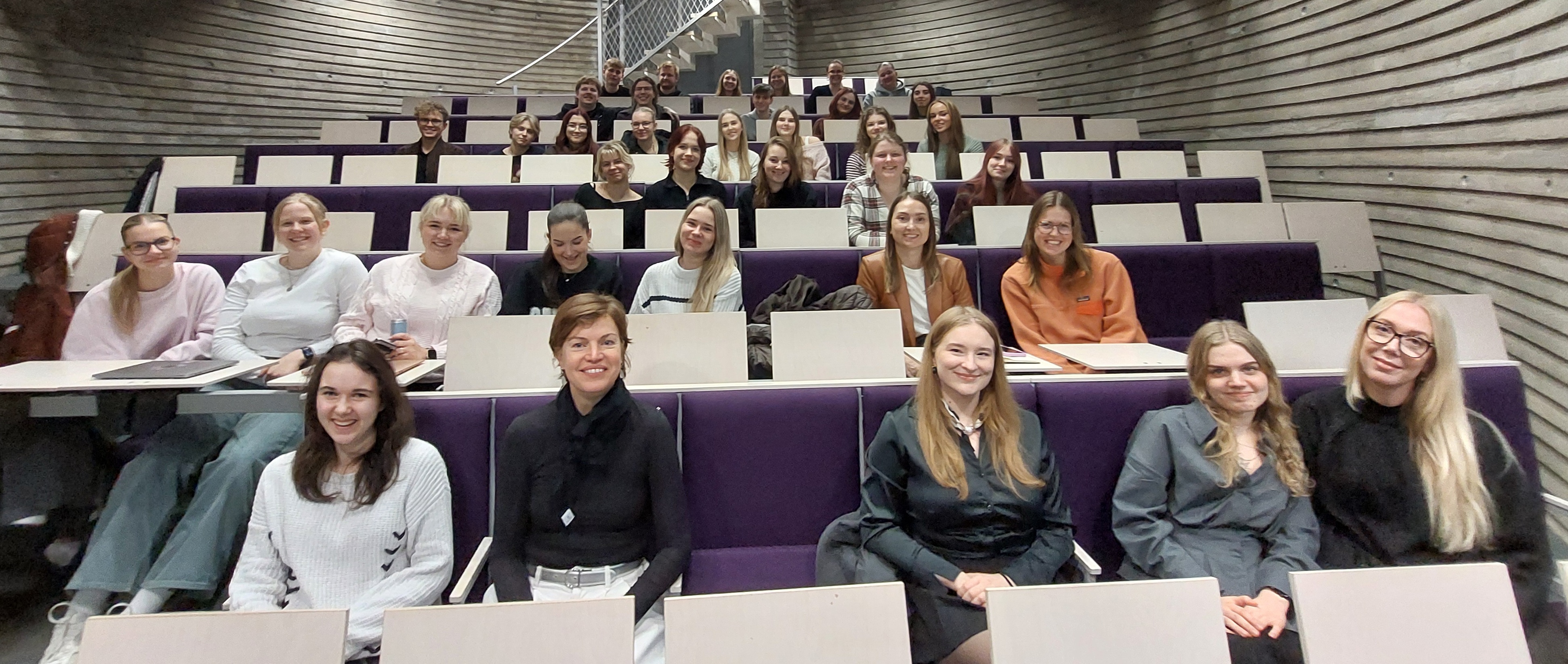
These questions were at the heart of a guest workshop led by Marge Tooming, Equal Treatment Commissioner at Tallinn University, on 12 November 2026. The workshop formed part of the TLU BFM's Intercultural Communication course, taught by Professor of Intercultural Communication Dr Anastassia Zabrodskaja. Bringing together questions of equality, cultural awareness and everyday communication, the session encouraged students to reflect on their own experiences and consider how intercultural understanding can contribute to a more inclusive university community.
Understanding equality through different cultural perspectives
Drawing on her experience of living, working and studying across three continents, Marge Tooming introduced students to the histories and principles of equal treatment, as well as Tallinn University's approach to equity, diversity and inclusion. The workshop explored students' lived experiences at the university and invited them to reflect on the results of an equity survey conducted ahead of the session. This provided an opportunity to consider how individuals experience their learning environment and how different perspectives can shape our understanding of fairness and inclusion.
Students also explored the development of equal treatment frameworks in Estonia, the European Union and the United States, including the concept of affirmative action. An important part of the discussion focused on what equal treatment means in the context of higher education and how universities can recognise and address situations in which individuals may experience unequal treatment.
When feedback means different things across cultures
One of the workshop's central themes was the influence of culture on communication styles, particularly when giving and receiving feedback. Using examples from the United States, France, Asia and Estonia, students examined how cultural backgrounds can influence the way people express opinions, respond to criticism and communicate feedback.
The discussion highlighted the importance of recognising that communication practices are not universal. What may be considered direct and constructive in one cultural context might be perceived differently in another. By comparing their own communication styles with the examples presented, students were encouraged to question assumptions, recognise cultural differences and develop greater awareness of how their behaviour affects interactions with others.
From awareness to action
Beyond understanding the principles of equality and cultural diversity, the workshop emphasised the importance of taking action when witnessing unequal treatment. Students were introduced to practical strategies for stepping in and responding to situations that may involve discrimination or exclusion. This connected theoretical knowledge with the everyday responsibilities of individuals in an academic community.
For Marge Tooming, developing an equal treatment system at Tallinn University means fostering an environment that is free from discrimination, open to diversity and equipped to provide qualified support and advice. Her broader aim is also to contribute to the development of good practices in equal treatment within Estonian higher education and to nurture a culture of care.
Learning to communicate across differences
The guest workshop reflected the broader aims of Tallinn University BFM's Intercultural Communication course, which introduces students to key concepts, theories and research themes in intercultural communication. These include intercultural competence, interculturality, stereotyping, lingua franca communication and nationalism. By combining academic perspectives with practical examples and personal reflection, the course encourages students to understand intercultural communication not simply as an academic subject, but as an essential competence in increasingly diverse societies.
The session with Marge Tooming demonstrated that building an inclusive university community requires more than an understanding of policies and principles. It also calls for curiosity, reflection, awareness of cultural differences and a willingness to act when others experience unequal treatment. Ultimately, learning to communicate across cultures begins with recognising that people may see, experience and interpret the same situation differently. Creating space for these differences is an important step towards a university community in which everyone can participate, contribute and feel respected.
For additional information, please contact Dr Anastassia Zabrodskaja, Professor of Intercultural Communication, Head of the MA Programme in Communication Management, and Executive Director of the European Masters in Intercultural Communication, at anastassia.zabrodskaja@tlu.ee.