EMICC students begin their Tallinn semester by exploring Estonia’s stories of freedom
The new semester of the European Masters in Intercultural Communication (EMICC) began at Tallinn University on 31 August, with the international group of students starting their Tallinn experience with a visit to Vabamu and reflections on Estonia’s history, freedom, resilience and memory.
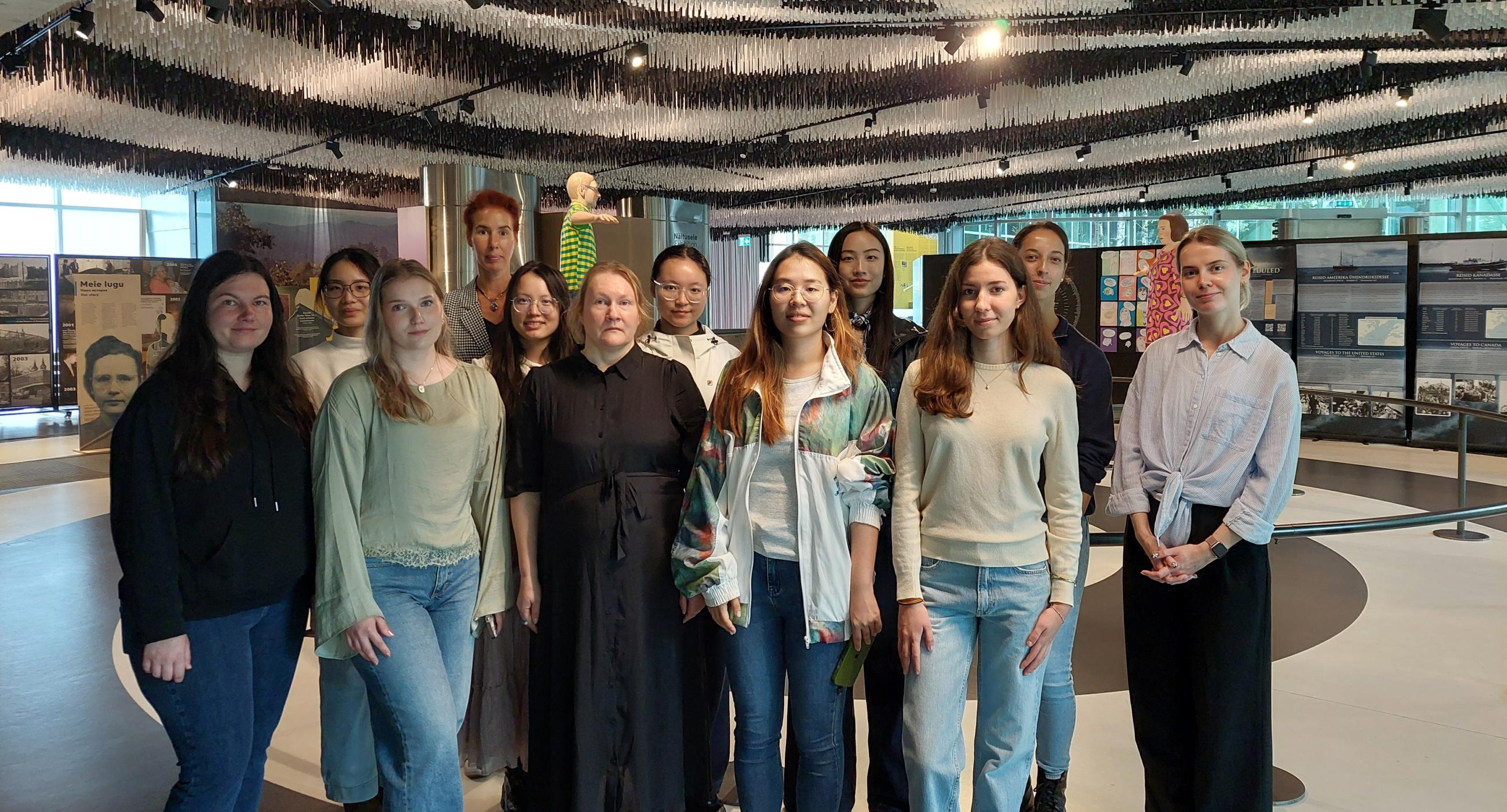
Ten students of the European Masters in Intercultural Communication (EMICC) began their new semester at Tallinn University on 31 August with a visit to Vabamu, the museum of occupations and freedom in Tallinn. Their first experience outside the university introduced them to Estonia’s recent history and prompted reflections on freedom, resilience, memory and the courage of ordinary people.
The students are taking part in the EMICC Eurocampus, a four-month intensive programme that brings together students from universities across Europe to study intercultural communication from different academic and cultural perspectives. In autumn 2026, the Eurocampus is hosted by Tallinn University Baltic Film, Media and Arts School (BFM). The EMICC network brings together nine European universities, with Tallinn University playing a central role in the programme.
At Vabamu, the students explored Estonia’s experiences under Soviet and Nazi occupations, the struggles of people living under repression, and the country’s path towards the restoration of independence. What particularly stayed with many of the students were the personal stories behind these historical events.
“The most impressive part was the personal stories of Estonian people during the Soviet occupation,” one student reflected. “It made me understand Estonia’s history better, and I think I will remember these stories for a long time.”
For another student, the visit highlighted the strength and determination of people who lived through difficult times. The story of Estonia’s Singing Revolution was particularly moving, as was the way Estonians built connections with other nations and sought international support for their independence.
Several students said that the visit made them think about freedom not as something that can be taken for granted, but as something that requires courage and commitment to protect.
“I take with me the stories of people who lost their freedoms but still tried to keep hope,” one student said. “The museum made me realise how important freedom is.”
Another student reflected on how families helped people preserve hope during periods when their freedom had been taken away. Others were struck by the parallels between Estonia’s history and the experiences of other European countries.
“We are in a complicated world, filled with power struggles, happiness and fear, peace and chaos,” one student reflected. “Although the world is like this, humans are eager for a future and freedom.”
The students were also impressed by the museum itself. One participant expressed gratitude for the “excellent museum tour”, highlighting Vabamu’s modern facilities and professional introduction to Estonia’s history.
One of the stories that made a particularly strong impression was that of an Estonian woman who had settled in the United States but later devoted her resources to establishing the museum in her homeland. For the student, this story underlined the importance of remembering the past even when generations living in freedom may be far removed from the suffering experienced by those before them.
“When people live in freedom and happiness, they may choose to forget the suffering of the past,” the student reflected. “However, we must remember those painful experiences and how previous generations struggled to survive.”
.jpg)
Agnes Kaasik leading an excellent tour.
The EMICC students would also like to express their sincere thanks to Agnes Kaasik for welcoming and guiding them during the visit and for the opportunity to visit Vabamu free of charge. They are also grateful to Ivo Lille, Head of Tallinn University Baltic Film, Media and Arts School, for his kind support in making the visit possible.
Beginning the Eurocampus with a visit to Vabamu offered the international group more than an introduction to Estonia’s history. It also provided a starting point for thinking about themes that are central to intercultural communication: how societies remember, how historical experiences shape identities, and how people communicate across different experiences of freedom, conflict and belonging.
For the EMICC students, the semester in Tallinn has therefore begun with a powerful reminder that understanding another culture also means listening to the stories that have shaped it.
For additional information, please contact Dr Anastassia Zabrodskaja, Professor of Intercultural Communication, Head of the MA Programme in Communication Management, and Executive Director of the European Masters in Intercultural Communication, at anastassia.zabrodskaja@tlu.ee.