
SustainERA – Accelerating Europe’s Green Transition
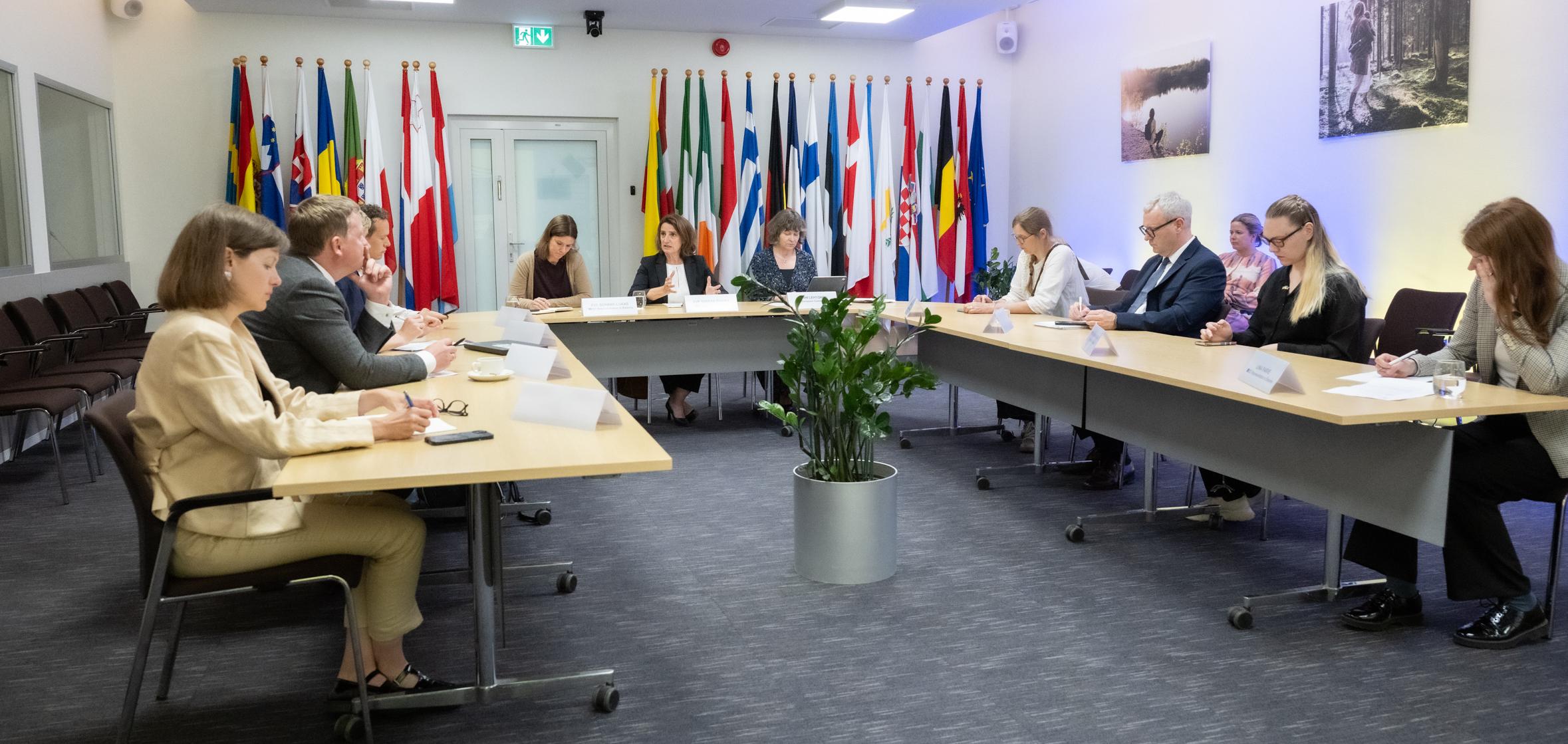
Today, Kai Pata, lead of Tallinn University’s interdisciplinary SustainERA project, will participate in a roundtable discussion with European Commission Executive Vice-President Teresa Ribera. The discussion will focus on SustainERA’s contribution to advancing the European Union’s green transition and clean industry agenda, as well as on how science, education, and community-driven innovation can support sustainable societal transformation. During the roundtable, Pata will present the SustainERA OpenLab model as a practical tool for connecting scientific knowledge with the everyday decisions of citizens, businesses, and policymakers.
Europe’s green transition requires more than new technologies. Its success depends on people, communities, and organizations that can understand, embrace, and implement change. Tallinn University’s ERA Chair project, SustainERA, was created with this goal in mind: to bring together science, education, communities, and policymakers to accelerate the transition towards sustainability in Estonia and across the European Research Area.
At the heart of SustainERA is the OpenLab model—open collaborative laboratories where citizens, businesses, schools, non-governmental organizations, and public sector actors can jointly experiment with and develop sustainable solutions. The project’s activities cover sustainability education, research on the implementation of Environmental, Social and Governance (ESG) principles, the development of the circular bioeconomy, and strengthening community resilience.
A key component of SustainERA’s work is the development of the skills needed for the green transition. The project supports the GreenComp sustainability competence framework, lifelong learning, micro-credentials, and community-based learning. At the same time, researchers investigate how organizations can move beyond ESG reporting towards genuinely sustainable practices, and what barriers and opportunities emerge along this pathway.
SustainERA emphasizes that many of the challenges associated with the green transition are primarily social rather than technological. For this reason, the project examines people’s attitudes, trust, sense of responsibility, behavioural change, and community resilience. Through OpenLabs, citizens become active co-creators of solutions rather than passive recipients of policies.
At the European level, the project sees an opportunity to establish a network of Sustainability OpenLabs that would connect universities, communities, and businesses. Such a network could support the European Green Deal, climate adaptation missions, the Union of Skills, and regional innovation strategies. Universities could serve as regional sustainability hubs, linking research, education, and practical action.
According to SustainERA, community-based experimentation and social innovation require stronger long-term support. While technological demonstration projects often receive substantial funding, community engagement, behavioural change research, and citizen-led initiatives frequently remain underfunded. The project aims to demonstrate how OpenLabs can evolve into permanent societal infrastructures that help drive Europe’s green transition—not only through technology, but also through people and communities.
SustainERA seeks to act as a bridge between researchers, citizens, organizations, and policymakers, helping Europe move from understanding sustainability to putting it into practice.