Social Entrepreneurship in Action: My Learning Journey with Amanita in Estonia
How can social entrepreneurship create meaningful change? During my internship with Amanita in Estonia, I had the opportunity to discover how innovative ideas can improve lives, strengthen communities, and inspire the development of my own social entrepreneurship project.
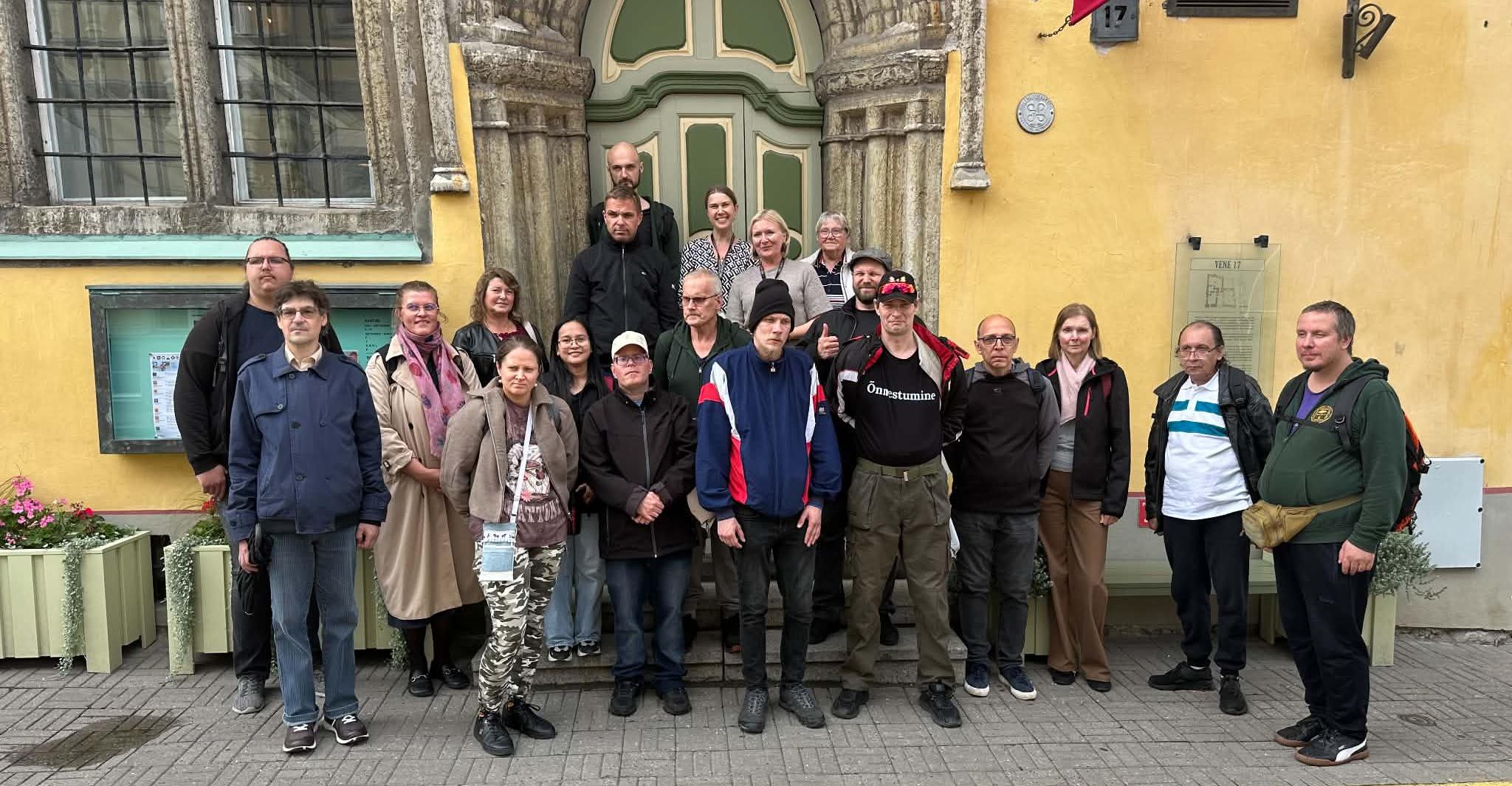
Turning Social Innovation into Real Impact
From August 10 to September 7, 2026, I completed my internship with Solve et Coagula OÜ and Amanita MTÜ in Pärnu, Estonia, under the supervision of social entrepreneur Indrek Linnuste.
Amanita supports people with mental health conditions, intellectual disabilities, autism, and other support needs through community living services, employment opportunities, and inclusive activities.
Studying Social Entrepreneurship at Tallinn University has given me an opportunity not only to learn about social innovation but also to explore how I can contribute to creating meaningful change through my own project.
To learn more about Amanita’s initiatives and social impact, visit official website and Amanita on Facebook.
One of the most inspiring initiatives I encountered was the Amanita Woodcraft Center, where participants transform industrial wood leftovers into handmade gifts and household products. This initiative combines environmental sustainability with skills development and meaningful employment, demonstrating how social enterprises can create both economic and social value.
Another highlight was Pärnu Invarand, an accessible beach initiative that allows people with mobility limitations to enjoy the sea. Beyond improving accessibility, the project creates seasonal employment opportunities for individuals supported by Amanita.
These experiences showed me how social entrepreneurship can address societal challenges through innovative business models, community collaboration, and sustainable practices.
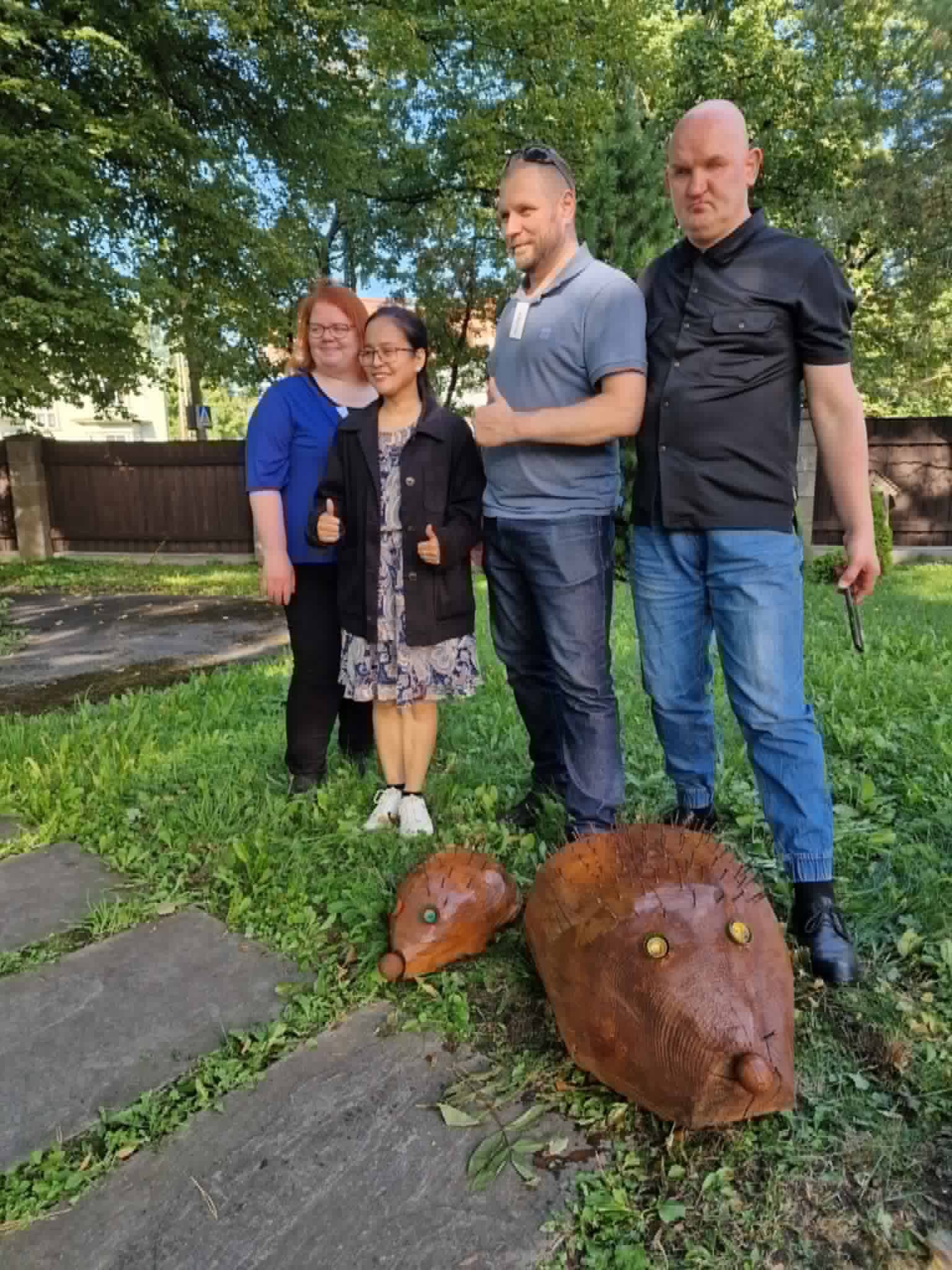
Photo during the woodcraft workshop at the Vaba Vaimu Festival.
Learning Beyond the Classroom
During my internship, I conducted field research, interviewed community partners, documented social initiatives, and researched social enterprises across Europe, Asia, and other regions.
I also participated in the Vaba Vaimu (Free Spirit) Festival, celebrating creativity and inclusion among people with disabilities, and joined the Amanita team at a demonstration in Tallinn advocating for better support for Estonia's special care sector.
These experiences were particularly meaningful because I am currently developing my own social entrepreneurship project, "Designing a Sustainable, Farmer-Led Cooperative Model for Farmers in the Philippines."
Through this project, I aim to explore how farmer-led cooperatives can strengthen smallholder farmers' economic opportunities, encourage collective action, and support sustainable rural livelihoods.
Although Amanita operates in a different sector, I discovered valuable connections between its approach and the principles I hope to incorporate into my own project. Its emphasis on community empowerment, sustainable resource use, and partnerships encouraged me to think more critically about how a cooperative could balance economic sustainability with its social mission.
I hope to apply some of these lessons as I continue developing my own social entrepreneurship initiative.
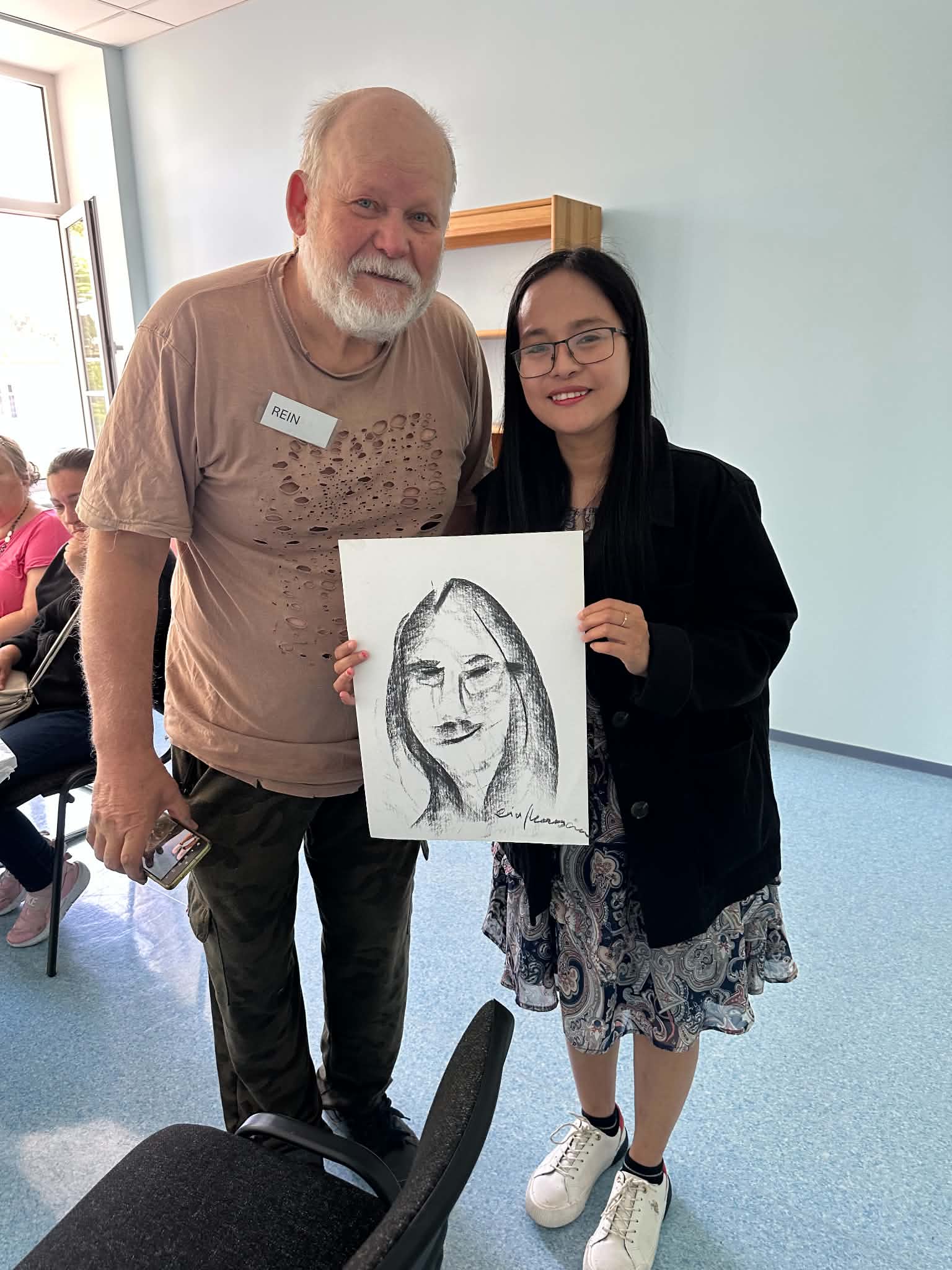
Photo of me with Rein, the instructor for the painting and sketching workshop at the Vaba Vaimu Festival.
Why I Chose to Study Social Entrepreneurship at Tallinn University
My experience with Amanita reflects what I value about studying in Tallinn University's Social Entrepreneurship (SEMA) master's programme: the opportunity to connect academic learning with real societal challenges.
The two-year, English-taught programme combines interdisciplinary knowledge, entrepreneurial thinking, and project-based learning. It encourages students to develop their own social entrepreneurship initiatives while exploring how innovative solutions can address social and environmental challenges.
For me, the opportunity to learn from an established social enterprise while developing my own project has been particularly valuable.
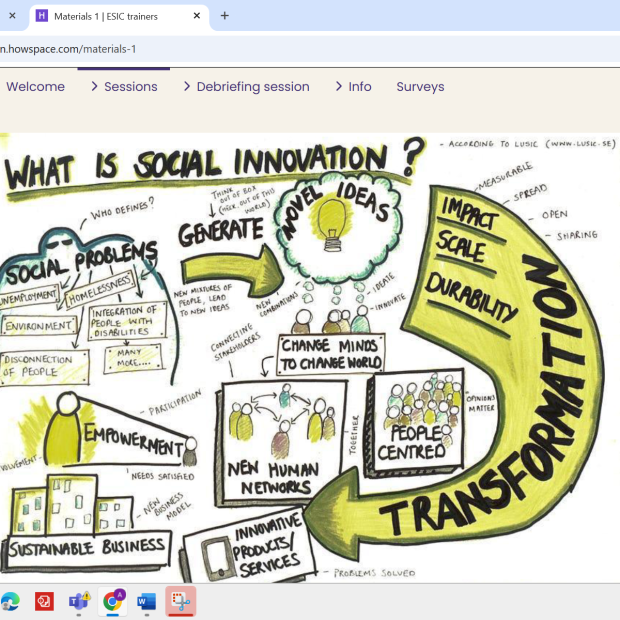
My internship allowed me to see how concepts such as social innovation, sustainable business models, and community participation can work in practice. It also helped me understand that social entrepreneurship is not simply about creating a business. It is about developing solutions that respond to people's needs and generate lasting positive impact.
Turning Ideas into Meaningful Change
My time with Amanita has strengthened my motivation to continue developing my farmer-led cooperative project in the Philippines.
I am grateful to my internship supervisor, Indrek Linnuste, and the Amanita community for sharing their experiences and allowing me to observe their work firsthand.
From learning about inclusive employment and sustainable production in Estonia to exploring cooperative development for smallholder farmers in the Philippines, my journey has shown me that social entrepreneurship can connect ideas, people, and communities across different countries and sectors.
I would also like to highlight that my biggest takeaway from the internship is seeing how social organizations and the people behind them work together to enable communities with smaller voices to be heard and seen. Without them, the underserved communities would have little to no support.
Studying Social Entrepreneurship at Tallinn University has given me an opportunity not only to learn about social innovation but also to explore how I can contribute to creating meaningful change through my own project.
If you are passionate about addressing societal challenges and want to develop your own ideas for positive social impact, I encourage you to explore Tallinn University's Social Entrepreneurship (SEMA) master's programme.