
Digital Explorers II Teams Presented Their Internship Projects at Tallinn University
The Digital Explorers II programme is approaching its conclusion, and the final internship project presentations marked an important milestone in this journey.
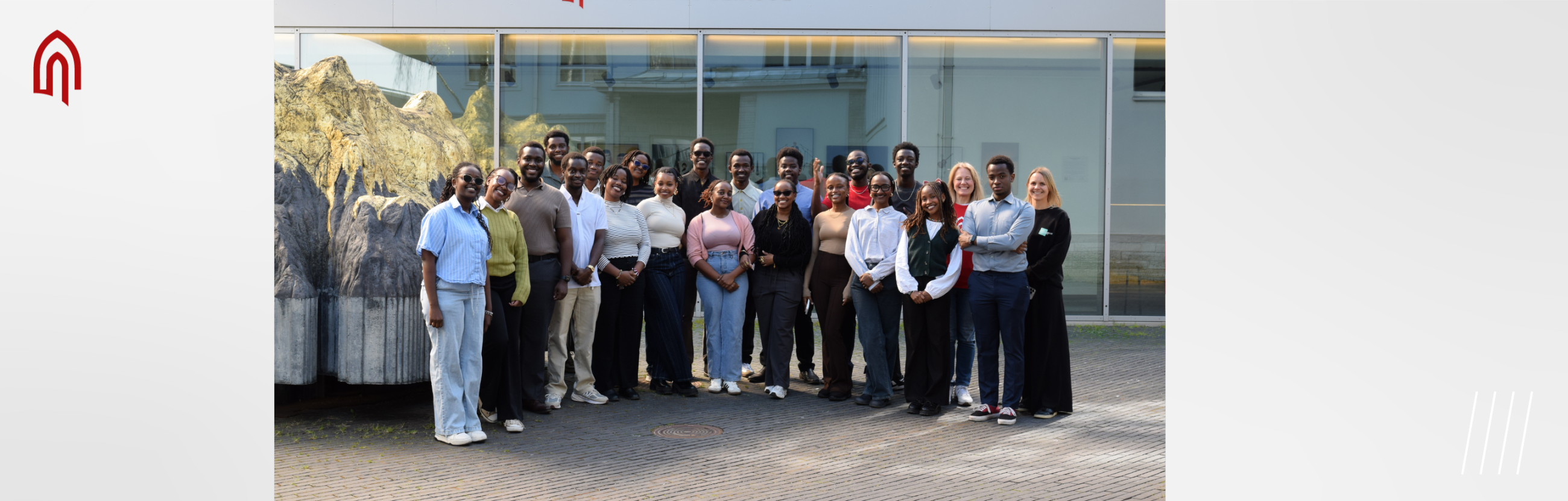
Over the past four months, 20 students from Kenya have combined their studies in the Interaction Design course led by Mustafa Can Özdemir with project-based internships in eight Estonian organisations. At the final presentations, the student teams showcased the solutions they had developed and reflected on what they had learned through the experience.
For Tallinn University’s School of Digital Technologies, this is the second time hosting the Digital Explorers II programme and welcoming students from Strathmore University and Kenyatta University. Once again, the programme has brought together academic learning, practical work, and international cooperation in a way that connects studies with real organisational challenges.
According to Mustafa Can Özdemir, it was a very rewarding experience to work with such a group of curious-minded and motivated students. “While each group worked on very different projects, in different teams, and tackled unique challenges of their own, they always found solutions to the problems that came up during their journeys. Not only did they navigate and adapt well to a completely new environment like Estonia, but they also brought in new ideas and perspectives overall.”
/DTI/37F1939E-8F95-485A-976A-CB1135AFB999_0.JPG)
The final presentations showed the wide range of topics the teams had worked on during their internships. Some projects focused on improving digital products and services through user experience and interface design. At FleetGuru, students worked on the company’s landing website, AI workflow and chatbot, and a redesigned dashboard aimed at improving the experience of fleet managers. With Latitude59, the team developed a speaker onboarding platform for live events, designed to replace fragmented manual processes with a more coherent and efficient system. At PoCo, students created a personalised audioguide journey for museum visitors, making museum experiences more engaging, accessible, and tailored to individual interests and time constraints.
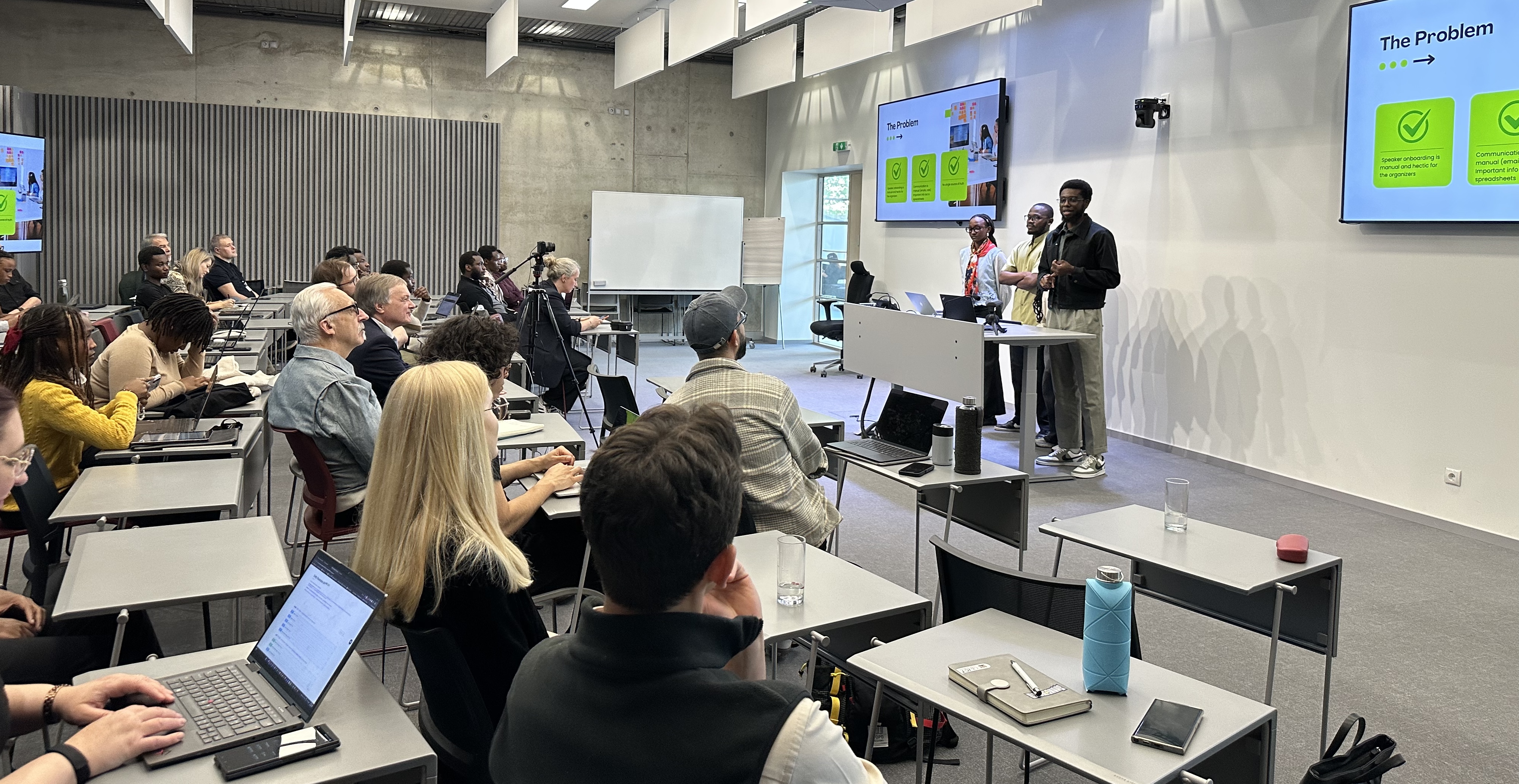
Other projects addressed organisational and public-sector systems. At ADM, students contributed to Kenya Starter, a modular platform designed to help governments, municipalities, and businesses digitise services and manage government-related processes more efficiently. At the Institute of Baltic Studies, the team worked on a digital inmate handbook for the Estonian Ministry of Justice, focusing on how complex and sensitive information can be translated into a secure, intuitive, and supportive digital environment. At Ettevõtluskeskus, students designed and tested automation workflows to reduce repetitive administrative work in education management, improving onboarding, communication, assignment delivery, and feedback collection.
A third group of projects centred on internal systems, data quality, and learning processes. At Trinidad Wiseman, the team built EchoMatch, a machine learning system with a human-in-the-loop approach for matching fragmented company, project, and people records across internal systems. At //kood, students tackled the challenge of inconsistent peer review by developing a structured code review platform that helps make feedback more useful, fair, and transparent. Together, these projects reflected the programme’s broader approach: combining user-centred design, technical problem-solving, and real organisational needs through integrated project work.
Several students also reflected on how the experience shaped their skills and perspectives. Michael Kihuyu, whose team worked with Latitude59, described the value of taking ownership of the full development process: “We built everything from scratch, and that has given me confidence and competence in designing and implementing complex systems for large-scale use cases.”
Leon Nduati, who worked with the Institute of Baltic Studies, highlighted the broader meaning of the project: “This experience highlighted the profound, tangible impact that thoughtful, minimalist interface design can have on civic systems.” He added that it helped him grow not only as a developer and designer, but also as an engineer who better understands the value of accessible, ethical, and human-first technology.
Christine Nyaga, reflecting on her work at Ettevõtluskeskus, noted: “My experience at Ettevõtluskeskus was incredibly rewarding because it gave me the opportunity to work on a real-world problem with visible impact.” She added that working closely with real course processes strengthened her ability to identify problems and build solutions, regardless of scale or complexity.
As the programme comes to an end, these final presentations showed not only the technical and design outcomes of the internships, but also the growth of the students as collaborators, problem-solvers, and emerging professionals.
We would like to sincerely thank all partner organisations and company supervisors who contributed their time, expertise, and support throughout the programme. Special thanks also go to university supervisors Mustafa Can Özdemir and Pjotr Savitski, relocation manager Ingrid Hinojosa, and all other colleagues whose work helped make this year’s Digital Explorers II programme a success.
The “Digital Explorers II” programme is implemented with the financial assistance of the European Union, contracted by ICMPD through the Mobility Partnership Facility and led by a consortium consisting of the Lithuanian think-and-do tank OSMOS Global Partnerships, the Estonian Centre for International Development (ESTDEV), and the Latvian Startup Association Startin.LV.