
Generative Design Research for Organisational Innovation at UTS
Researchers from Tallinn University’s School of Digital Technologies collaborated with colleagues at the University of Technology Sarawak to explore organisational innovation through generative design research. Led by Sonia Sousa and David Lamas, and working with Tariq Zaman and Gary Loh, the initiative applied designerly methods to surface institutional challenges and reframe them as opportunities for transformation.
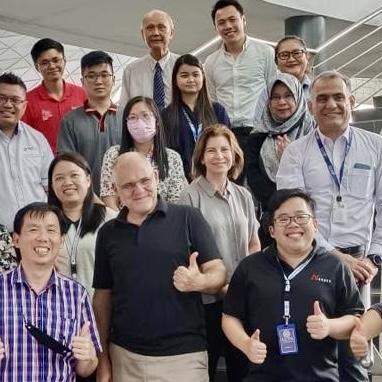
A recent collaboration between Tallinn University and the University of Technology Sarawak (UTS) focused on advancing organisational innovation through generative design research. The work brought together Sonia Sousa and David Lamas from Tallinn University with Tariq Zaman and Gary Loh at UTS, establishing a shared space for inquiry into how institutions can evolve in response to digital transformation pressures.
Rather than approaching innovation as a top-down planning exercise, the collaboration adopted a generative design research approach. This involved engaging participants, academic staff, institutional stakeholders, and researchers, in structured activities designed to externalise experiences, articulate tensions, and collectively imagine alternative organisational futures. The process emphasised making institutional dynamics visible and negotiable, rather than prescribing predefined solutions.
Central to the work was the use of material and participatory artefacts. Through sensitising exercises, mapping activities, and collaborative canvases, participants were able to reflect on their own practices and situate them within broader socio-technical systems. This aligns with ongoing work at Tallinn University on generative methods, where design is used not only to solve problems but to expand the space of what can be meaningfully discussed and transformed.
The collaboration also reflects a broader methodological stance: organisational innovation is not simply a matter of implementing new technologies, but of reconfiguring practices, roles, and institutional logics. In this context, generative design research operates as an enabling infrastructure—structuring how participants engage with complexity, uncertainty, and change.
Working closely with Tariq Zaman and Gary Loh, the initiative at UTS created conditions for mutual learning. While Estonian perspectives on digital transformation informed the process, the local context of Sarawak, its institutional landscape, strategic priorities, and constraints, played a defining role in shaping outcomes. This ensured that the work remained grounded and contextually relevant.
This collaboration contributes to a growing body of work positioning generative design research as a viable approach to organisational transformation in higher education. By combining participatory methods with a strong theoretical grounding in design research and socio-technical systems, it demonstrates how universities can act not only as sites of knowledge production, but as active agents in designing their own futures.