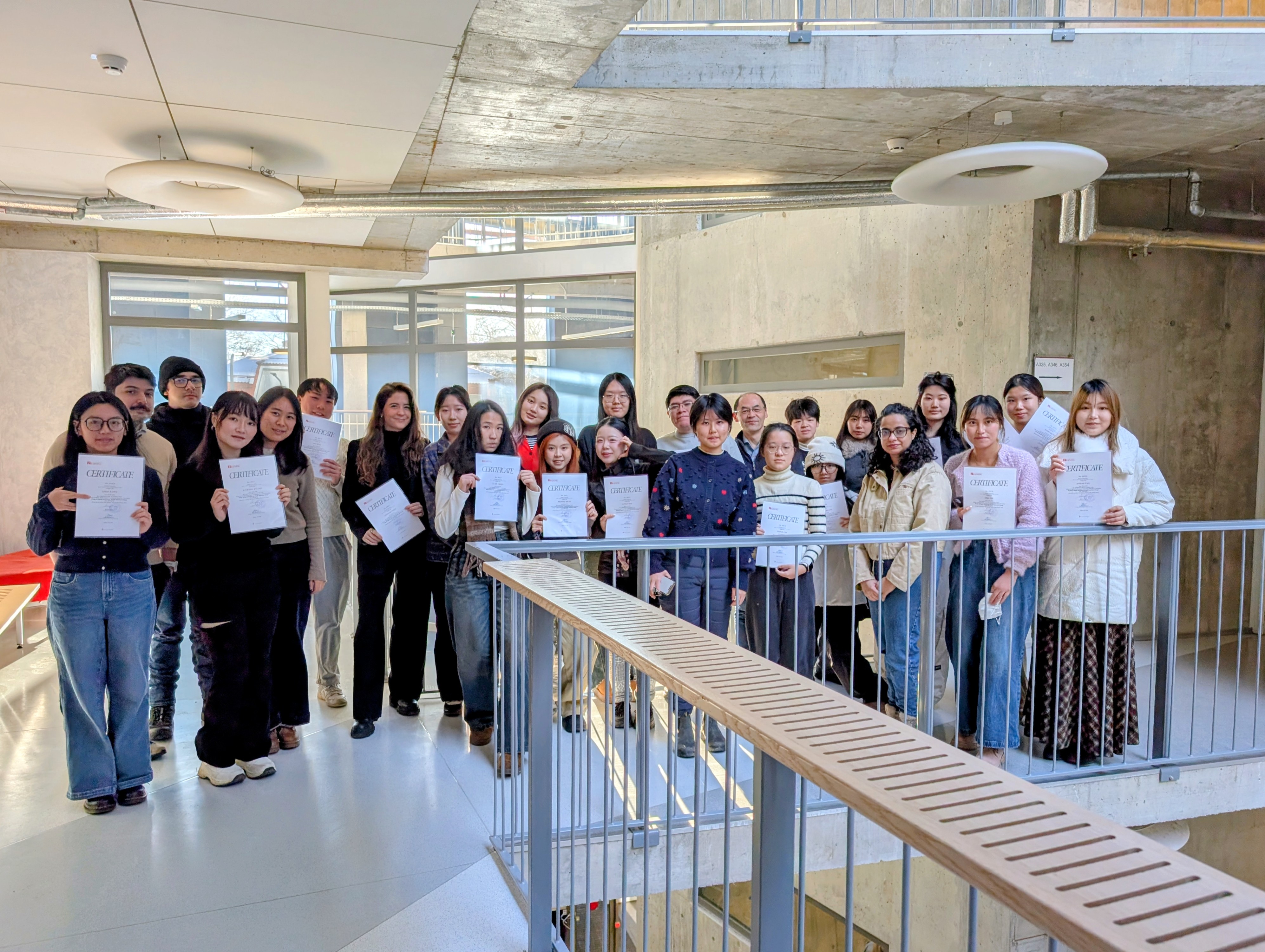
Winter School Explores Interaction Design and Digital Behaviour Change
As part of this year’s Tallinn University Winter School, the School of Digital Technologies brought together international participants in two intensive two-week courses focusing on interaction design and digital services for health behaviour change.

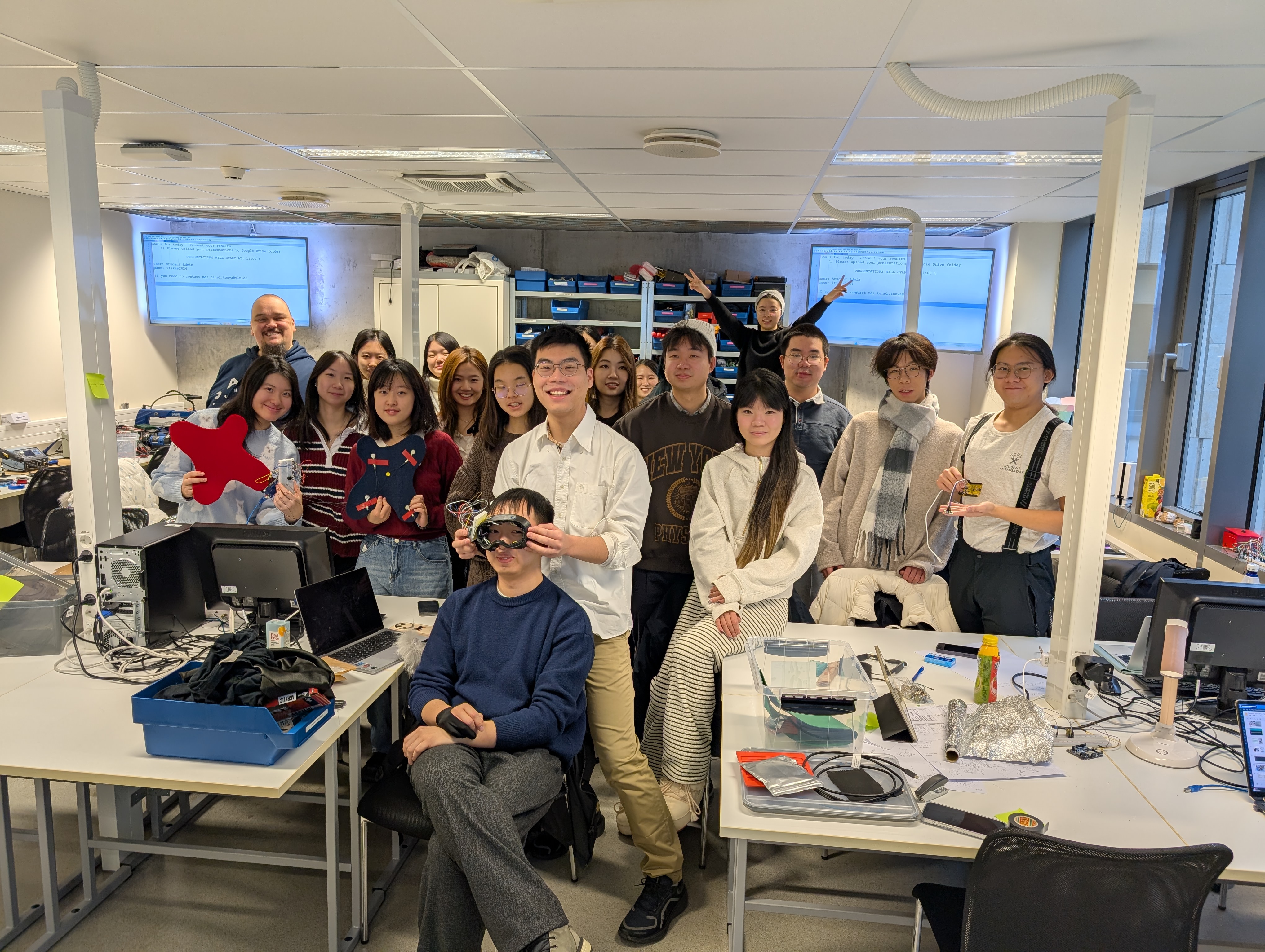
The Experimental Interaction Design course focused on teaching the full interaction design process. Participants worked through the entire journey from generating and evaluating a device or product idea to technical evaluation using prototypes of different fidelity levels.
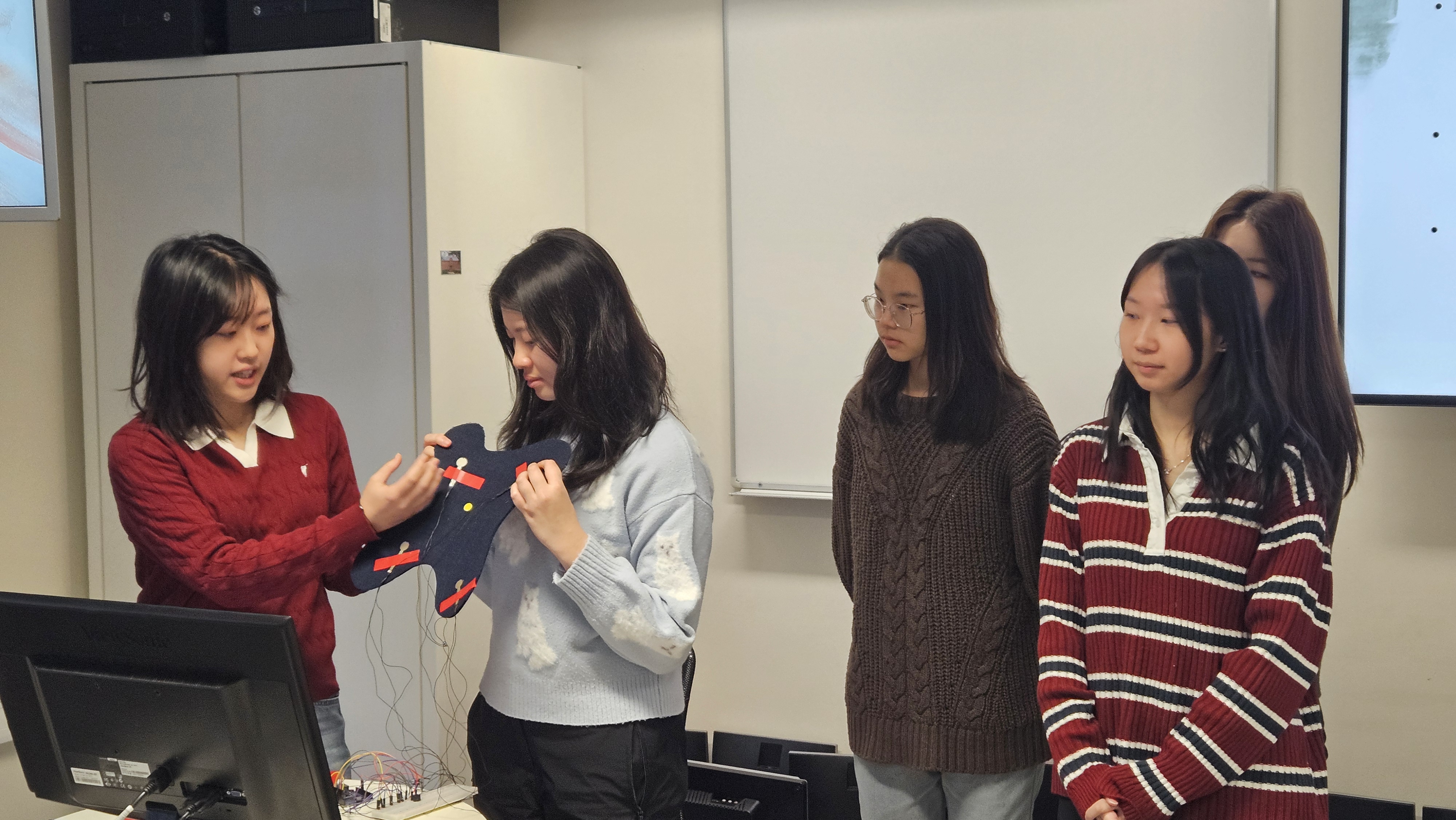
Low-fidelity, or paper, prototypes were used to adapt concepts to user needs and test usability aspects, including ease of use, interface logic, and alignment with user expectations. This was followed by the development of high-fidelity prototypes, where participants built at least partially functioning devices and tested their technical feasibility as proof of concept. This phase included selecting and connecting sensors and actuators to microcontrollers, programming system logic, and testing device performance using real data.
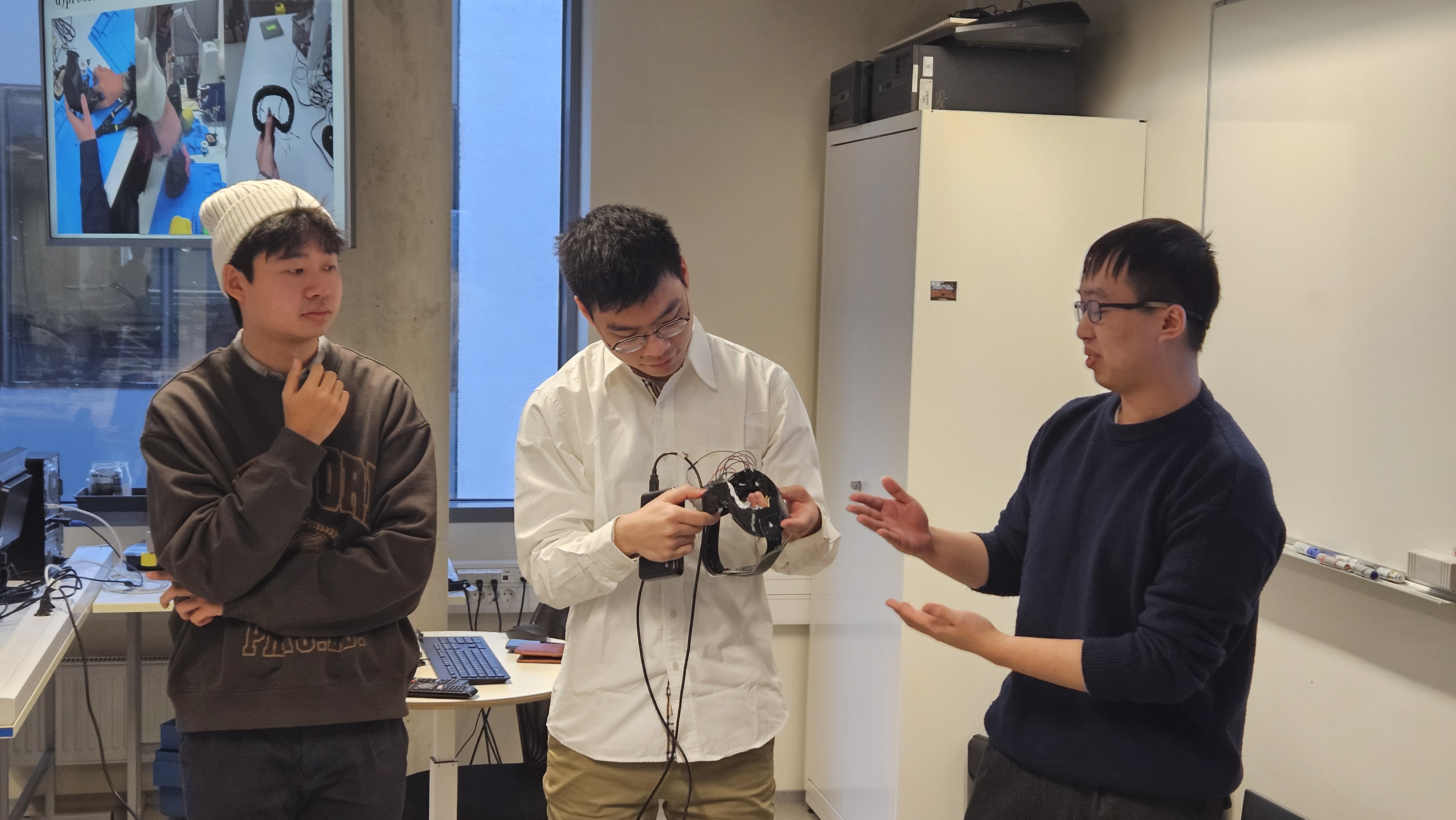
The emphasis of the course was not on producing a finished product, but on understanding and experiencing the design process itself.
The course was attended by 23 students from a wide range of disciplines, all from the People’s Republic of China.
Alongside this, the Design of Digital Services for Health Behaviour Change course explored foundational theories and processes of behaviour change and interaction design. The course demonstrated how behavioural theory can be meaningfully integrated into the design process. By combining theoretical perspectives with hands-on practice, participants applied behavioural theory and interaction design methods to the development of digital solutions aimed at supporting behaviour change.
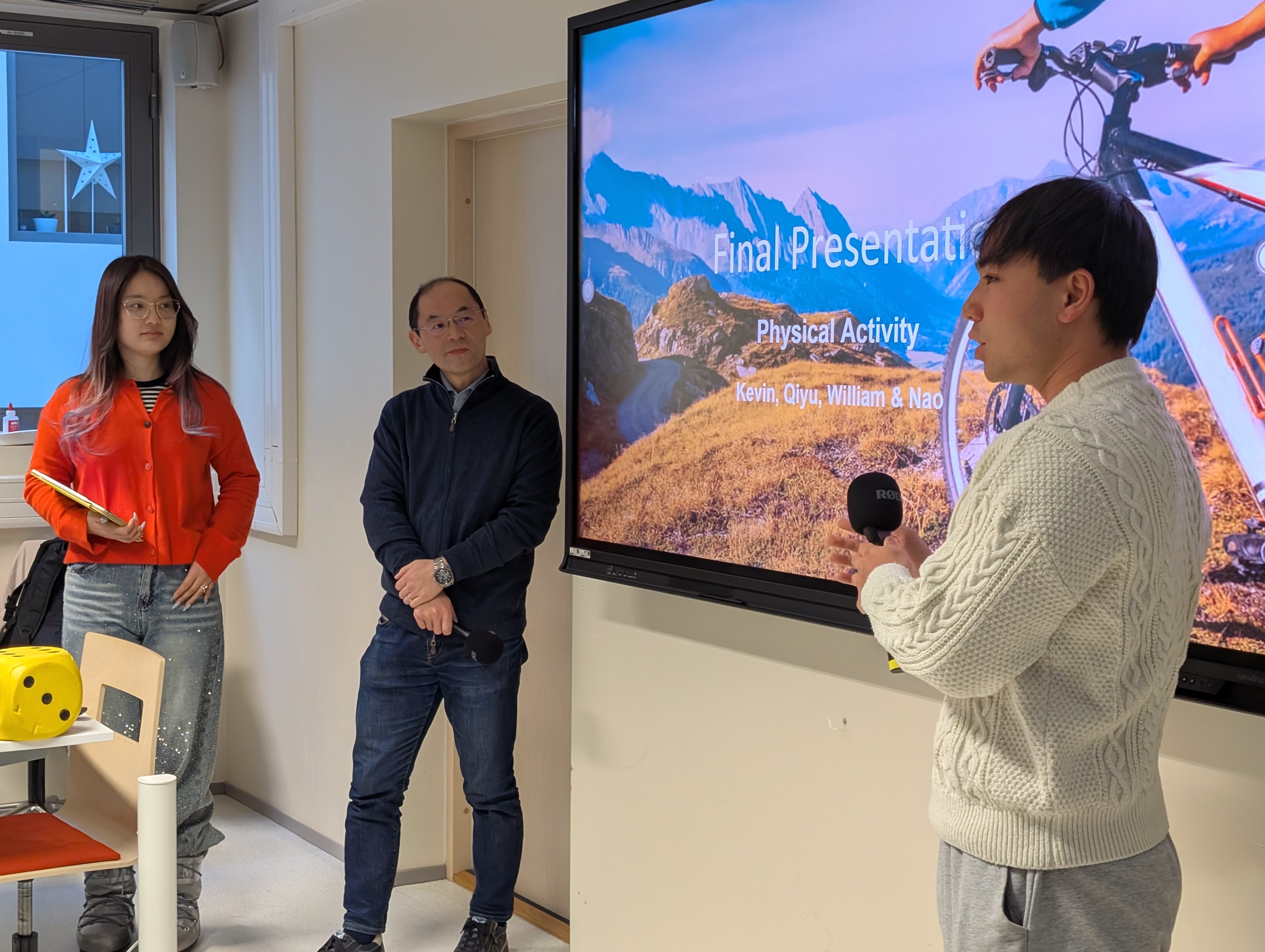
During the winter school, 26 participants took part in this course. Working in seven interdisciplinary groups, they addressed health-related behaviour change topics and developed low-fidelity prototypes as part of their group assignments. The course aimed to deepen understanding of the complexity of Digital Behaviour Change Interventions and to highlight the importance of close collaboration between psychology and design disciplines.
Together, the two School of Digital Technologies courses offered participants a rich, practice-oriented learning experience that bridged theory, design, and technology within an international and interdisciplinary learning environment.