
Editor-Presenter on Television
Baltic Film, Media and Arts School
T
The TV Editor and Presenter microdegree programme has been developed jointly by the Baltic Film, Media and Arts School (BFM) of Tallinn University and TV3. The programme offers participants the opportunity to acquire essential professional knowledge and first-hand experience for working in television — particularly for those who do not have a formal education in the field but are interested in working in television and, through their existing skills, background, or professional experience, could become valuable contributors to TV channels and production companies. The course also serves as a continuing education opportunity for current media professionals.
The microdegree programme is led by Assoc. Prof. Andres Jõesaar, PhD, expert in media policy at BFM. The team is coordinated by renowned television professional Urmas E. Liiv and long-time TV producer Marje Tõemäe.
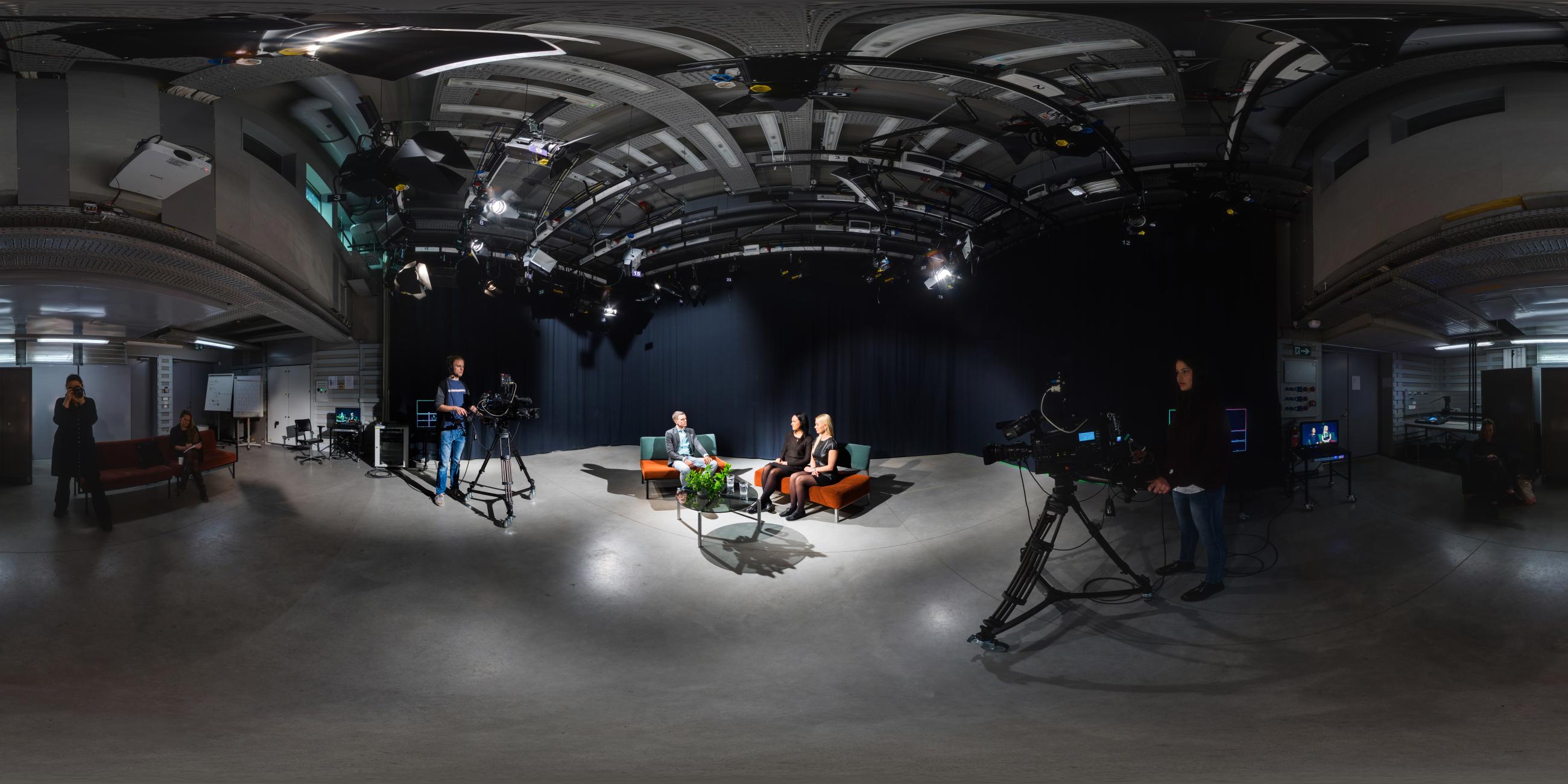
Teaching is conducted in cooperation between Tallinn University BFM and TV3: instructors and mentors include top lecturers and practitioners from both organisations. Teaching and practical sessions take place using the facilities and equipment of both partners. A key component of the programme is extensive hands-on practice in editorial offices and supervised workshop activities. Among the lecturers are Indrek Treufeldt, Taavi Libe, Anu Välba, Mart Mardisalu, and many others.
The study programme is offered as a continuing education course over eight months, starting from the spring semester. The summer non-contact period is dedicated to internships and independent or supervised creative assignments. Classes are held according to a session-based schedule, approximately twice a month on Fridays and Saturdays.
Who should apply?
The microdegree is designed both for those already working in the field and for newcomers who wish to enter the television industry and possess the personal qualities required for such work but lack the necessary professional knowledge and skills. Graduates of the course will have the foundation to work as TV editors, and—depending on their abilities—also as TV presenters.
Applicants are expected to hold (preferably) a bachelor’s degree in any field, or a professional higher education degree or vocational qualification in a related discipline and/or possess relevant professional experience in the field, together with a strong motivation to work as a TV editor or presenter. Previous media experience is considered an advantage.
Applications must include a motivation letter and a CV, submitted via this webpage. Admission decisions will be made based on these documents.
Learning outcomes
Graduates of the programme will:
-
possess fundamental knowledge of how the television industry operates;
-
have the ability to analyse media content critically and professionally;
-
master the basic creative skills necessary for working with words, images, and scripts;
-
have gained initial experience in creating TV stories and programmes.
Programme structure
The curriculum consists of lectures, seminars, feedback sessions, practical work across genres, guided practice, and independent assignments.
General Courses
-
Introduction to Media Theory (Instructor: Andres Kõnno)
Introduces the concept of media within its cultural context and explores its transformation over time. -
Television Culture and History in Estonia (Instructor: Andres Jõesaar)
Provides an overview of the development of Estonia’s contemporary media landscape since the restoration of independence. The course features contributions from leading cultural and media scholars as well as experienced television practitioners. -
Journalistic Media Genres (Instructor: Rain Uusen)
Offers an overview of different genres within journalistic media. -
Media and Broadcasting Law, Journalism Ethics, and Copyright (Instructor: Andres Jõesaar)
Introduces the key principles and regulations of audiovisual media law and journalistic ethics through case studies and analysis. -
Fundamentals of TV Production (Instructor: Marje Tõemäe)
Provides an understanding of the technical foundations of audiovisual production and the structure and terminology of production teams. -
Text Analysis for Journalistic Work (Instructor: Kajar Kase)
Focuses on critical source-text analysis and the construction and synthesis of journalistic news texts. -
Storytelling Fundamentals and TV Scriptwriting (Instructor: Katrin Pauts)
Covers the main television genres and their specifics, introducing the basics of scriptwriting. Students develop a script outline for a TV programme or story. -
Editorial Work Across Formats (Instructor: Anneli Lahe)
Introduces the nature, tasks, and specifics of the TV editor’s work across various audiovisual productions. -
Pitching Ideas and Marketing Media Products (Instructor: Marje Tõemäe)
Develops skills for presenting and defending ideas and provides an overview of key marketing channels for completed TV programmes. -
Introduction to News Production Practice (Instructor: Liina Kanarbik)
Includes visits to the TV3 News editorial office and studio, which serve as the practice base for the summer internship.
Practical TV Production Courses
These courses are focused on hands-on experience with different television genres, involving team-based creation of various TV stories.
-
Media Flow Seminar (Instructor: Urmas E. Liiv)
Aims to deepen students’ ability to navigate and critically analyse the current media flow. -
Introduction to TV Editing for Editors (Adobe Premiere) (Instructor: Tarmo Rajaleid)
Provides basic skills for grouping and selecting audiovisual material using Adobe Premiere, introduces audio-to-text tools, and teaches principles of writing editorial linking text. -
TV News Editing Practice (Instructor: Kajar Kase)
Teaches the skills required for news editing in television production, including editorial planning, voice-over writing, and working with sources. -
Fundamentals of Diction and Body Language (Instructor: Anne Türnpu)
Through practical exercises, develops voice, diction, and presentation skills essential for TV hosting. -
Interviewing and Conducting Interviews (Instructor: Indrek Treufeldt)
Practical training in core interviewing techniques and working with interview subjects. -
Masterclass with Mart Mardisalu
Practical training in the work of a news anchor and the use of teleprompters, based on Mardisalu’s personal experience. -
Masterclass with Anu Välba
Practical training in conducting and moderating in-studio interviews, drawing on Välba’s extensive experience. -
Masterclass with Taavi Libe
Practical exercises in conducting field interviews and producing reportage-style segments. -
Masterclass with Karl-Erik Taukar
Practical training in hosting entertainment programmes, based on Taukar’s professional experience.
Internship at TV3 News
Participation in the editorial team’s work according to the internship plan and the student’s specific professional interests.
Final Production
Through the creation of three different television programmes, students acquire the skills necessary to produce a simpler-format TV show, using the TV3 or BFM studio facilities.
Contact
Content-related questions:
Programme Director: Andres Jõesaar
E-mail: andres.joesaar@tlu.ee
Administrative questions:
E-mail: salme.kulmar@tlu.ee
Phone: +372 619 9908
Schedule
Classes take place on Fridays and Saturdays from February to September.