From Costa Rica to Europe: The Master’s in Artificial Intelligence for Sustainable Societies
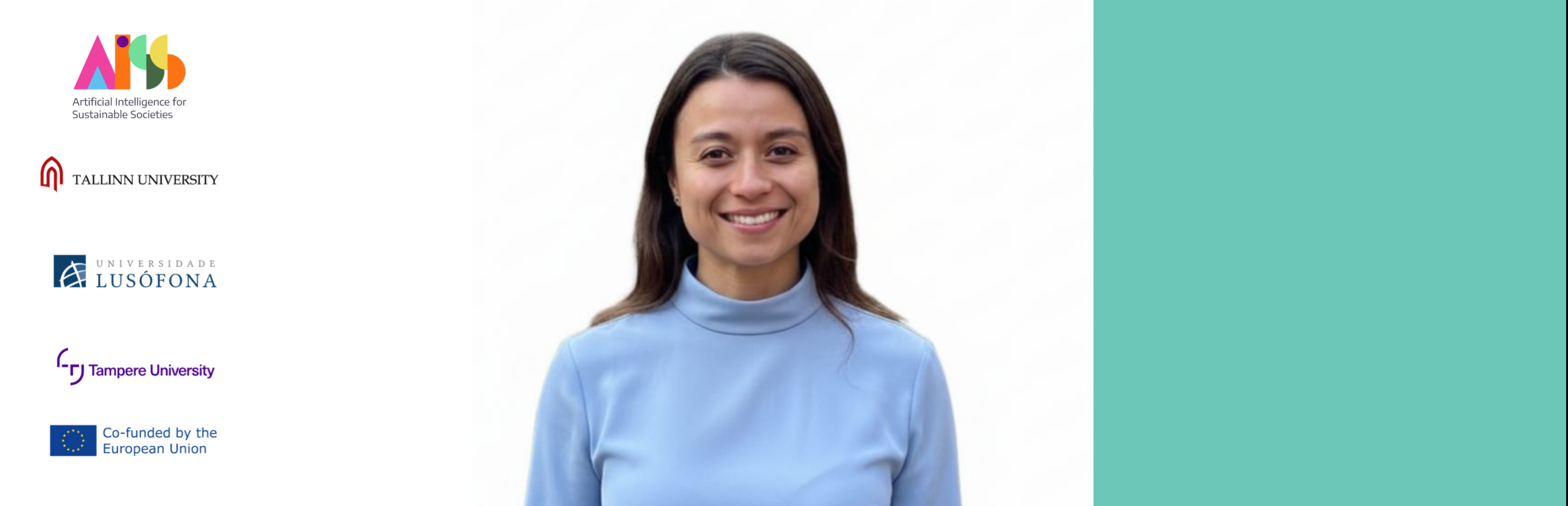
Cristal Denise Rivera Picado is a student in the Artificial Intelligence for Sustainable Societies (AISS) master’s programme at Tallinn University. She shares her experience of studying AI in a multidisciplinary and international context, reflects on the skills gained during the programme, and discusses how these studies connect to her research interests and startup activities in both Europe and Costa Rica.
What motivated you to apply for the AISS programme at Tallinn University School of Digital Technologies?
Firstly, I was motivated to apply because I was looking for a holistic opportunity, something that wasn't purely technical or purely social. I felt this was the ideal approach to gaining a truly integral perspective on Artificial Intelligence. Secondly, the fact that the programme takes place across three different countries sounds very exciting, as it allows me to experience different cultures and, more importantly, to see how each nation develops AI sustainably through hands-on experience, conferences, and networking. Lastly, my primary goal is to apply this knowledge to the startup I co-founded in Costa Rica, DiAmiti, and to return home to serve my country through my profession.
Which skills or knowledge that you gained during your studies were especially useful in your internship or research work?
I believe the most valuable skills I’ve gained are task organization, strategic planning, and time management. Participating in high-intensity events like hackathons significantly improved my ability to work under pressure, while collaborating on course projects with classmates from diverse backgrounds strengthened my teamwork skills.
I also valued learning how to frame and conduct formal research, particularly through the thesis process and by mastering various AI research tools. This experience has motivated me to pursue further research in the future. Beyond just the technical aspects, it helped me realize the vital importance of publishing articles and, more importantly, how to do so by following academic best practices.
Furthermore, developing our own initiative, Oppi, provided hands-on experience in pitching and presenting ideas. This project has opened numerous networking doors and allowed us to continue developing the product as a potential solution for the European market.
What challenges and opportunities have you encountered while building startups in two very different contexts, Costa Rica and Estonia, and how has the AISS programme supported you in this process?
I believe Estonia has successfully normalized the idea that anyone can have a great concept; there is no requirement for a perfect, finished product to gain initial trust. The ecosystem is built on events, connections, and programs that champion new ideas, where failure is respected as a vital part of the growth process.
While Costa Rica is gaining traction with startup support programs, there is still a higher barrier to entry regarding the 'openness' to fail or to propose early-stage, untested ideas. Estonia’s approach fosters true innovation by allowing entrepreneurs to iterate multiple times until they find their footing. Within this context, AISS provided the general guidance and networking connections necessary for potential collaborations, helping us navigate the community and move in the right direction.
What has been the most important lesson or experience for you during the programme?
Ultimately, you create your own experience. While structure is helpful, I believe that relying on a predictable environment isn't always realistic; being flexible, agile, and disciplined is key. You can go as far as your vision takes you if you are proactive and look beyond the classroom. For me, the value lies in building connections, seeking out diverse professional mindsets, and immersing myself in different cultures. By staying active in university events and workshops, I discovered opportunities I didn't even know existed. It’s all about finding that balance between self-discipline and embracing the joy of living abroad. It has truly been a life-changing experience.
What are your current career or research plans?
My immediate career plan is to complete my thesis project, which serves as the bridge to the next stage of my professional growth. I am committed to bringing the insights from my research into reality in Costa Rica, directly applying them to my startup, DiAmiti, and sharing that value with other local companies. Furthermore, I intend to maintain the invaluable network I’ve built across Estonia, Portugal, and Finland. My goal is to leverage these international connections for future collaborations, creating innovative solutions that bridge the gap between Europe and Latin America.
What advice would you give to future AISS applicants?
Maintain an eagle-eye vision: be brave and strong, pour your heart and love into everything you do. Never underestimate your progress or your potential. My advice is to see this as more than just a Master’s degree, see it as a whole. You must envision who you want to become, understand the unique value you bring to the table, and recognize why your perspective is needed. If you approach it this way, you won't just learn; you will gain the tools to make this world a better place.
Learn more about the Artificial Intelligence for Sustainable Societies Master's Programme