Human-Computer Interaction master’s students presented industry collaboration projects at Tallinn University
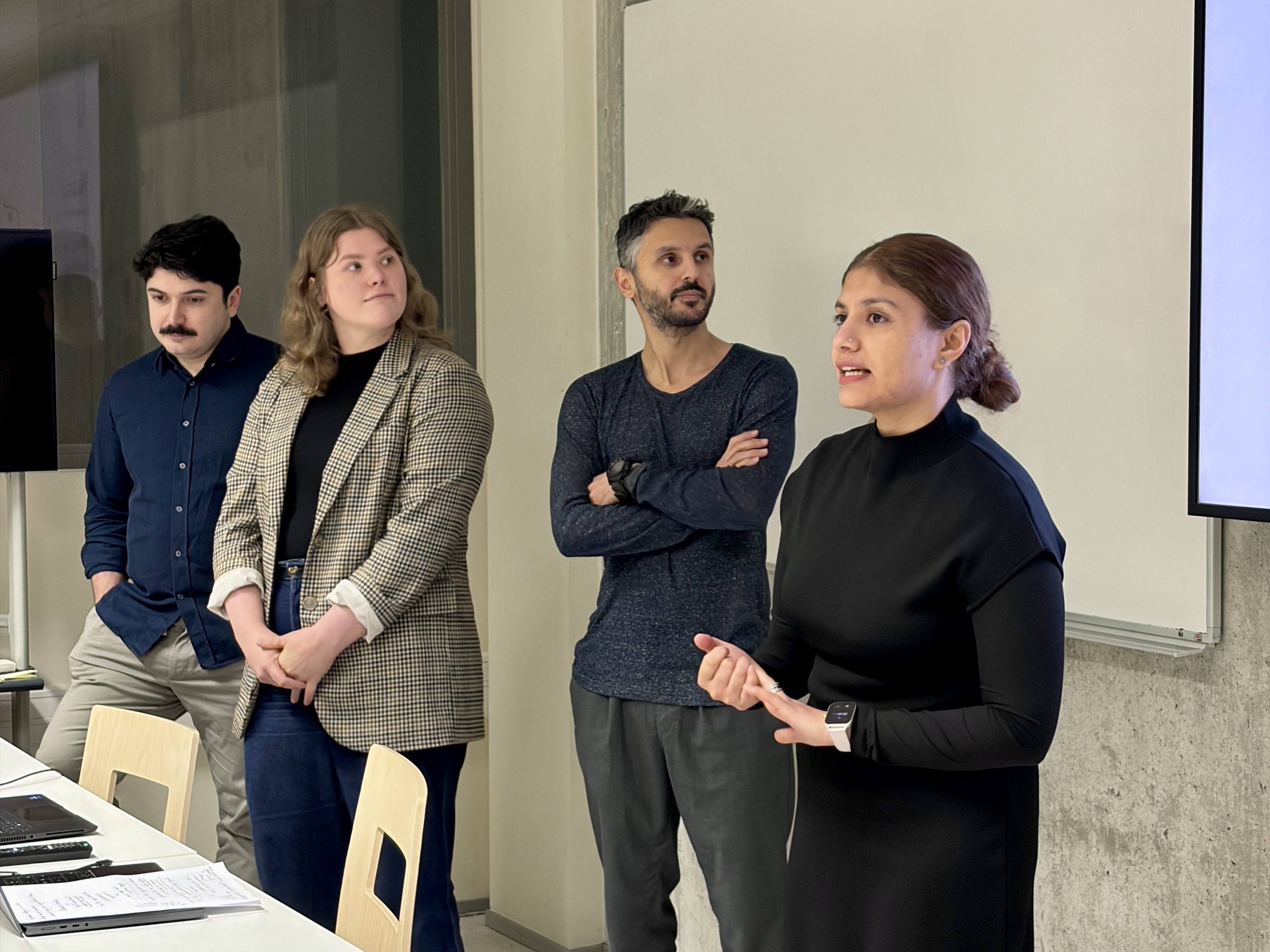
Last week, students from the Human-Computer Interaction (HCI) master’s programme showcased the results of their Interaction Design Workshop projects at an open presentation. Throughout the Autumn semester, student teams worked on real-world challenges in collaboration with the City of Tallinn and start-ups Mentastic and UXMust.
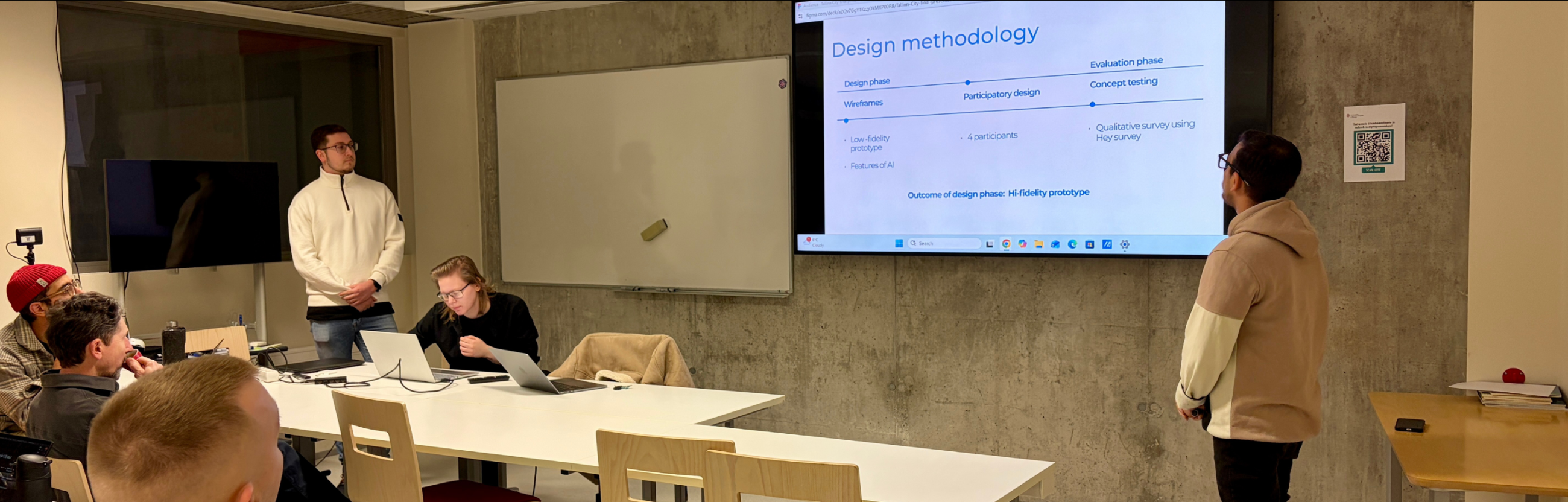
Throughout the Autumn semester, HCI students formed design teams to tackle real-world industry challenges. This time, they partnered with the City of Tallinn and the start-ups Mentastic and UXMust.
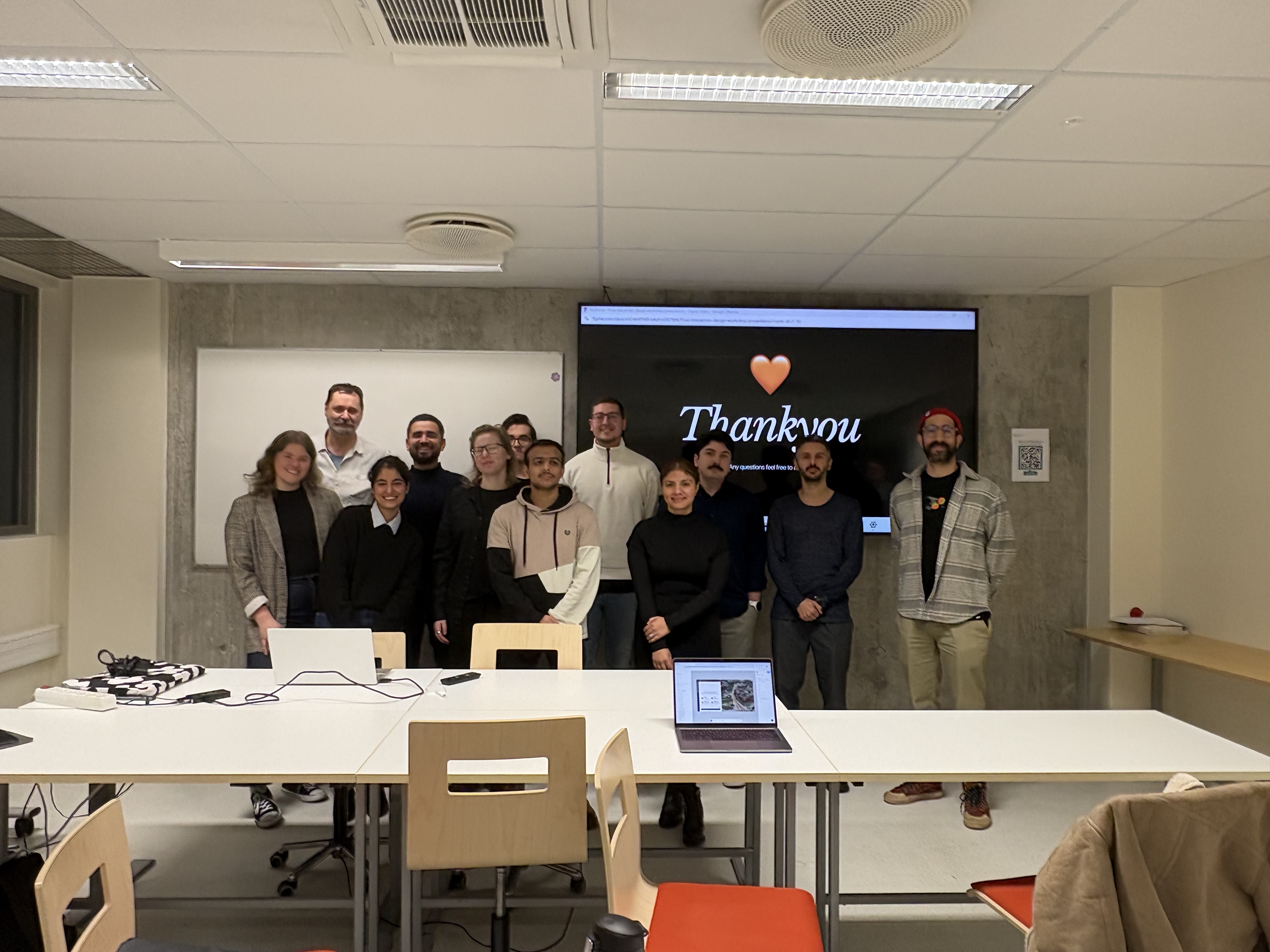
Tallinn City Digital Twins Project
In the Digital Twins project, students explored the integration of a Large Language Model (LLM) into Tallinn City’s 3D map. The aim was to enable workers across various city departments to use the solution in their everyday work. Students successfully prototyped a user interface for incorporating the LLM bot into professional workflows.
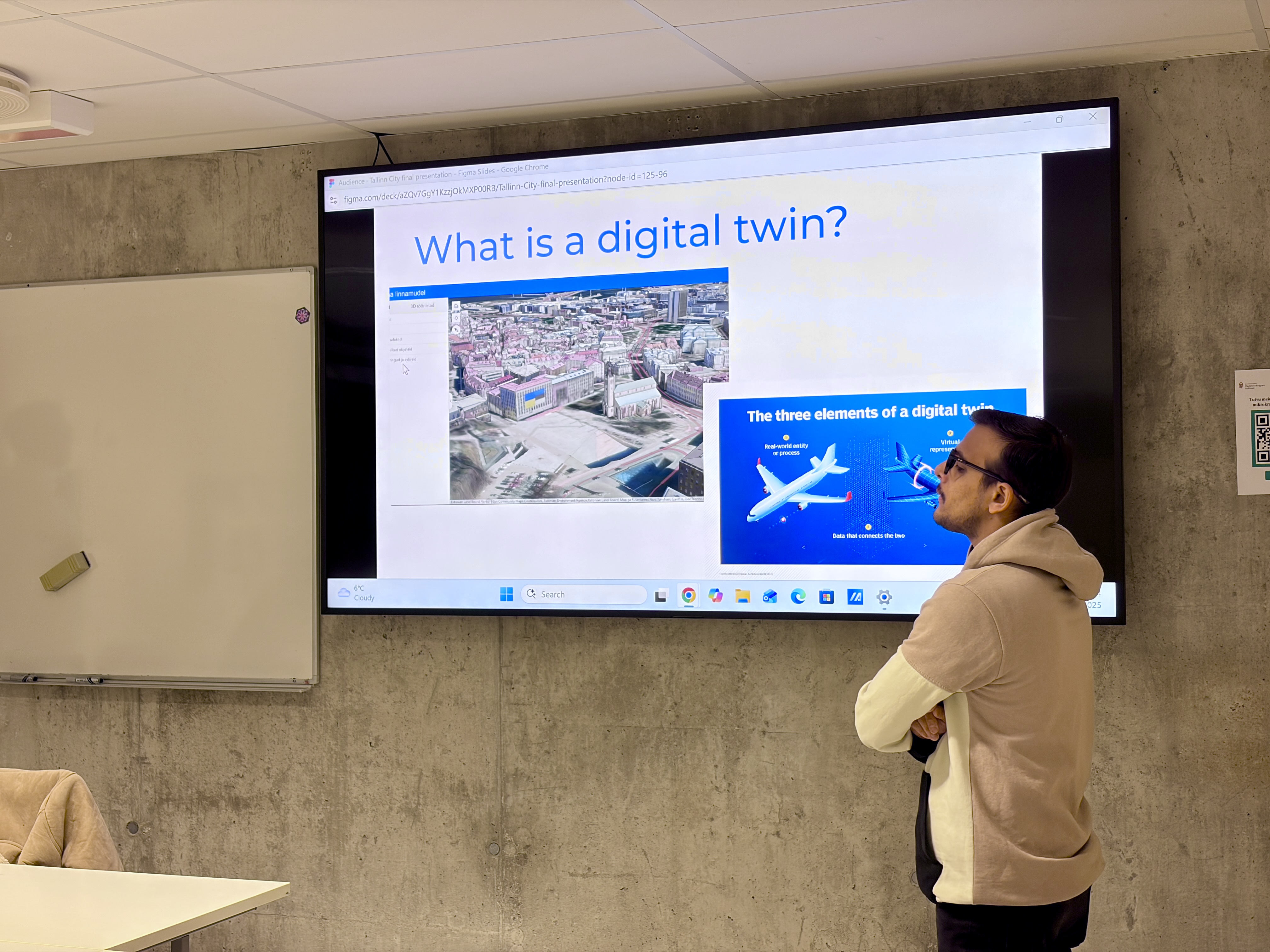
Mentastic Mental Well-Being Experience
In the Mentastic project, students explored how a truly personal and adaptive mental well-being experience could be designed from the ground up. Over the semester, the team conducted interviews with diverse user groups, synthesised insights through affinity mapping, applied the Transtheoretical Model of Behaviour Change, and designed detailed client journey maps and a concept prototype for the Mentastic application. The project provided concrete input for shaping Mentastic as a highly personalised mental well-being product.
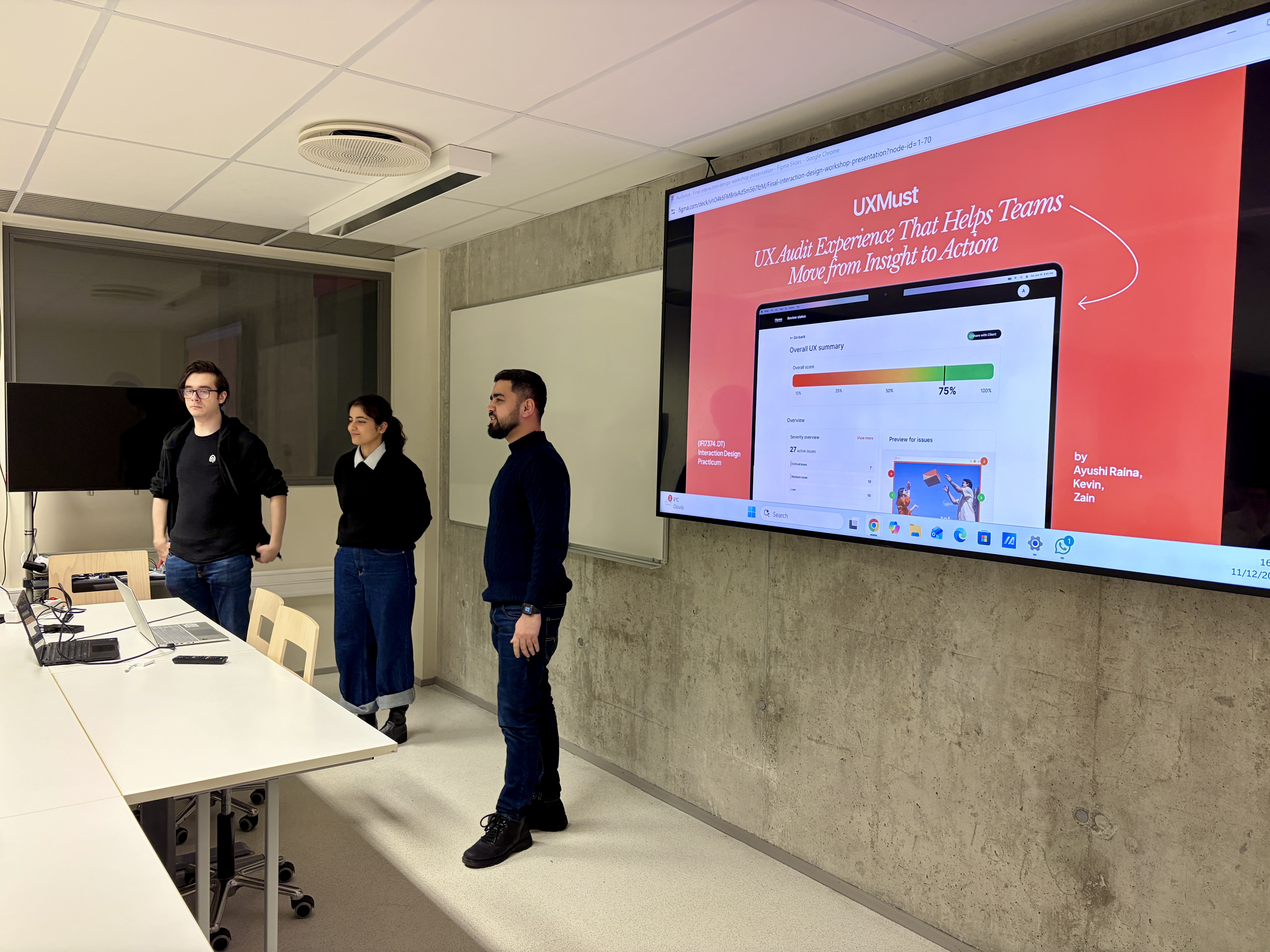
UXMust AI Concept
Students worked on designing an AI concept for the product vision of UXMust, an Estonia-based start-up offering heuristic UX evaluation reports. The concept explored how AI could shape the overall experience and make the UX evaluation process more seamless, from understanding inputs to generating meaningful and actionable insights. Over the semester, the project involved user research, ideation, testing, and design in a start-up context.
All of the projects addressed high-level technological and user-related challenges. The students demonstrated strong skills in conducting user research, modelling, and prototyping design solutions.
The projects received high praise, and the partners expressed a strong interest in continuing collaboration. Several students will continue their work on the Digital Twins project with the City of Tallinn next semester, and one student will use data collected with Mentastic for her master’s thesis.