
Advancing Research Leadership in Angola: Capacity Building with UNI.AO
David Lamas visited Luanda, Angola to provide training in research project management under the UNI.AO programme, an EU-funded initiative supporting higher education and research capacity at the Ministry of Higher Education, Science, Technology and Innovation (MESCTI). The visit strengthened academic and institutional skills aligned with national priorities for postgraduate research and innovation.
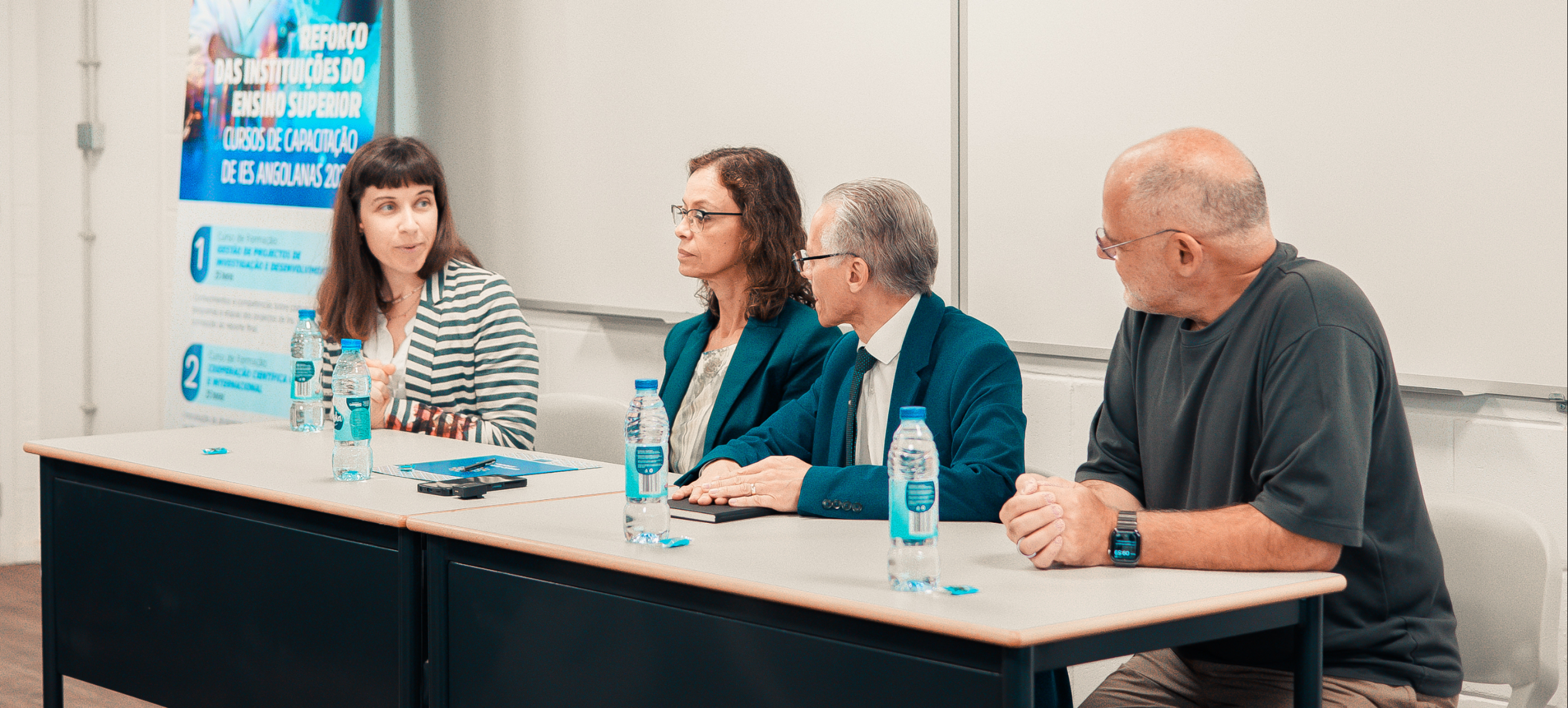
A recent training initiative in Luanda, Angola, focused on strengthening research project management skills among local scholars and higher education professionals. The training was delivered by David Lamas from Tallinn University within the framework of UNI.AO, a programme funded by the European Union and implemented in cooperation with Angola’s Ministry of Higher Education, Science, Technology and Innovation.
The training was formally opened by the Minister of Higher Education, Science, Technology and Innovation, the European Union Ambassador to Angola, and the Head of the UNI.AO programme, underlining the strategic importance of research capacity building for Angola’s higher education system. Their opening remarks highlighted the role of well-managed research projects in strengthening postgraduate education, international cooperation, and the societal impact of research.
Following the opening, the training sessions addressed practical aspects of research project management, including project design, planning, budgeting, implementation, and monitoring. Participants engaged with concrete tools and frameworks aimed at improving the quality, feasibility, and sustainability of research initiatives, particularly in the context of international funding and collaborative projects.
Overall, the training contributed to UNI.AO’s broader mission of enhancing institutional capacity and research leadership in Angola. By combining policy-level support with hands-on academic training, the initiative reinforced links between national priorities, international cooperation, and the day-to-day practices of researchers and higher education institutions.