
Doctoral Exchange Brings Mozambican Perspectives to DHT 11.0
Two doctoral students from Universidade Eduardo Mondlane, Jamo Macanze and Helton Josses, took part in the doctoral course Designing Human Technologies 11.0 in Haapsalu, Estonia, supported by Erasmus+ International Credit Mobility (ICM) grants. Their participation strengthened academic exchange and contributed Mozambican perspectives to an international doctoral learning environment.
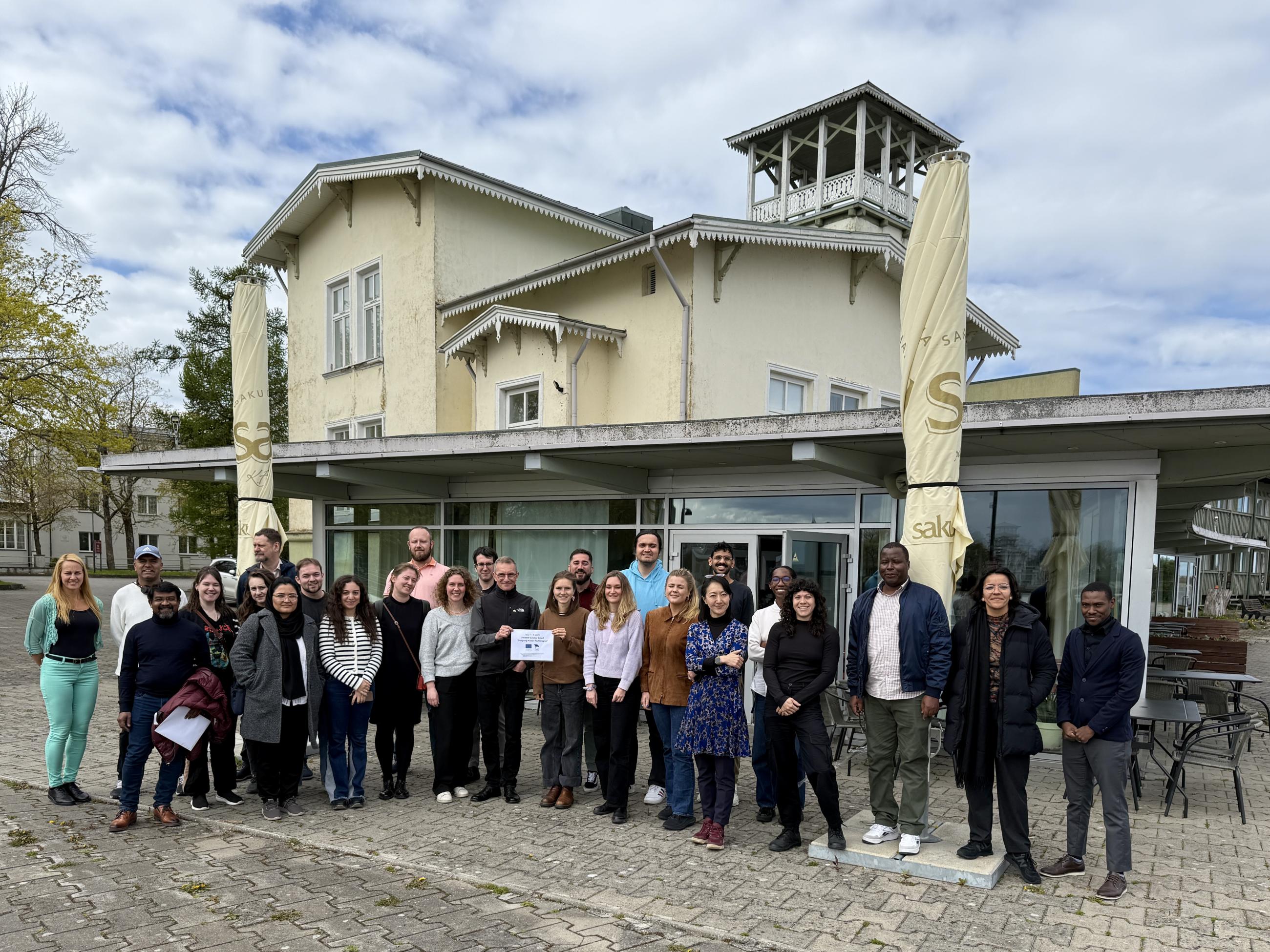
The doctoral course Designing Human Technologies 11.0 (DHT 11.0) was recently held in Haapsalu, bringing together PhD candidates from different countries to engage in intensive discussion around participatory, human-centred, and design-oriented research. Hosted by David Lamas from Tallinn University, the course provides a structured yet supportive setting where doctoral researchers present their work, receive detailed feedback, and reflect on methodological and theoretical challenges.
Among the participants were Jamo Macanze and Helton Josses, doctoral students from Universidade Eduardo Mondlane (UEM) in Mozambique. Supported by Erasmus+ International Credit Mobility (ICM) grants, they joined the course to present their research and take part in peer-to-peer critique sessions, lectures, and collaborative discussions. The format of DHT 11.0 emphasises deep engagement with research-in-progress, encouraging participants to situate their work within broader debates on designing technologies for people and societies.
Their participation highlighted the value of Erasmus+ mobility in enabling meaningful academic exchange at doctoral level. By bringing together researchers from different institutional and cultural contexts, DHT 11.0 fostered mutual learning and strengthened links between Tallinn University and Universidade Eduardo Mondlane, while supporting the development of globally connected and human-centred doctoral research.