
Putting Users First: Raising Awareness of Usability at Universidade Eduardo Mondlane
A seminar led by David Lamas, Professor of Human–Computer Interaction at Tallinn University, introduced students and academic staff at Universidade Eduardo Mondlane to the principles of usability and human-centred design. The session highlighted usability as a shared academic and institutional concern, encouraging more inclusive, effective, and context-aware digital practices across teaching, research, and everyday technology use.
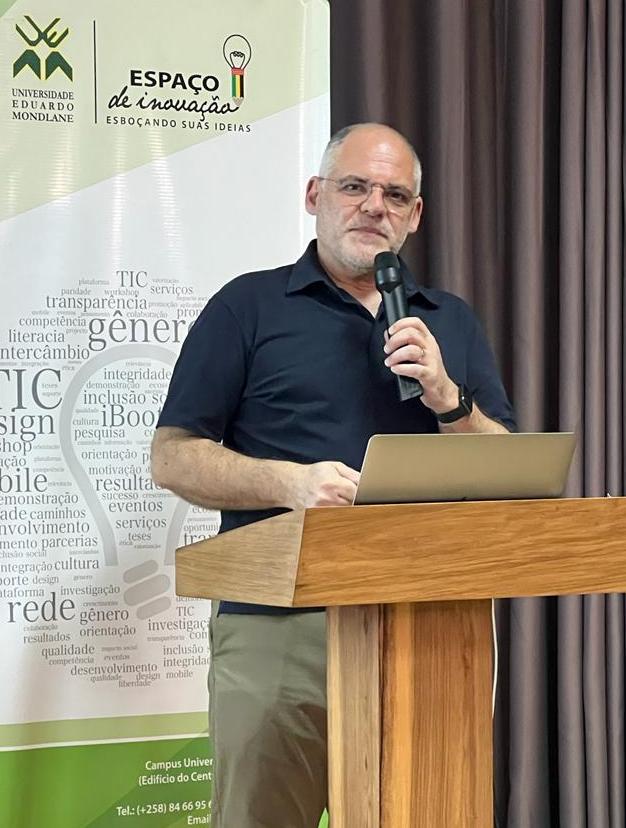
A seminar on usability and human-centred design was recently held at Universidade Eduardo Mondlane (UEM) in Maputo, Mozambique, led by David Lamas, Professor of Human–Computer Interaction at Tallinn University. The session brought together both students and academic staff, creating a shared space to reflect on how usability principles shape the quality, accessibility, and effectiveness of digital systems in education, public services, and everyday life.
The seminar introduced core concepts from usability and human–computer interaction, emphasising the importance of designing technologies that align with users’ needs, capabilities, and contexts. Through examples drawn from research and practice, the session highlighted how usability goes beyond interface aesthetics, encompassing learnability, efficiency, accessibility, and user experience, particularly in resource-constrained and diverse socio-technical settings.
A key objective of the session was to raise awareness across disciplines, encouraging participants to see usability as a shared responsibility rather than a purely technical concern. Students were invited to reflect on usability as a professional competence, while academic staff discussed how human-centred approaches could be integrated into teaching, research, and institutional development at UEM.
The event concluded with an open discussion on local challenges and opportunities for advancing usability-aware practices at the university. By engaging both students and staff, the seminar contributed to building a common understanding of human-centred design as a foundation for more inclusive, effective, and sustainable digital solutions at Universidade Eduardo Mondlane.