
Researchers established a joint health communication network
This week, researchers and experts from various fields came together to establish the Estonian Health Communication Network. The goal of the network is to strengthen collaboration between research and applied institutions in order to support the communication of health-related messages to the wider public and to patients, as well as to enhance people’s health literacy.
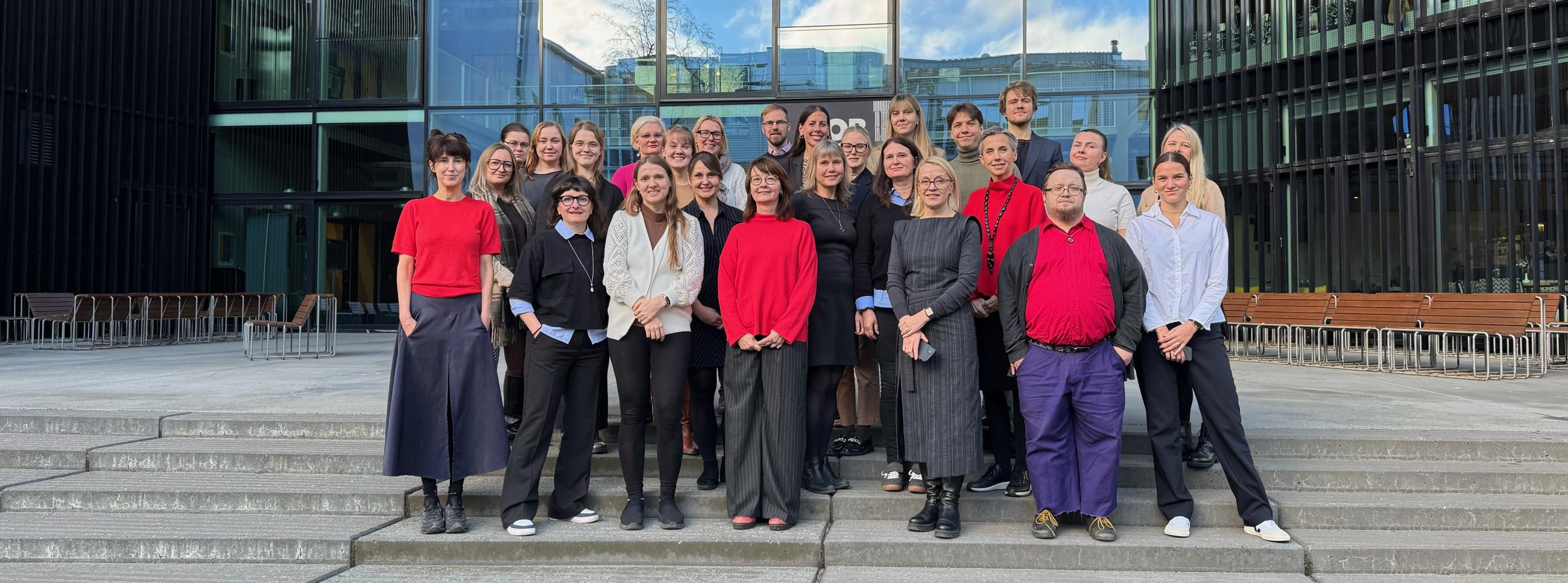
According to the initiators of the Health Communication Network, it is very important that reliable health-related advice reaches people in a way and language they can understand, and in such a way that individuals feel free in making their own decisions. Clear, evidence-based messages that take the audience into account and show respect for people’s agency support mutual trust between all parties involved in communication and help individuals make informed health decisions.
The network’s members include more than thirty researchers from the humanities, social sciences, medicine, and other disciplines who study health communication and meaning-making, as well as policymakers and practitioners, specialists in journalism and communication, and representatives of patient advocacy organisations. Members come from the University of Tartu, Tallinn University, TalTech, Tallinn Health Care College, the Ministry of Social Affairs, the Estonian Health Insurance Fund, the Health Board, the National Institute for Health Development, the Estonian Chamber of People with Disabilities (EPIKoda), and the Estonian Cancer Society Network.
The roundtable was convened by Maili Pilt, Research Fellow in Folkloristics at the University of Tartu and lead of the study Meaning-Making in Social Media: Health and Vernacular Thinking. She pointed out that there are already several research projects in Estonia that help to understand how people create meanings and consume information related to health topics. Therefore, it is important to bring this knowledge to practitioners who deal with health communication in their everyday work—such as healthcare professionals, journalists, communication managers, and others.
According to Kristina Seimann, Junior Research Fellow in Communication Studies at the University of Tartu and researcher in the projects BECID and Meaning-Making in Social Media: Health and Vernacular Thinking, one of the key themes in Estonia and elsewhere has become how people cope with disorder and overload in health-related information environments, as well as health literacy more broadly—a competence that can be learned and taught.
Katrin Tiidenberg, Professor of Participatory Culture at Tallinn University and lead researcher of the project on the reliability of health-related content on social media, noted that the planning and implementation of health communication have become increasingly important over the years—for patients, health professionals, and policymakers alike. The network provides opportunities for expert information exchange and, where needed, offers recommendations and solutions concerning health communication issues relevant to the public and the media.
At the roundtable held on November 11 to establish the network, six research projects and studies conducted by researchers from different academic institutions were presented. These projects explore what health means to Estonian people, how patient autonomy and informed health decisions are understood, and how these can be supported by the state, communities, and healthcare professionals in a media-saturated and digital world.
- “Meaning-Making in Social Media: Health and Vernacular Thinking” examines the strategies people use and the reasons why they exchange information on various health-related topics on social media. The project also studies how trust or distrust towards information coming from mainstream media and medical experts manifests in these interactions. The project was presented by Maili Pilt, Research Fellow in Folkloristics at the University of Tartu.
- “Trust and Visuality in Everyday Digital Practices (TRAVIS)” aims to understand how trust is formed in health-related social media communication in Estonia, Finland, Austria, and the United Kingdom, and what role images and videos play in building that trust. The project was presented by Jaana Davidjants, PhD candidate at Tallinn University, together with Professor of Participatory Culture Katrin Tiidenberg.
- The project “Ars Moriendi Estonia 2030” focuses on competencies related to death and dying as part of health literacy. The overview was given by Associate Professor of Medical Anthropology Piret Paal and Junior Research Fellow in Medical Anthropology Jandra Sule from the University of Tartu.
- An overview of the legal framework of patient autonomy was presented by Kristi Paron, PhD in Sociology at the University of Tartu.
- Hendrik Šuvalov, Junior Research Fellow in Health Informatics at the University of Tartu’s Institute of Computer Science, gave an overview of the research projects and methods of the Health Informatics Research Group.
- The Baltic Centre for Media Excellence’s Info Disorder Intervention Centre (BECID) focuses on media literacy and health-related information disorder. The presentation was given by Associate Professor of Journalism Studies Marju Himma from the University of Tartu.
The Health Communication Network plans to create a joint social media channel that will regularly share updates about the network’s activities and relevant topic-related information. In addition, the network will organise roundtables, seminars, and conferences. In planning the conferences, collaboration will be sought between research projects and applied institutions to find areas of common interest.
The establishment and development of the Health Communication Network is supported by the project Meaning-Making in Social Media: Health and Vernacular Thinking (EKKD-TA32), carried out under the programme Estonian Language and Culture in the Digital Age of the Ministry of Education and Research. The initiators and coordinators of the network are the project’s principal investigator Maili Pilt, lead researcher Katrin Tiidenberg, and researcher Kristina Seimann.