
Launching LIFE in Mozambique: A New Chapter with Universidade Eduardo Mondlane
Tallinn University has initiated a collaboration with the School of Business and Entrepreneurship in Chibuto, part of Universidade Eduardo Mondlane, to transfer and adapt the LIFE project. The initiative focuses on embedding a capstone, interdisciplinary learning experience into local curricula, supporting entrepreneurial thinking and real-world problem solving.
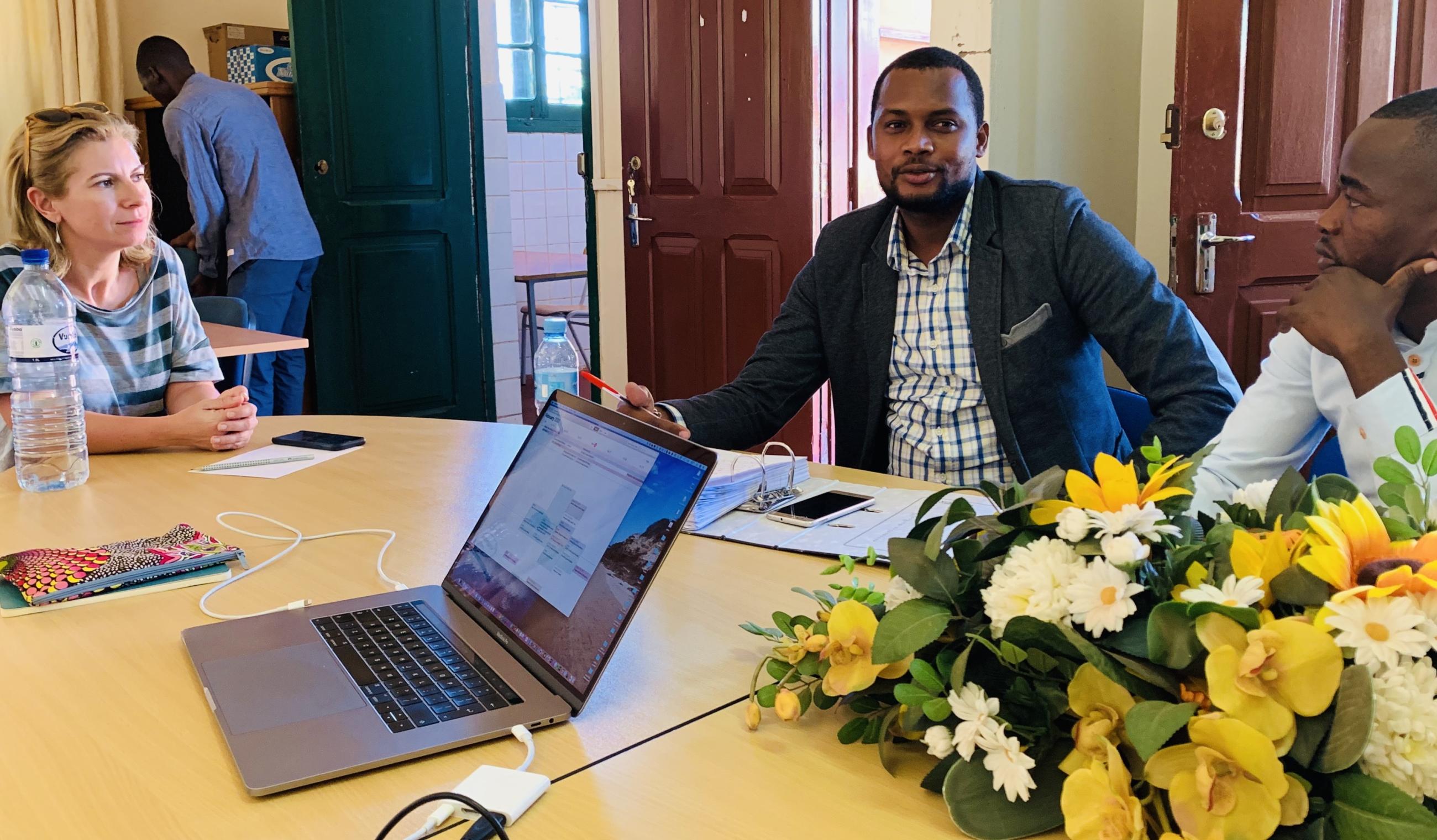
Tallinn University has begun a new phase of cooperation with the School of Business and Entrepreneurship in Chibuto, extending its collaboration with Universidade Eduardo Mondlane into a strategically important educational domain. At the centre of this initiative is the transfer of the LIFE project, a mandatory capstone course for all Bachelor’s and Master’s students at Tallinn University.
The LIFE project is designed as an interdisciplinary, challenge-based course where students from different study programmes work collaboratively on real-world problems. It emphasises teamwork, problem framing, stakeholder engagement, and the development of viable solutions in response to complex societal and organisational challenges. Rather than focusing on disciplinary depth alone, LIFE operates at the intersection of knowledge areas, preparing students for contexts where collaboration and adaptability are critical.
The cooperation with the Chibuto-based school focuses on translating this model into a new institutional and cultural setting. This is not a direct replication. The process involves adapting the pedagogical structure, aligning it with local curricula, and ensuring that the types of challenges addressed resonate with regional priorities—particularly in areas related to entrepreneurship, economic development, and community engagement.
From a design perspective, the transfer of LIFE can be understood as an infrastructural intervention in education. It introduces not only a course, but a framework for organising learning around real-world challenges. This requires coordination across faculty, the development of new teaching practices, and the establishment of partnerships with external stakeholders who can provide meaningful problem contexts.
The collaboration also builds on a long-standing relationship between Tallinn University and Universidade Eduardo Mondlane, where joint initiatives have increasingly focused on capacity building in digital technologies, research, and education. By extending this cooperation into the domain of entrepreneurship education, the LIFE project contributes to strengthening institutional capabilities in preparing students for dynamic and uncertain labour markets.
Importantly, the initiative reinforces a shift in higher education from knowledge transmission to knowledge application. Through LIFE, students are positioned not only as learners but as active contributors to problem-solving processes within their communities.
This marks the beginning of a broader effort to co-develop educational models that are both internationally informed and locally grounded. The introduction of LIFE in Chibuto is therefore not just a curricular innovation, but a step toward building sustainable, practice-oriented learning ecosystems in Mozambique.