
MODINA project explored how AI is reshaping contemporary dance
Tallinn University played a leading role in the international MODINA project. The School of Digital Technologies coordinated the initiative, leading both its overall management and research activities, while also contributing technical expertise in AI and supporting several of the artistic productions.
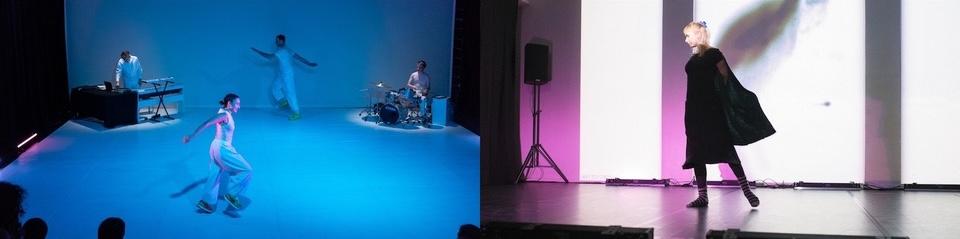
The international project MODINA (Movement, Digital Intelligence and Interactive Audience) has come to an end after three years of exploring how artificial intelligence (AI) and digital technologies can transform contemporary dance and audience experience. The project was coordinated by Nuno Correia from the School of Digital Technologies at Tallinn University.
The project aimed to expand creative possibilities in dance by combining choreography with AI and interactive technologies. It also addressed a gap in research: while AI has been widely studied in areas such as text, images and video, it has largely focused on emulating the brain, often overlooking embodied intelligence – how thinking is shaped by the body and physical experience – an area where dance offers unique insights.
“Dancers are experts in embodied cognition, which offers important insights for AI research,” said Correia.
/DTI/grid_final_image5_up%20copy.jpeg)
New works, wider audiences
Over the course of the project, MODINA supported the creation of 10 new choreographies, developed through international residencies involving 20 artists selected from 364 applicants. These works resulted in 42 performances across five countries, reaching nearly 2,400 audience members, with several productions continuing beyond the project.
Beyond performances, MODINA also created a rich body of supporting activities and resources. The project organised 10 artist talks and 10 seminars, bringing together nearly 1,000 participants to discuss the intersection of dance, technology and AI.
To ensure wider access and long-term impact, the project documented its work extensively. A total of 64 videos (over 53 hours of content) – including residencies, performances, seminars and discussions – are available online, alongside nearly 1,000 photographs capturing the creative process.
MODINA also contributed to academic research, publishing six open-access scientific articles presented at major international conferences, with additional publications in progress. Complementing this, the project developed six open-source software systems, making its technological innovations freely available for artists, researchers and developers.
/DTI/grid_final_image5_up%20copy%202.jpeg)
Growing recognition in Europe
MODINA gained visibility beyond the artistic community. Some of its works were presented internationally, and the project was invited to contribute to European-level discussions on AI in the cultural sector, including the EU Cluster Meeting on AI for the Culture and Creative Sectors (Brussels, June 2025). The project will also be part of an upcoming EU publication on this topic.
Collaboration and challenges
As a Creative Europe cooperation project, MODINA brought together eight partners with complementary expertise, including in areas such as virtual and augmented reality.
One of the main challenges was keeping pace with rapidly evolving AI technologies while supporting artists’ creative processes. Another was balancing research objectives with artistic freedom.
The next project MOVIDA – short for Movement and Virtual Intelligence for the Development and Accessibility of Artists and Audiences, also supported by Creative Europe, continues the work done in MODINA. The project starts on April 1st, and has a duration of 3 years.