
Tallinn University hosted an international BIP on AI-assisted workflow automation
This week, Tallinn University’s School of Digital Technologies hosted an Erasmus Blended Intensive Programme (BIP) on End-User Development, organised by the Human-Computer Interaction research group of Tallinn University. The programme focused on workflow automation, AI-assisted tools, and rapid prototyping for participants without a software development background.
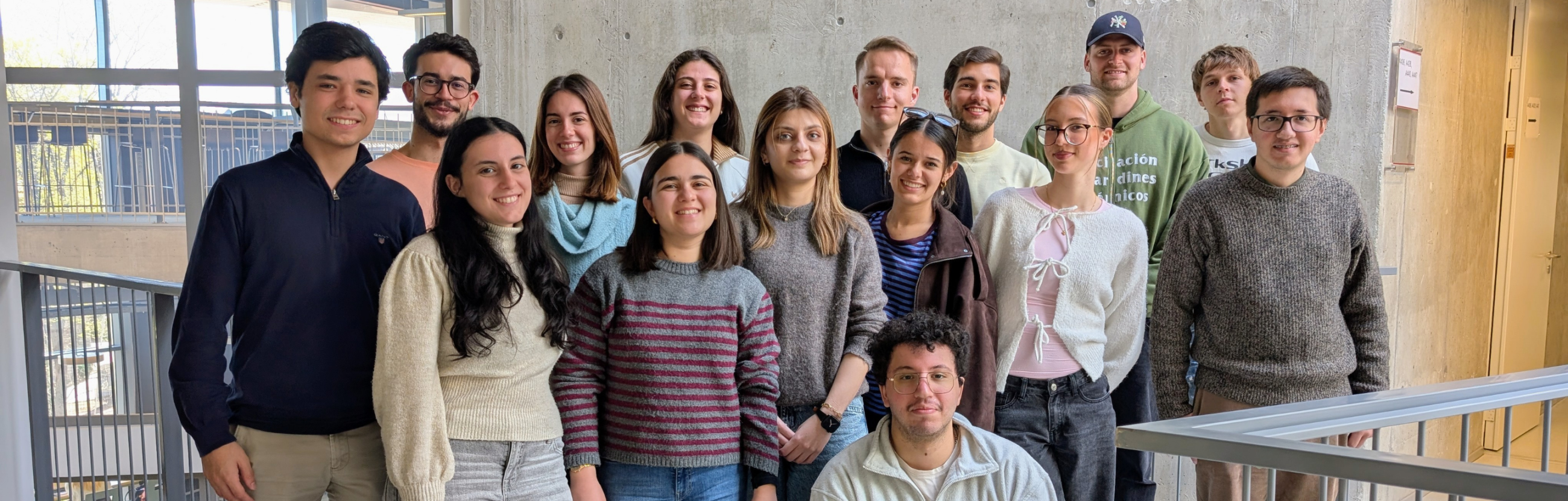
The course brought together students interested in building practical digital solutions using no- and low-code tools such as n8n and Zapier. Throughout the week, participants explored how AI tools and workflow automation can support research projects, services, and creative ideas without requiring deep programming expertise.
The programme was led by Associate Professor Vladimir Tomberg, Junior Research Fellow Aishah Shah, and student mentors.
Partner universities included the University of Lisbon (Portugal) and Stuttgart Media University (Germany). The programme welcomed 12 international students.
During the intensive week in Tallinn, participants worked through a hands-on learning process combining system architecture thinking, workflow automation, prompt engineering, and AI-assisted prototyping.
The programme focused on practical experimentation and collaborative problem-solving. Participants learned how to analyse and structure real-world problems into manageable tasks and subtasks, design and implement automated workflows, use AI assistants and prompt engineering techniques in development processes, and prototype and test digital services without advanced programming skills. They also explored how analytics and iterative development methods can be used to refine and improve solutions.
The course followed a practical, problem-based learning approach combining short lectures, demonstrations, guided exercises, peer feedback, and mentoring. By the end of the programme, participants had developed functional prototypes that can support experimentation, research, or further project development.
The BIP highlighted how accessible AI and no-/low-code technologies are expanding opportunities for students and professionals from different backgrounds to participate in digital innovation and rapid solution development.