
English Exposed: Vulnerability and Hope in Culture and Language
International Symposium October 8–10, 2026 Tallinn University
In a world marked by overlapping crises—wars, epidemics, climate catastrophe, democratic erosion, technological acceleration, and the growing entanglement of artificial intelligence with everyday communication—vulnerability has emerged as an increasingly recognised condition. English, as a global language of culture, education, governance, and digital mediation, is deeply implicated in these processes: it both exposes subjects to new forms of precarity and offers resources for articulation, resilience, care, and hope.
How to think about vulnerability in today’s world? Is it to be resolved or can we conceive of it as a condition to be accepted and embraced? Is it helplessness and lack of agency or is it a relational, affective and ethical condition? How can it be reconceptualised and recognised for its potential to generate new forms of creativity, solidarity, and critical hope?
This symposium invites scholars working across literary studies, cultural studies, linguistics, and language education to explore how vulnerability manifests in the world and is represented in and through English and Anglophone cultures today. Drawing on recent theoretical work on fear (Han 2024a), survival societies, pain (2020) hope (Han 2024b), critical attention (Citton 2017, Ganteau 2023, 2024), and narrative engagement beyond the human (Caracciolo 2021, 2024), the symposium asks how cultural and linguistic practices respond to a present marked by anxiety, exhaustion, and exposure. How do literary, artistic, cinematic, and discursive forms register contemporary vulnerabilities? How does English function simultaneously as a site of domination and of shared agency, whether in local, global, or intercultural lingua franca contexts? What kinds of futures—pedagogical, political, aesthetic—can be imagined from within conditions of vulnerability?
We particularly welcome contributions that engage vulnerability not only as a theme but as a method, stance, or practice, including creative-critical and interdisciplinary approaches.
Possible thematic areas include (but are not limited to):
- Vulnerability, precarity, and exposure in contemporary literature, film, and culture
- Fear, crisis, and “survival societies” in cultural and linguistic imaginaries
- Hope as disruption, refusal, and collective practice
- Reimagined communities, solidarities, and the “we” of hope
- English as a global language: ownership, inequality, and risk
- English as a lingua franca and the vulnerabilities of global communication
- AI, automation, and the transformation of linguistic and cultural attention and agency
- Narration, storytelling, and art as practices of care, repair, or healing
- Creativity, innovation, and aesthetic experimentation in vulnerable times
- Vulnerability, attention and hope
The symposium will combine academic panels with film screening and poetry reading, creating a space for dialogue between scholarly analysis and artistic practice.
Please address your queries to: Prof Julia Kuznetski, julia.kuznetski@tlu.ee
Confirmed keynote speakers:
- Marco Caracciolo (Ghent University)
- Hannah Lowe (award-winning British writer and poet)
Full programme in PDF format HERE
Abstracts and BIOs can be found HERE
See photos of the symposium HERE
Keynote Lecture Abstracts
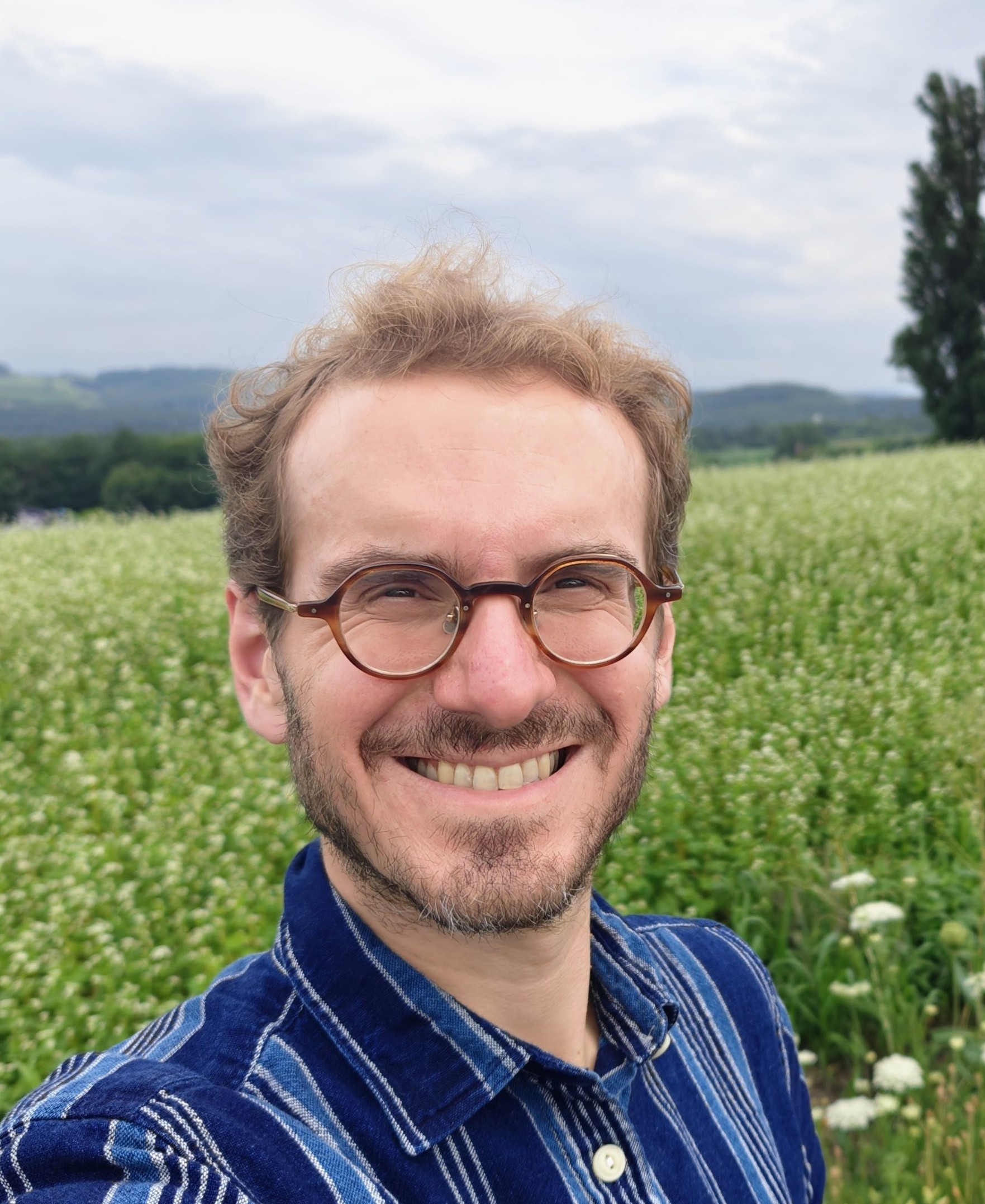
Marco Caracciolo "Embodiment and Vulnerability in Climate Fiction"
“The planet is sick” is a common metaphor for the environmental crisis: it works by mapping illness onto ecological processes. This metaphor goes hand in hand with how the discourse of vulnerability is mobilized in both environmental discourse and climate fiction: preventing ecological collapse becomes an extension of embodiment (and its breakdowns) to the planetary.
This talk examines how embodied concepts such as vulnerability and care inform the way we think about environmental processes. It draws on discussions in ecofeminism--particularly work by Astrida Neimanis and Maria Puig de la Bellacasa--to reveal how scaling up vulnerability to ecological processes involves significant conceptual and ethical tensions. The talk argues that contemporary fiction offers unique insight into these tensions. Richard Flanagan’s The Living Sea of Waking Dreams (2020) provides the main example. The novel draws an explicit connection between planetary crisis and the terminally ill body of the protagonist’s mother, showing how vulnerability, care, and the planetary are complexly and uneasily intertwined. This discussion will help advance arguments on the need to transform the imaginary of the body to address the challenges of climate change.
***
Marco Caracciolo is Associate Professor of English Literature at Ghent University in Belgium. Drawing inspiration from cognitive science, the philosophy of mind, and the environmental humanities, his work explores the forms of experience afforded by narrative in literary fiction and other media (especially video games). Between 2017 and 2022 he led the ERC-funded NARMESH project at Ghent University, which focused on negotiations of the nonhuman in contemporary narrative. He is the author of several books, including most recently Figures of Complexity in Contemporary Fiction (Edinburgh University Press, 2026). He received the Barbara and George Perkins Prize of the International Society for the Study of Narrative for his 2022 book Slow Narrative and Nonhuman Materialities (University of Nebraska Press).
.jpg)
Hannah Lowe "Vulnerable Lives, Precarious Histories: Fragments, Silence and Memory Work"
How do we write lives that survive only in fragments? Photographs and objects, archival traces and inherited memories can illuminate the past, but they can also reveal its omissions and silences.
At the centre of this talk is my ongoing poetry and memoir project about my Afro-Chinese Jamaican family history, particularly the life of my aunt Nelsa Lowe, a businesswoman and folk healer whose story exists in a series of partial and often contradictory records. This incomplete and precarious archive has led me to explore what it means to write in the presence of silence, uncertainty and loss. Rather than treating gaps in the archive as problems to be solved, I consider how incompleteness can become a method of attention, inviting us to see, listen and create differently .
The talk will also reflect on my writing concerned with Jamaican medicinal plants and vernacular naming practices, which asks what is at stake when local knowledge, cultural memory and ways of speaking disappear.
In a time of social, cultural and ecological vulnerability, creative writing may help us cultivate forms of care and listening that acknowledge both the limits of what can be known and our responsibility to what remains.
***
Hannah Lowe was born in Essex to an Afro-Chinese father and White English mother. Her father’s death, when she was twenty-two, prompted her to begin writing and led to a wide range of literary investigations into the Chinese presence in the Caribbean, postwar migration to Britain, and of British multiculturalism. She holds an MA in Refugee Studies, and undertook a PhD in Creative Writing at Newcastle University.
Her poetry and non-fiction prose has garnered numerous awards and accolades, including The Costa Book of the Year, The Eccles Centre & Hay Festival Writer’s Award and the Michael Murphy Memorial Award for Best First Collection. In September 2014, she was named as one of 20 Next Generation poets. Her work has also featured widely on radio, including Radio 4’s Book of the Week, Free Thinking, and Front Row.
This year, she will host the Glimpse podcast, produced by the Adrian Brinkerhoff Poetry Foundation. Her new book The Woman in the Chinese Collar, will be published by Scriber in early 2027.
Programme
Day I, 8 October
- 13:00-14:00 Registration, welcome coffee (A-104, Astra lobby)
- 14:00-16:00 Opening and Keynote I (A-002).
Opening words by Julia Kuznetski (Tallinn University), Jo Lomas (British Ambassador to Estonia) and Ursula Roosmaa (British Council Tallinn).
Keynote I: Marco Caracciolo, “Embodiment and Vulnerability in Climate Fiction”/ Moderator: Julia Kuznetski - 16:00-16.30 coffee break in the Astra lobby (registered participants)
- 16:30-18:30 Panel I (M-648) Panel I: Spaces and Temporalities of Vulnerability and Hope / Moderator: Iveta Aare
Panel I: speakers and papers
María Porras Sánchez (Complutense University of Madrid):
Urban Landscapes of Waste in the Capitalocene: Nostalgic Hope in Julia Wertz’s Tenements, Towers and Trash
Carolina Sánchez-Palencia Carazo (University of Seville):
Keep Calm and Embrace Uncertainty: Sara Baume’s and Kerri Ni Dochartaigh’s Slow Temporalities of Hope
Cristina María Gámez Fernández (Universidad de Córdoba):
Chronicling Systemic Vulnerability: Dynamics of Hope and Attention in Katherine Boo’s Behind the Beautiful Forevers
Zuzanna Szatanik (University of Bielsko-Biała):
Spatial Anxiety and the Geography of Vulnerability in Wild Dark Shore and Heartwood
- 18:45 Reception and Poetry evening (Mare Atrium): Hannah Lowe in conversation with Estonian poets (registered participants)
Day II, 9 October
- 9:00-11:00 Panel II: Postcolonial Identities, Decolonial Hopes / Moderator: Elisabeth Oakes (M-648)
Panel II: speakers and papers
Adesanya M. Alabi (Karabuk University):
Post-colonial Precarity and Vulnerability in Contemporary Literature: Reimagining Migration Exposure in Abdulrazak Gurnah’s By the Sea
Henry Obi Ajumeze (University of Galway, Ireland):
Hydrographies of Englishness: Empire, Water, and Decolonial Poetics in Tares Oburumu’s Origin of Syma Species
Ruslana Dovhanchyna (Tallinn University):
In Our Time, Hemingway Knows Nothing: Vulnerability and Hope from Ernest Hemingway to Artur Dron
Subarna De (Tallinn University):
From Vulnerability to Hope: Collecting as Bioregional Heritage Making in Sarita Mandanna’s Tiger Hills
- 11:00-11:15 Coffee break in Mare Atrium (registered participants)
11:15-13:15 Panel III: Panel III: Embodiment and Posthuman Care / Moderator: Bernadette Merila (M-648)
Panel III: speakers and papers
Raili Marling (Tartu University):
F(r)ictions of vulnerability: affirmative brokenness in illness narratives
Katia Marcellin (Université de Perpignan, France):
Vulnerable Breathing: Experiencing Vulnerability and Hope in British Pandemic Narratives
Elisabeth Oakes (Tallinn University):
Environmental Embeddedness as a Source of Resilience in Women-Authored 1960s and 1970s Science Fiction
Amitie Lee (Tallinn University):
Relational Vulnerability and Posthuman Dependency: Reading AI Care through M3GAN (2022)
- 13:15-14:15 Lunch in Mare Atrium (registered participants)
- 14:15-15:45 Keynote II: Hannah Lowe, “Vulnerable Lives, Precarious Histories: Fragments, Silence and Memory Work” / Moderator: Miriam McIlfatrick (A-002)
- 15.45-16:00 Coffee break in Mare Atrium (registered participants)
- 16:00-18.00 Panel IV: Vulnerability, Hope and Resistance in the Language Classroom and across Varieties of English / Moderator: Alpo Honkapohja (M-648)
Panel IV: speakers and papers
Dandyson Michael Jaja (Sivas University of Science and Technology):
The Vulnerable Classroom: Generative Artificial Intelligence, Linguistic Exposure, and Critical Hope in English Language Teaching
Ene Alas (Tallinn University):
Vulnerability of Multilingual Learners in Assessment Situations
Adedeji Adeniyi and Avneet Sharma (Tallinn University):
Language Choice in the Yoruba community: English as a site of resistance, solidarity or discrimination
Laura Kate Gage (Tallinn University)
From Revitalization to Integration: Intergenerational Perspectives on the Pronunciation of Māori Loanwords in New Zealand English
- 19:00 Conference Dinner (registered participants)
Day III, 10 October
- 9:00-11:30 Panel V: Vulnerable Waters: Relationality, Transformation, and Decolonial Futures / Moderator: Marion Moussier (M-648)
Panel V: speakers and papers
Tomasz Dobrogoszcz (University of Łódź):
Troubled Waters: Vulnerability and Ecological Politics in Contemporary Indigenous and Postcolonial Literature
Polina Golovátina-Mora (Norwegian University of Science and Technology):
Oceanic Thinking in Conversation with Theory of Water by Leanne Betasamosake Simpson
Anna Maria Karczewska (University of Bialystok):
Robert Macfarlane’s Is a River Alive?: Thinking with Rivers in Encounter and Imagination
Katarzyna Ostalska (University of Łódź):
Leaving Normative Humanity on Shore: The Palimpsest of the Land and the Deep, Queer Sea in Julia Armfield’s Our Wives under the Sea and Deborah Levy’s Hot Milk
Katarzyna Więckowska (Nicolaus Copernicus University in Toruń):
University in Toruń Uncertain Waters: Living with Climate Change and Contemporary Anglophone Fiction
- 11:30-11:45 Coffee break in Mare Atrium (registered participants)
- 11:45-13:15 Roundtable with Marco Caracciolo, Hannah Lowe and Cristina María Gámez Fernández:
“From Vulnerability to Critical Hope” / Moderators: Julia Kuznetski and Iveta Aare (M-648) - Closing words
- 13:15-14:15 Lunch in Mare Atrium (registered participants)
- 15:00 Visit to KUMU art museum, guided tour (optional, registration required)
Full programme in PDF format HERE
Abstracts and BIOs can be found HERE
Accommodation options
We recommend these centrally located hotels, with easy access to Tallinn University and the Old City:
Metropol Hotel *** Visit hotel site
We have secured a special rate and blocked some rooms in this hotel, with room rate 65EUR / room/ night
Please send reservation requests before 17 September to: booking@metropol.ee , using the password: TLU_Engl
Other options include:
Sokos Hotel Viru ****
Nordic Hotel Forum ****
Organising Committee
- Professor Julia Kuznetski
- Dr Miriam McIlfatrick-Ksenofontov
- Dr Alpo Honkapohja
- Dr Ksenia Shmydkaya
- Iveta Aare
- Bernadette Merila
- Memory and Environment project team