Building Connections Across Years: Fair Verona and Sunny Tallinn
Associate Professor Chiara Battisti (University of Verona) visited Tallinn University on 6–8 May 2026, further strengthening an ongoing and fruitful collaboration between our institutions. Her visit offered a valuable opportunity to deepen academic exchange, develop new ideas, and continue building a partnership that has grown steadily over the years.
Prologue
Some academic collaborations begin formally; others grow almost unexpectedly into something much richer. Ours belongs to the latter category.
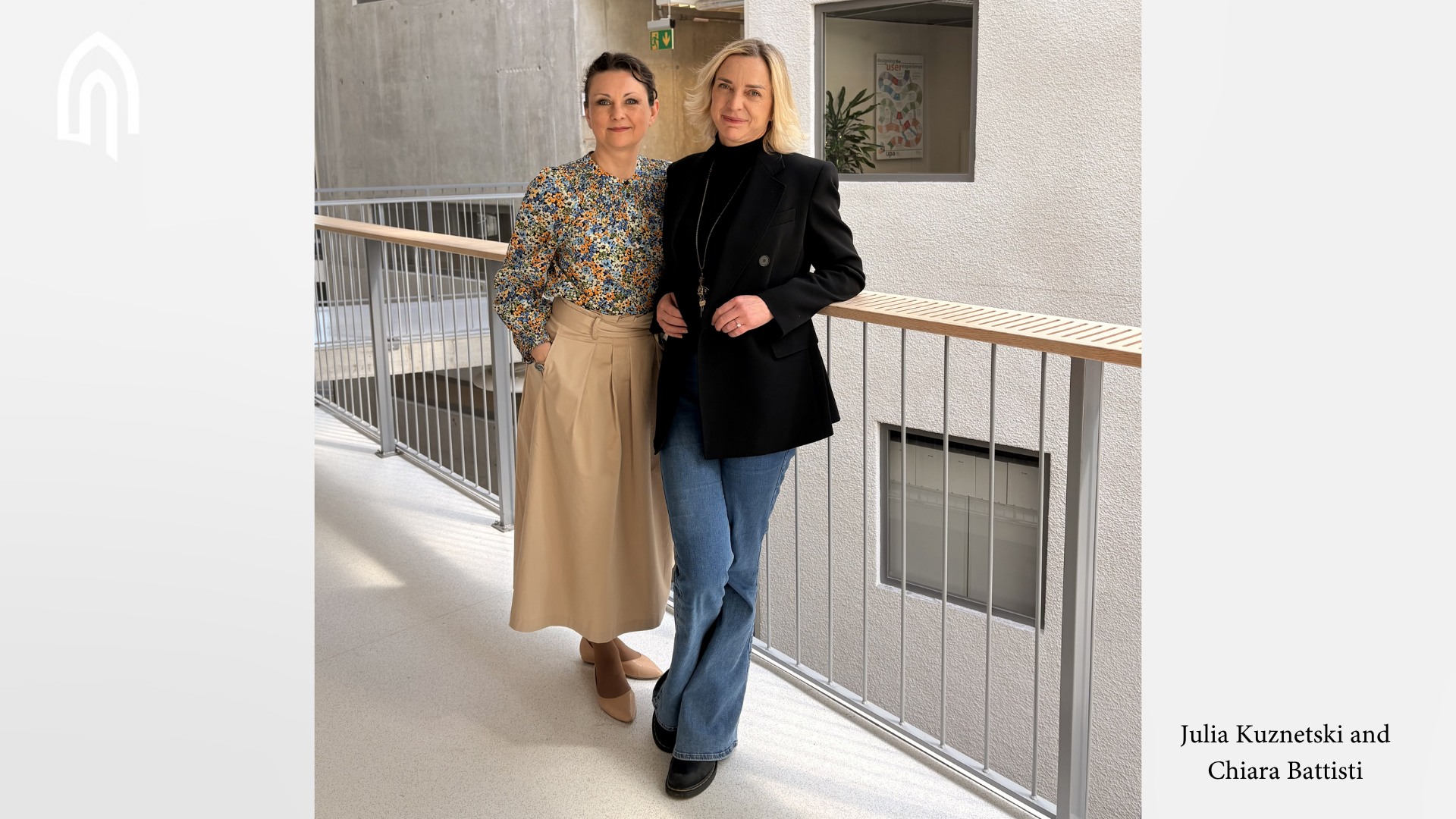
Our first contact dates back to 2017, when Prof Julia Kuznetski was co-editing a volume with Silvia Pellicer-Ortín, titled Women on the Move: Diasporic Bodies, Diasporic Memories. Constructing Femininity in the Transitional and Transnational Era in Contemporary Narratives in English (Routledge 2019), and invited Prof Chiara Battisti to contribute a chapter. That initial exchange marked the beginning of an intense and rewarding collaboration.
Over the years, our work developed through multiple shared projects: Chiara’s participation in a roundtable at ESSE (European Society for the Study of English) 2021, organized by Julia and Silva and titled “We Too”: Female Voices in the Transnational Era of Crisis, Migration and Climate Change, followed by a special journal issue in Women: A Cultural Review, and later the co-planning of another ESSE Seminar, this time on crisis (2024). This culminated in the publication of The Routledge Companion to Literatures and Crisis (2024) - a multilayered, challenging project that drew us even closer together. Months of sustained dialogue and joint work gradually strengthened not only our academic partnership, but also a genuine personal friendship.
Chiara’s first visit to Tallinn, in February 2025, for the International Seminar on “Literature and Crisis”, was followed shortly after by the organization of the Doctoral Symposium “Crisis in the Humanities?” at the University of Verona (March 20th, 2025). Julia visited Verona as teaching staff, bringing along her PhD students, who participated in the seminar. Our collaboration continued with the co-editing of a special issue of Critique: Studies in Contemporary Fiction on crisis in the twenty-first century Anglosphere. We are very proud of this volume and our joint introduction, titled “Fractured Spheres, Entangled Worlds: Reimagining the Anglosphere in the Age of Permacrisis” (OA).
The journal editors were so happy with our work that even invited us to join its Editorial Board.
The Visit
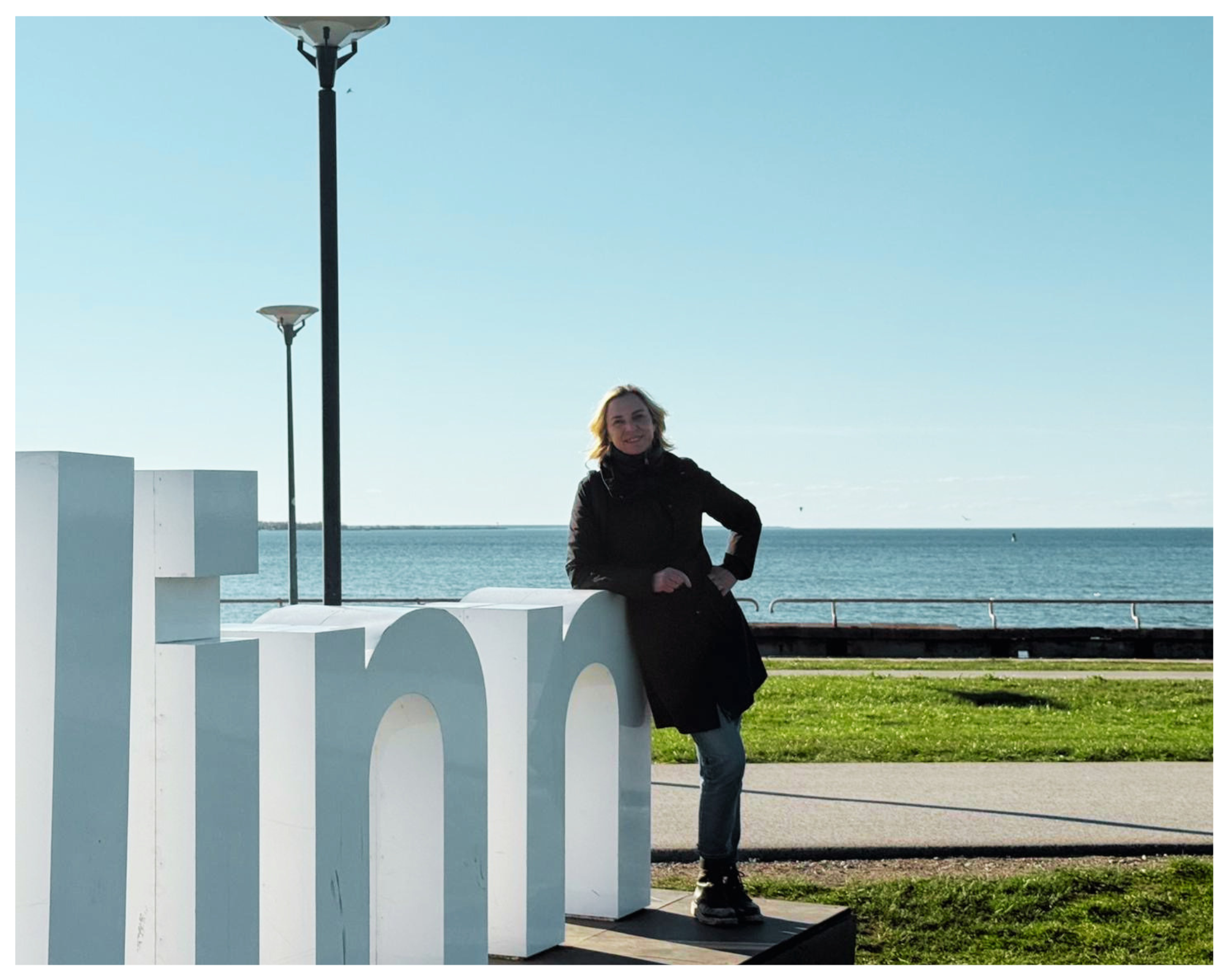
Chiara: Returning to Tallinn this May as part of a Teaching Staff mobility offered a new perspective, both academic and personal. Unlike my first visit, which was mostly centred on the medieval charm of the Old Town, this time I had the opportunity to experience the city in its broader complexity. Under a surprisingly bright northern sun, and guided with care and insight by Julia, I discovered Tallinn’s layered urban identity: the colourful wooden houses in quieter districts, the proximity of the sea, and the unexpected presence of green spaces - gardens, ponds, and even a small “Versailles” just outside the city centre.
Equally enriching was the experience within the university. Engaging with colleagues proved intellectually stimulating and genuinely welcoming, while interactions with students were particularly rewarding. Their curiosity and liveliness in discussion offered a refreshing reminder of the importance of dialogue in the humanities.
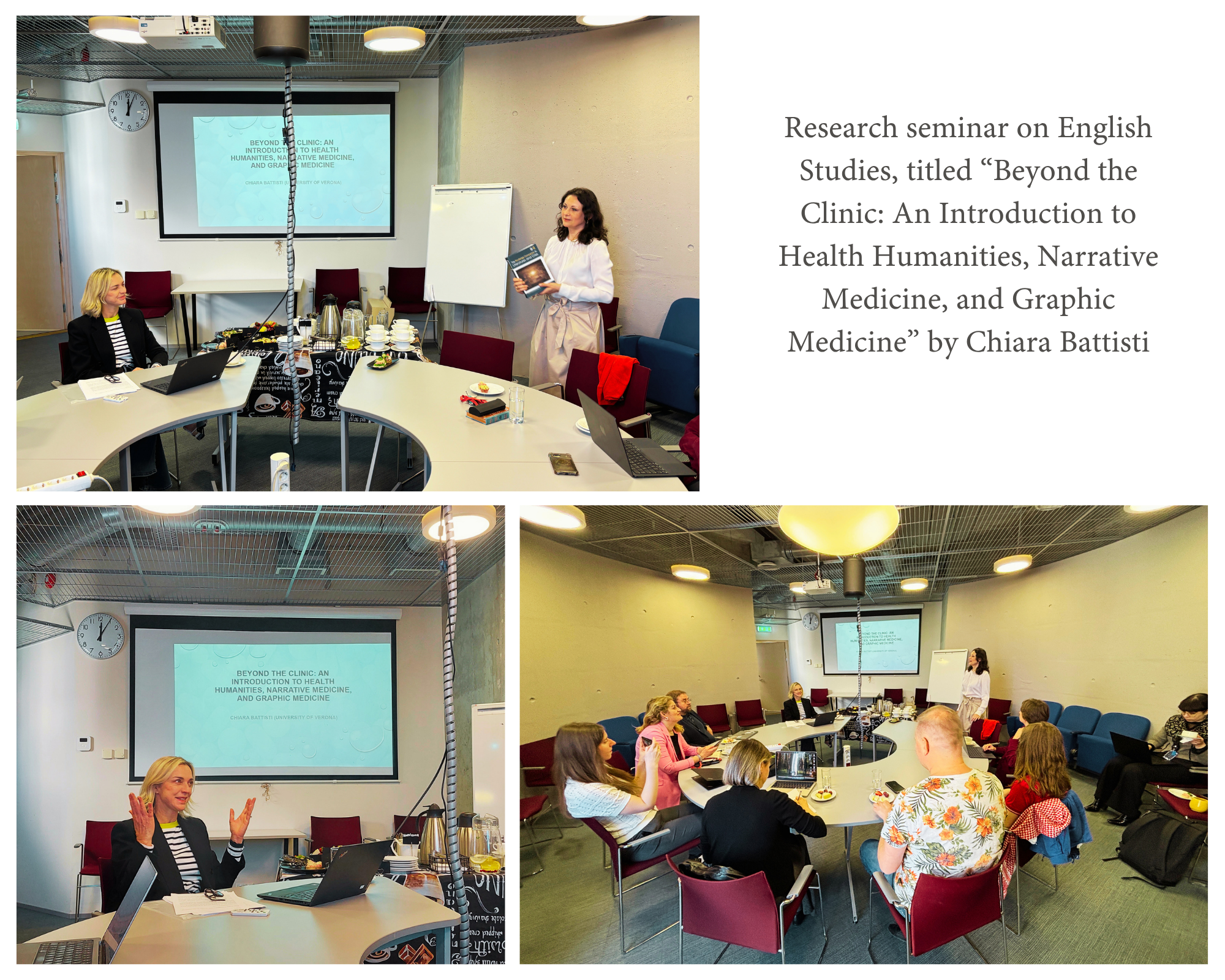
Julia: It has been a sheer pleasure having Chiara in Tallinn. Her presentation at the Research seminar on English Studies, titled “Beyond the Clinic: An Introduction to Health Humanities, Narrative Medicine, and Graphic Medicine”, introduced Medical Humanities - her field of expertise. It opened the important conversation about a holistic approach to the body and the importance of narrative in breaking the taboos around disabilities and diseases. How to imagine the pain and confusion of the other? When scientific vocabulary fails, visual images such as walking a tightrope with every next lived day start telling their story.
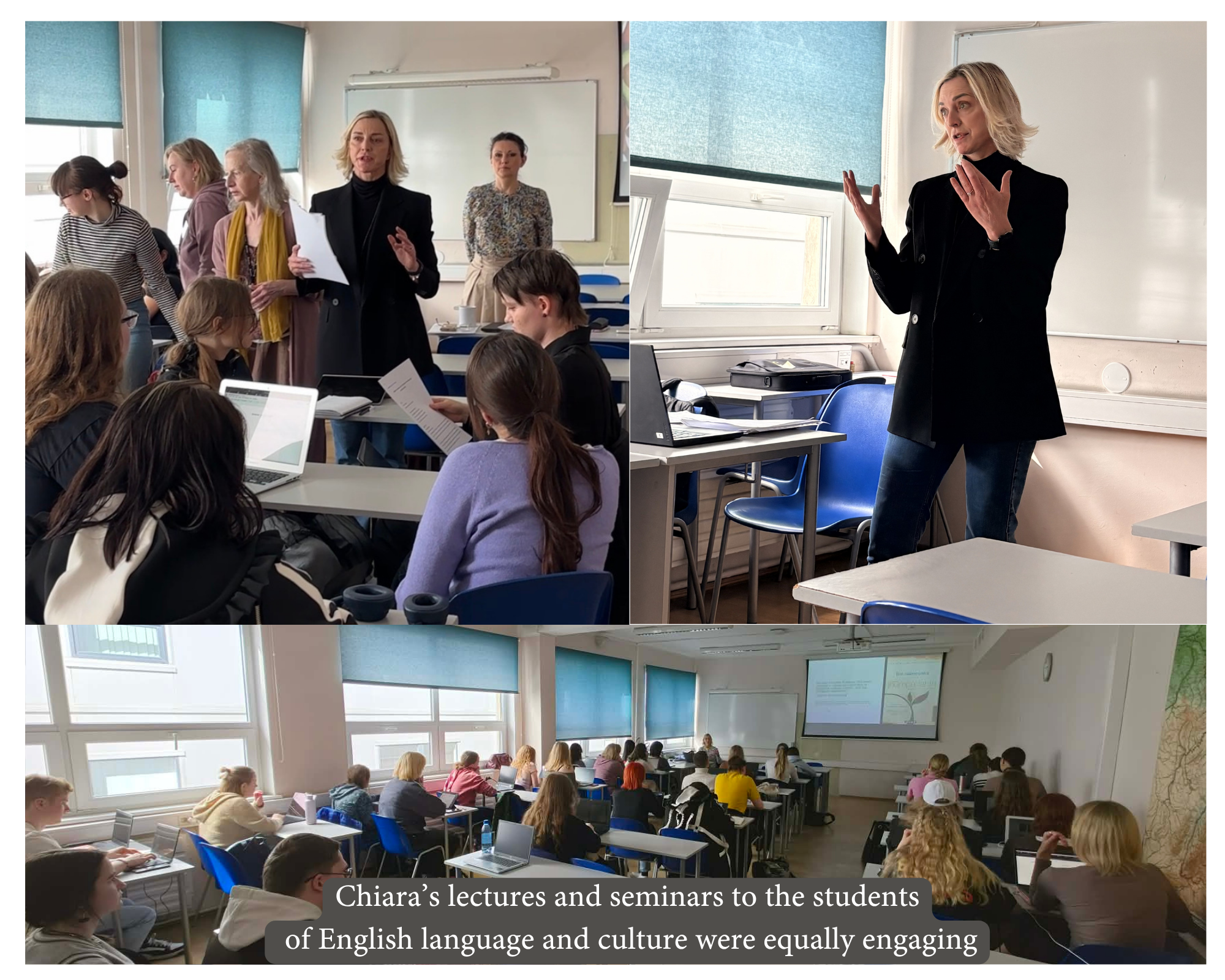
Chiara’s lectures and seminars to the students of English language and culture were equally engaging. She approached diasporic literature through the example of Indian-American writer Jumpa Lahiri’s novel The Namesake (2003), with a special focus on food as an intimate and powerful marker of identity. This was continued by bringing in intermediality and zooming in on the novel’s screen adaptation (2006), which provoked a particularly lively discussion among the students. Aren’t we all forever rooted in our family’s meals, which keep alive the memories of culture, community, or lineage?
Conclusion (rather, To Be Continued…)
Rather than a conclusion, this visit feels like the continuation of an ongoing trajectory, and perhaps the beginning of new ones.
Several projects are already on the horizon: a co-edited special issue of Pólemos on “Crisis of Democracy in Law, Literature, and Culture”; the joint organisation of a seminar for ESSE 2026 in Santiago de Compostela; and, emerging precisely during these days in Tallinn, the idea of another Routledge Companion and a of Blended Intensive Programme (BIP).
If anything, this experience confirms that what began as a single academic invitation to a volume has evolved into a dynamic and forward-looking partnership.
So, rather than closing, this is simply a pause … to be continued.