Film programs and lectures series on Palestine
Scholars and students of TÜHI, ÜTI, the BFM organized this semester two significant initiatives dedicated to exploring the complex realities, history, and diverse narratives surrounding Palestine and broader themes of human resilience and resistance – a film program and a series of lectures and discussions with scholars and Palestinian writers.
V
The “Cinema of Resistance” program, curated by Vivek Jain, ran throughout the Fall semester, offering a multi-layered exploration of resistance through film. The series aimed to amplify marginalized narratives and foster empathy, addressing questions of why, for what, and against whom resistance manifests—from defending freedom of expression to combating moral apathy.
The program featured “The Encampments” (October 8), which provided an intimate look at America’s student protests sparked by Columbia University`s ties to the war on Gaza, highlighting a nationwide student uprising and freedom of expression on campuses. This was followed by “From Ground Zero” (October 23), a powerful collection of stories from 22 Palestinian filmmakers documenting their lives in Gaza amidst war, showcasing human resilience through animation, documentary, and fiction.
“A State of Passion” (November 2) captured the harrowing experiences of British-Palestinian surgeon Dr. Ghassan Abu Sittah during the humanitarian crisis in Gaza, portraying resilience in the face of immense suffering and the targeting of medical facilities. Elia Suleiman’s satirical “Divine Interventions” (November 12) offered a different form of resistance, using humor and absurdity to depict Palestinian life, challenging oppression with laughter.
A retrospective of Jocelyne Saab’s work (November 26) showcased her pioneering Lebanese cinema, focusing on disadvantaged populations, displaced individuals, and the impact of war on Beirut through films like “Palestinian Women” and the “Beirut Trilogy”. The series concluded
with Annemarie Jacir`s “Wajib” (December 12), a nuanced portrayal of family dynamics and duty within Palestinian society, as a son returns to Nazareth to help his father.
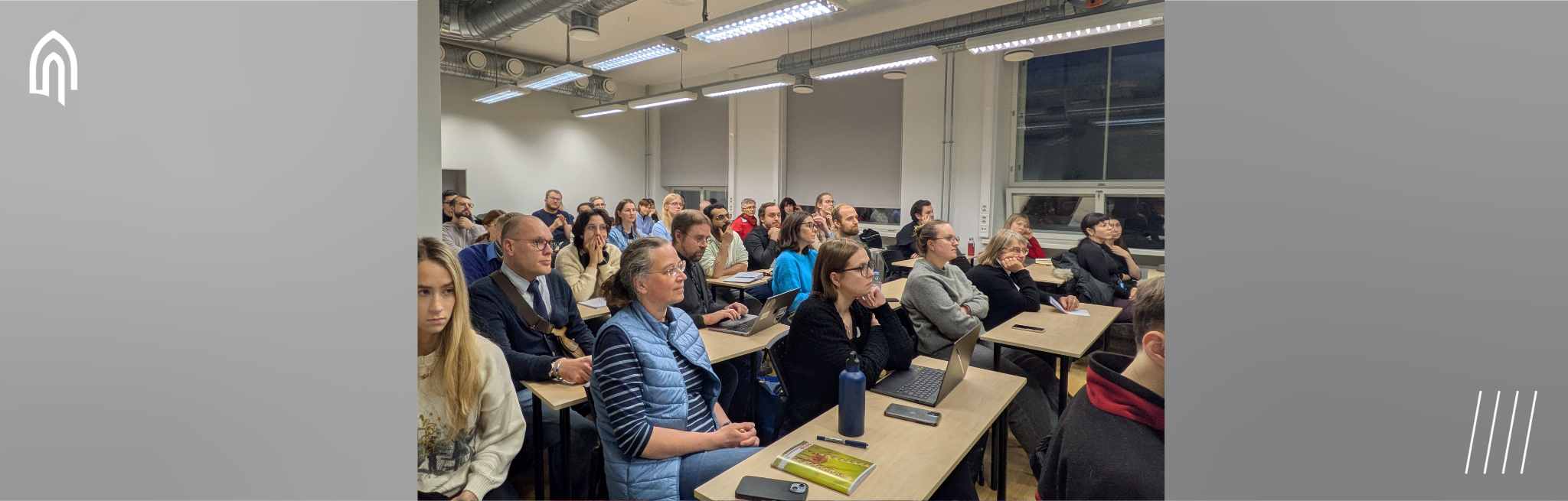
The lecture series “Let us talk about Palestine, let us listen to Palestinians” provided academic perspectives on conflicts, genocide, and collective memory, offering a platform for thoughtful engagement, enriching our community’s insights into Palestinian history and culture. The series commenced with a public lecture titled “Memory Wars and the War on Palestinian Memory: 77 Years of the Ongoing Nakba” (December 4), delivered by Professor Ihab Saloul from the University of Amsterdam. Professor Saloul’s presentation explored how Palestinian generations remember and interpret al-Nakba, the catastrophic loss of Palestine in 1948, and its profound ongoing impact. He delved into the complexities of collective memory in exile, examining contemporary debates surrounding conflict heritage, genocide, and analogies with the Holocaust.
.png)
Following, Professor Dirk Moses from CUNY presented a public lecture titled “How and Why Genocide is Distinguished from Warfare” (December 8), in which he critically examined the legal and conceptual frameworks differentiating war from genocide. He highlighted how historical legal definitions, intended to criminalize warfare against entire populations, inadvertently limited accountability for mass violence. Professor Moses elaborated on how the memory and legacy of the Holocaust profoundly shaped international law and public perception, reinforcing this divide. He argued that recent conflicts, notably in Ukraine and Gaza, require a redefinition of the notion of genocide to include “genocidal wars.”
.png)
The series concluded with an engaging discussion titled “Does the Word Still Have Power in Our World?” (December 11), featuring Palestinian writers Hazem Jamjoum and Heba Hayek. This dialogue explored the enduring power of literature in offering alternative perspectives amidst conflict. Students and writers discussed how literature responds to violence — as a mirror of reality, a rallying cry, or a beacon of hope. Heba Hayek specifically highlighted her acclaimed debut, “Sambac Beneath Unlikely Skies”, which powerfully illustrates the resilience of Palestinian women in Gaza. This conversation provided a unique opportunity to connect directly with the creative and intellectual contributions of Palestinian voices, showcasing how art and storytelling remain vital tools for understanding and preserving memory.
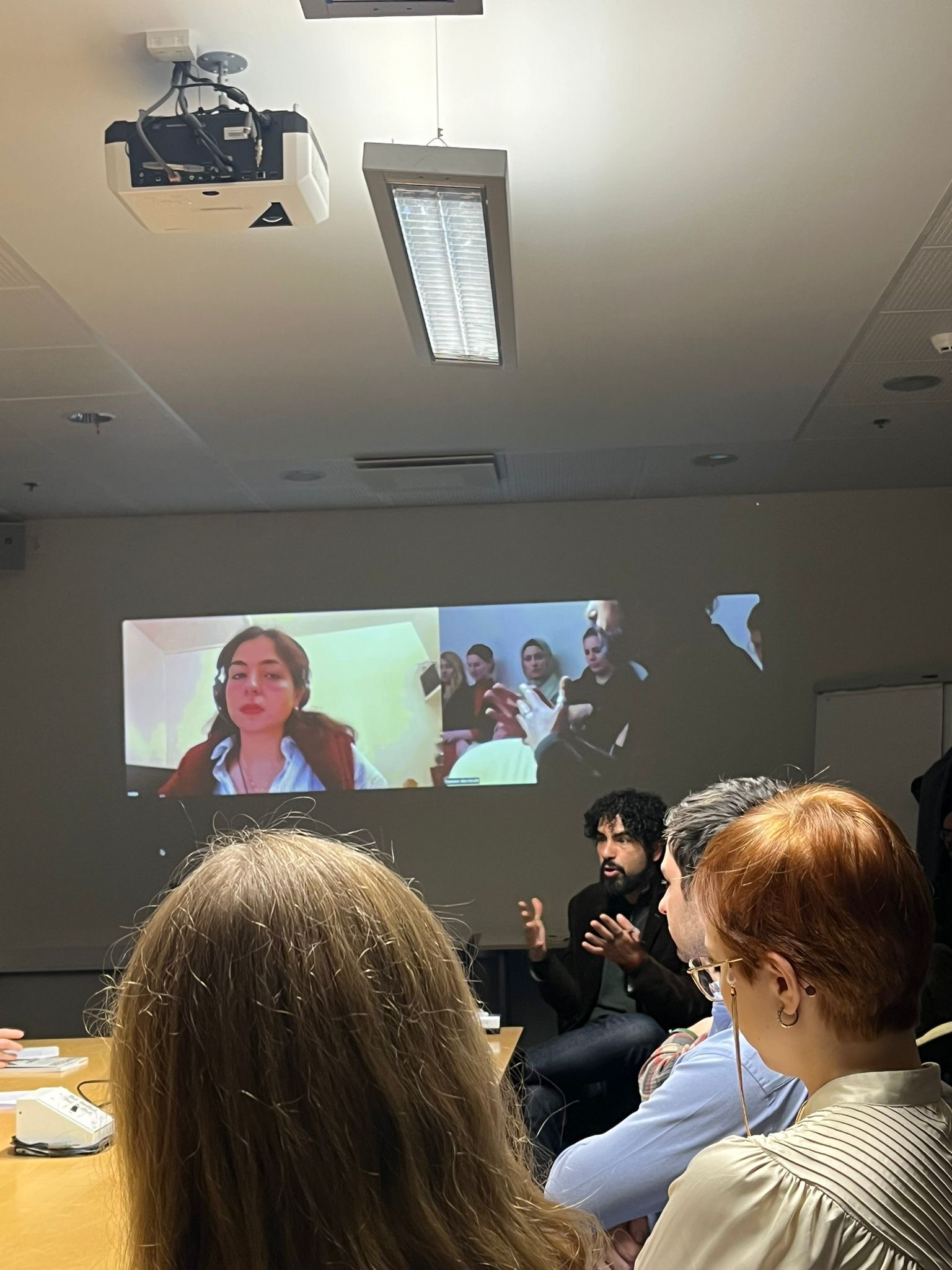
Overall, the series of events at Tallinn University achieved its goal of providing a multifaceted and academically rigorous exploration of Palestinian history, memory, and ongoing experiences. By hosting leading scholars and influential writers, the university facilitated informed dialogue, deepened understanding, and underscored its commitment to fostering critical thought on complex global issues, leaving the community with profound insights. The high participation in all the events and the quality of the discussions demonstrate that these kinds of events are greatly needed at our university and that we can debate divisive and complicated issues in an academic and safe manner for all.