
Ukrainian Vocational Education Leaders in Estonia – Focus on Innovation and Leadership
From 26 April to 9 May, the School of Educational Sciences hosted representatives of vocational schools from Ukraine’s Zhytomyr region. The microdegree programme “Educational Innovation and Leadership” brings together 20 participants from three vocational schools and educational institutions in Zhytomyr.
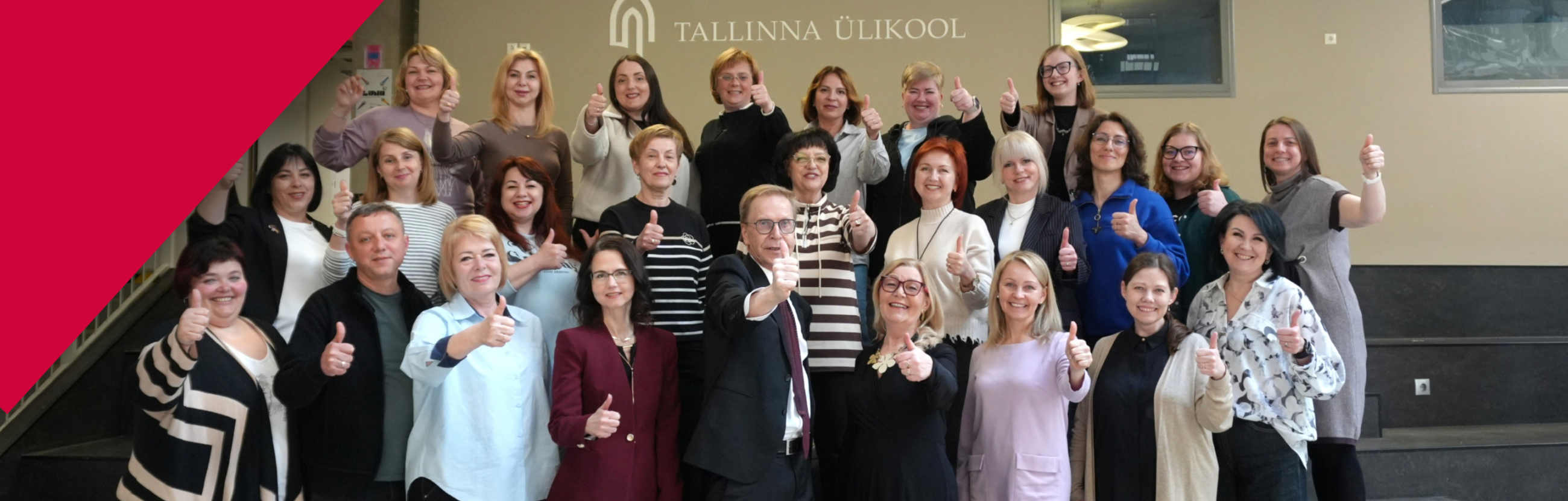
The programme "Educational Innovation and Leadership" focused on sharing insights from Estonia’s successful education reforms, vocational education development, modern teaching approaches, and curriculum design. Special emphasis was placed on practical skills, adapting innovative solutions to the Ukrainian context, and strengthening leadership culture based on the principles of the Future School programme.
Representatives of vocational education institutions from the Zhytomyr region of Ukraine participated in an intensive study visit in Estonia from 26 April to 9 May 2026. The programme was implemented within the ESTDEV-funded project “Supporting the Reform of the Vocational Education System in Zhytomyr” and formed part of a three-year initiative aimed at strengthening the professional capacities of Ukrainian school leaders, teachers, and education officials.
The intensive face-to-face module in Estonia offered participants a highly practical and experience-based learning opportunity, connecting theory with real-life examples from the Estonian education system. The programme was primarily hosted at Tallinn University and included several study visits to vocational education institutions.
The module began with participants’ arrival and a welcome dinner in Tallinn’s Old Town, followed by an introductory day focusing on future trends in education, as well as equity, inclusion, and core values in the Estonian system. Subsequent sessions explored leadership and management, including insights from organisational psychology and change leadership.
A key component of the programme was school visits. Participants visited the Estonian Business and Services College (AVARA), where they learned about the structure, challenges, and development of Estonian vocational education and met with school leadership. Another visit took place at Tallinn Technology College, focusing on vocational education planning, funding models, and cooperation with stakeholders. These visits provided first-hand insights into how Estonia’s vocational education system operates in practice.
Seminars at Tallinn University addressed broader themes such as the ecosystem of Estonian vocational education reform, teacher professional development, feedback and formative assessment, as well as student well-being and social-emotional skills. Special attention was given to stakeholder engagement and strategies for implementing sustainable educational change.
During the second half of the module, participants worked intensively on their own education innovation projects. They mapped stakeholders, refined their ideas, and practised presenting them, receiving feedback from lecturers and peers. The module concluded with final project presentations, where each participant outlined a concrete, evidence-based action plan for implementation in Ukraine.
Throughout the programme, emphasis was placed on active learning, discussion, and reflection to ensure that participants could effectively adapt the acquired knowledge and practices to their local context.
The programme combined online learning with a face-to-face intensive module in Tallinn and was led by internationally recognised education expert Peeter Mehisto from the UCL Institute of Education. During the Tallinn module, participants explored key topics such as future trends in education, leadership and management, vocational education reform, teacher professional development, and change management. Study visits to Estonian vocational schools provided hands-on insights into real-life practices and solutions.
By the end of the programme, participants had developed evidence-based education innovation projects for implementation in Ukraine. They also analysed Estonia’s long-term education reform experience and designed their own professional development pathways.