
The First Half of Digital Explorers II in Tallinn Brings Together Studies, Internships, and New Connections
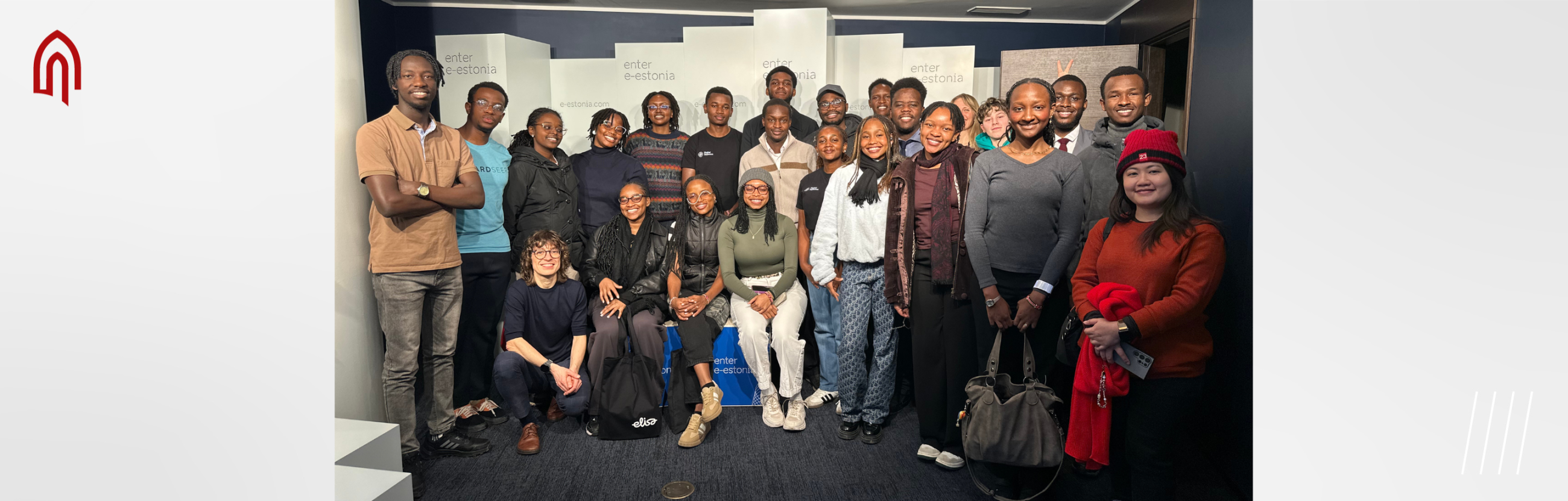
The first half of the Digital Explorers II programme in Tallinn has now been completed, marking an important milestone for the 20 students from Kenya who began their journey at Tallinn University earlier this year. For Tallinn University’s School of Digital Technologies, this is the second time it has hosted the programme, welcoming students from Strathmore University and Kenyatta University to a programme that combines academic studies, project-based internships, and engagement with Estonia’s digital ecosystem.
The programme began with an opening phase in Nairobi, where participants took part in a hackathon built around real-life ICT challenges. From there, 20 students were selected to continue their journey in Estonia, where they are now studying at Tallinn University while also working on internship projects across eight host organisations.
Since arriving in Tallinn, the students have participated in an intensive programme combining coursework, project-based internships, mentoring, reflection sessions, and study visits. Their academic work runs in parallel with internship projects in eight host organisations, allowing them to connect classroom learning with practical challenges and teamwork in professional settings.
/DTI/7A5AE3A4-A3F0-4CE2-A80A-8A178B242A59.JPG)
A key part of the experience has been exposure to Estonia’s wider innovation and startup environment. The group has attended World Usability Day Estonia, visited International House Estonia and the e-Estonia Briefing Centre, met with Ambassador Daniel Schaer, and visited the Estonian company Bolt. These activities have helped place their studies and internships in a broader context, showing how digital transformation, user-centred design, international talent support, and entrepreneurship connect in practice.
Participation in World Usability Day was especially relevant, as the students are studying interaction design at Tallinn University. Reflecting on the experience, programme participant Cindy Tumaini noted that one of the strongest takeaways was the reminder that the value of AI lies not in the technology itself, but in its real impact on people. As she put it, “Functionality alone isn’t enough if the experience doesn’t drive adoption. Design and engineering need to be far more aligned than they typically are.”
/DTI/Untitled%20design%20(2).png)
Another important aspect of the programme has been the way students have engaged beyond formal academic and internship requirements. Participants have joined hackathons, startup-related activities, pre-accelerator programmes, and student events, demonstrating a high level of initiative and openness to new opportunities. Community and cultural exchange have also been an important part of the journey, including the Kenyan Cultural Night organised by the group together with Tallinn University’s International Club.
Overall, the first half of the programme has shown how Digital Explorers II goes well beyond a traditional mobility experience. By combining studies, internships, ecosystem exposure, and community-building, the programme creates opportunities for professional development, cultural exchange, and longer-term cooperation between Estonia and Kenya.
The “Digital Explorers II” programme is implemented with the financial assistance of the European Union, contracted by ICMPD through the Mobility Partnership Facility, and delivered by a consortium led by the Lithuanian think-and-do tank OSMOS Global Partnerships, in cooperation with the Estonian Centre for International Development (ESTDEV) and the Latvian Startup Association Startin.LV.