Thesis: good results in maths require real-life experience
In a recent research paper, Hardi Sigus argues that numeracy and literacy alone are not enough to do well in maths. Students also need real-life knowledge to solve problems.

Although Estonian students perform very well in PISA tests, they often struggle with maths problems that deal with real-life issues. Similarly, they do not know how to use mathematics to solve everyday problems.
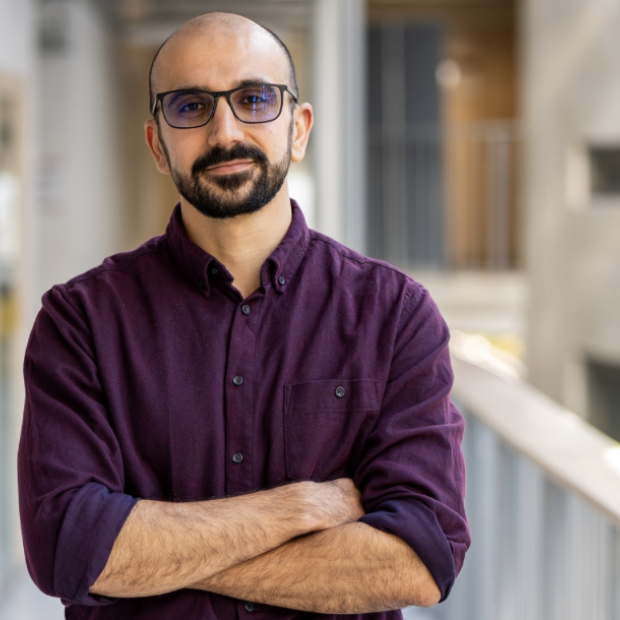
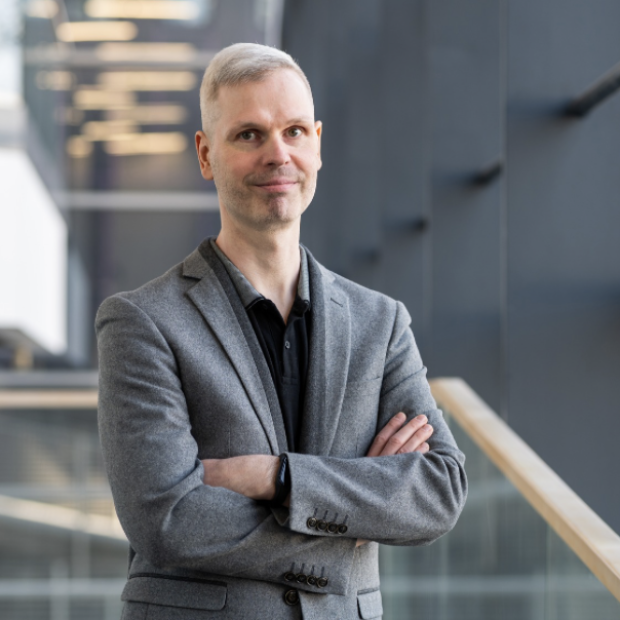
Hardi Sigus, a PhD student at Tallinn University's School of Natural Sciences and Health, shows in his doctoral thesis that in order to succeed in maths lessons, students need not only numeracy skills but also real-life non-maths knowledge, self-confidence and, if necessary, adequate support at school.
Muffin recipe in a maths problem and in real life
One of the key findings of the thesis is that knowing the rules of school mathematics alone is not enough to solve real-life problems. For example, in a muffin baking task, many students were able to calculate the recipe quantities, but erred in calculating the cost of the shopping list.
"If you need 200 grams of sugar to make 20 muffins, but the store only has one-kilogram packs, the answer that it costs 30 cents for sugar is wrong in real life – you can't buy a fifth of a pack from the store," explains Hardi Sigus. The results show that students with more real-life experience, such as with comparing the price per kilo of goods in a shop, are also significantly more successful at solving complex maths problems.
Self-confidence and "cost" determine motivation
In addition to knowledge, a student's self-confidence plays a role in mathematics, the belief that "I can do it!". If a task seems too difficult or if the effort required seems inadequately high, the student's confidence may drop, leading to a poorer result. As mathematics is a hierarchical subject, the learning content is structured in a step-by-step manner, so that understanding new topics requires the acquisition of prior knowledge and skills. If a link in the chain is missing, a snowball effect can occur, resulting in a loss of self-confidence and making maths seem like a huge effort.
School mathematics should move from the textbook to real life
Based on research, Hardi Sigus suggests that while mathematics requires learning procedural and conceptual knowledge and skills, mathematics education should move away from standard maths exercises towards problem-based learning that touches on students' interests and real lives. This would not only improve children's mathematical competence, but also better prepare them for the challenges of the 21st century.
The thesis defence
Hardi Sigus is a doctoral student at the School of Natural Sciences and Health, Tallinn University. His doctoral thesis is entitled Mathematics Learning in Basic School: Associations with Educational Placement, Extra-mathematical Knowledge, and Motivation.
The public defence of the thesis will take place on 28 January 2026 at 12:00 in Tallinn University, hall M648.
The public can also follow the defence and ask the degree candidate questions through Zoom.
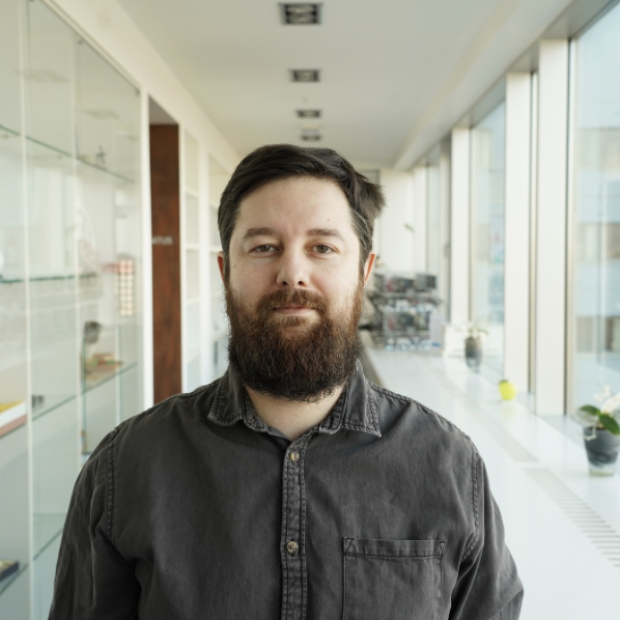
The thesis supervisor is Kaja Mädamürk, Senior Research Fellow at Tallinn University.
Opponents are Tomas Højgaard, Associate Professor at Aarhus University, and Evelyn Kiive, Professor at the University of Tartu.
The dissertation is available in the ETERA digital environment of Tallinn University Academic Library.