
Building Digital Pedagogy in Kenya: Lessons from an Estonia–Kenya Partnership
Tallinn University’s Centre for Educational Technology has completed an ESTDEV-funded development cooperation project, the “Digital Pedagogy Development Program for Teacher Educators in Kenya,” in collaboration with Riara University in Kenya. At Tallinn University (TLU).
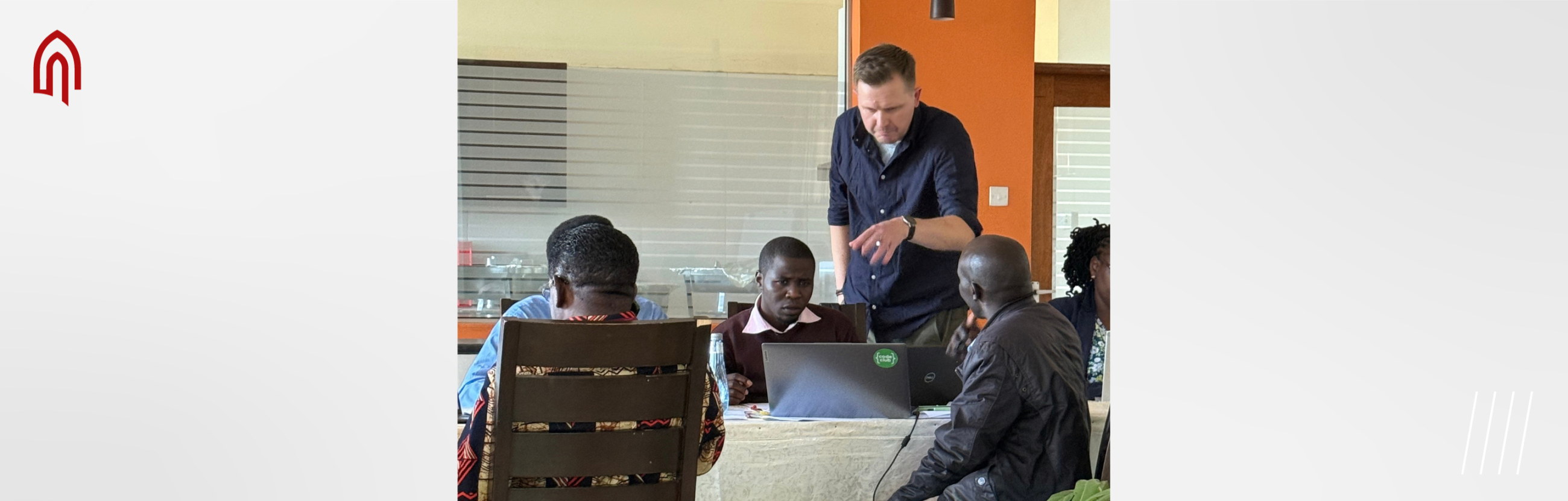
The project was coordinated by Kairit Tammets, with support from Manisha Khulbe, Alice Aaviksoo, Priit Tammets and Linda Helene Sillat.
The project aimed to strengthen Kenyan educators’ pedagogical digital competence through the design and delivery of a nine-month professional development programme.
On 21 October 2026, the project partners held an online final conference to present the programme’s activities and results, share participants’ experiences, and discuss how international university partnerships can support lasting changes in teaching practice.
The conference opened with welcome remarks from Professor Kairit Tammets and Professor Wanja Tenambergen. Kairit Tammets then gave an overview of the professional development programme and explained its theoretical foundations. The programme ran for nine months, from December 2025 to September 2026, and included both online and face-to-face workshops. It aimed to give teacher educators practical opportunities to apply new methods in their teaching and receive feedback on their implementation. Support from Riara University’s leadership was also central to ensuring that participants received sufficient organisational encouragement and to increasing the likelihood that new practices would be adopted across the institution.
Next, Tallinn University’s Alice Aaviksoo explained how the digital toolbox used during the programme was designed to support teaching and help sustain new practices. H5P was selected for its ease of use, as most participants were already familiar with it. A new tool, the ICAP lesson planner, was developed to guide lesson planning using the ICAP framework and support the reflection on and sharing of lesson plans.
The conference then turned to lessons learned from the project. By the end of the programme, participants reported improvements in their pedagogical digital competence and confidence in using digital tools for teaching. They also reported using technology more frequently to support constructive and interactive learning activities. Behavioural data from tool logs indicated that participants had adopted the tools, although their use had not yet become a routine part of their practice.
Riara University staff then shared their experiences of taking part in the programme. Paul Mwaniki described how his approach to teacher education had changed, with greater emphasis on pedagogy and learning goals rather than on tools. Alex Metto reported a shift towards learner-centred teaching and improvements in students’ learning experiences. Marion Amukuzi said she was now more intentional in her lesson planning and included a wider range of activities in each lesson to support student engagement. Alice Wamaitha described how she now emphasised co-creation over memorisation and provided opportunities for collaborative learning in class. Doris Kanana shared that she now aimed to create more student-centred lesson plans, used interactive digital content and carried out formative assessment more frequently.
The conference concluded with a panel discussion titled “How Do We Build Sustainable Capacity through International Collaboration?” The panel brought together Professor Wanja Tenambergen and Dr Julius Otundo from Riara University, and Kristina Kalvet and Dr Linda Helene Sillat from Tallinn University.
The discussion focused on how international university partnerships can move beyond short-term training activities towards lasting institutional change. One key message was that projects can initiate change, but sustaining it requires institutional commitment, leadership support and opportunities for educators to continue learning together.
The panellists also emphasised the importance of local ownership and mutual learning. Meaningful international collaboration recognises the strengths, experiences and contextual knowledge each partner brings, listens to local priorities, and remains open to adapting approaches together. Partnerships become more valuable when both institutions can question their assumptions, learn from different educational contexts and jointly shape the direction of change.
Sustaining the outcomes of collaboration projects also means maintaining the professional relationships, collaborative practices and institutional connections that make further development possible.
As the project comes to an end, we are grateful to all the colleagues at Riara University and Tallinn University who contributed their expertise, commitment and openness to learning throughout the collaboration.